 June 2022 in “International Journal of Advanced Research in Science, Communication and Technology”
 This study evaluated a polyherbal hair oil formulation that included hibiscus flower and other plant extracts, suggesting it may increase hair growth, reduce hair loss, and provide dandruff protection.
 January 2025 in “International Journal of Herbal Medicine”
 This review highlights that while dandruff affects over 50% of humans and cannot be fully eradicated, it can be controlled through chemical treatments that may cause side effects or herbal remedies such as Neem and Tea tree oil, which have longstanding use in hair care.
 3 citations
,
July 2021 in “International journal of pharmaceutical chemistry and analysis”
3 citations
,
July 2021 in “International journal of pharmaceutical chemistry and analysis” This review examines the role of medicinal plants in treating hair problems like baldness and dandruff, but it reports no new clinical results and emphasizes nutritional benefits from various herbal ingredients.
 March 2026 in “Zenodo (CERN European Organization for Nuclear Research)”
 This study evaluated a formulated herbal hair oil containing ingredients like Hibiscus rosa-sinensis and rosemary oil, finding increased hair growth activity with higher concentrations of these herbs, alongside assessments of mean hair length and anti-alopecia effects.
 March 2026 in “Zenodo (CERN European Organization for Nuclear Research)”
 This study formulated and evaluated a herbal hair oil containing natural ingredients such as Hibiscus rosa-sinensis and rosemary oil, finding that higher concentrations of these ingredients increased hair growth activity and improved anti-alopecia effects.
 January 2023 in “International Journal for Research in Applied Science and Engineering Technology”
 This review discusses the mechanism of "Malassezia" dandruff and the potential benefits of herbal treatments, focusing on phytoconstituents with anti-inflammatory, antibacterial, and antifungal properties, but reports no new experimental results.
 July 2022 in “International journal of Ayurvedic medicine”
 This study evaluated a newly formulated polyherbal anti-dandruff shampoo that incorporates natural ingredients, such as Neem and Aloe vera, to effectively clean hair, control dandruff, and promote hair growth without using harmful synthetic chemicals.
 February 2025 in “International Journal of Pharmaceutical Sciences Review and Research”
 In this study, researchers formulated and evaluated a herbal shampoo containing Tulsi leaves, Green gram extract, Flaxseed mucilage, and potato juice, finding it to possess good cleansing, foam stability, and conditioning properties, though further development is needed to enhance quality, performance, and safety.
 June 2024 in “International Research Journal of Modernization in Engineering Technology and Science”
 This study developed and evaluated a Neem, Tulsi, and Aloe vera-based anti-dandruff shampoo, finding it effective and safe, potentially offering a natural alternative to conventional antifungal shampoos for managing dandruff and maintaining scalp health.
 January 2023 in “International journal of Ayurveda and pharma research”
 This study focused on developing an anti-dandruff shampoo using herbal ingredients like Neem and Tulsi, which are proposed to offer antimicrobial and anti-inflammatory benefits without the side effects typically associated with chemical-based shampoos.
 May 2026 in “Zenodo (CERN European Organization for Nuclear Research)”
 This study evaluated a polyherbal hair oil formulated with medicinal plants and base oils like coconut and almond, reporting it as safe and effective in promoting hair growth, improving scalp health, and offering an economical alternative to synthetic hair care products.
 May 2026 in “Zenodo (CERN European Organization for Nuclear Research)”
 This study reported that a newly formulated polyherbal hair oil, containing ingredients like amla and neem, may safely promote hair growth and overall scalp health as an alternative to synthetic products.
 July 2023 in “International journal of pharmacognosy and life science”
 This study explores the development of a herbal hair oil formulation using selected herbs to potentially address hair loss and related issues, as an alternative to synthetic medications that may cause serious side effects and offer limited effectiveness.
 December 2025 in “International Journal of Research in Dermatology”
 This clinical study in healthy Indian adults found that a four-month application of an Ayurvedic leave-on treatment significantly increased natural black hair density, reduced grey hair count, and was well-tolerated without adverse effects, suggesting its efficacy and safety for treating premature hair greying.
 December 2025 in “International Journal of Ayurvedic Medicine”
 This review reports that Fenugreek seeds contain compounds like Galactomannan and Trigonelline, which show anti-diabetic and anti-hyperlipidemic effects, while Fenugreek leaves have high saponin content, contributing to their anti-microbial activities.
 June 2022 in “International Journal for Research in Applied Science and Engineering Technology”
 The research developed a herbal shampoo using extracts from Piper Betel and Psidium Guajava leaves, which showed potential in promoting hair growth and managing hair diseases, while replacing synthetic ingredients with safe natural alternatives.
 March 2024 in “International Journal of Advanced Research in Science, Communication and Technology”
 This review discusses the formulation and evaluation methods of herbal shampoos, highlighting various ingredients and their potential benefits for hair care, but reports no new clinical findings.
 December 2024 in “International Journal of Advanced Research in Science Communication and Technology”
 In this study, researchers prepared a herbal hair tonic using virgin coconut oil and nine herbs, evaluating its antibacterial, antifungal activities, and benefits for hair strength, with variations in ingredient concentrations and analyses for consistency and appearance.
 January 2024 in “Middle East Journal of Applied Science & Technology”
 This study formulated and evaluated a polyherbal body lotion using neem, tulsi, and aloe vera extracts, finding it met satisfactory physicochemical standards and was well received by users for skin smoothness and hydration without causing allergies.
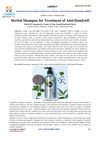 February 2023 in “International Journal of Advanced Research in Science, Communication and Technology”
 In this study, the researchers investigated the effectiveness of shampoo containing herbal extracts, specifically Neem and Tulsi, for managing dandruff and found it may offer benefits compared to synthetic drugs, which often cause side effects.
 May 2026 in “International Journal of Pharmacognosy and Life Science”
 This research evaluated a polyherbal powder shampoo using natural ingredients, finding it to be a stable, effective, and safe alternative to chemical-based shampoos, with no irritation and good usability.
 February 2026 in “International Journal of Advanced Research in Science Communication and Technology”
 In this review, researchers explored the potential of herbal shampoos as effective and safe alternatives to conventional anti-dandruff treatments, highlighting that polyherbal formulations may offer comparable or superior benefits with fewer side effects.
 June 2025 in “INTERANTIONAL JOURNAL OF SCIENTIFIC RESEARCH IN ENGINEERING AND MANAGEMENT”
 This study assessed a herbal dry shampoo comprising natural ingredients like Shikakai and Reetha, finding it effectively passed physicochemical tests but highlighted the need for more research to optimize product quality and safety.
 November 2023 in “International Journal For Multidisciplinary Research”
 This review explores how herbal hair oils made from ingredients like amla and hibiscus may offer benefits such as reducing hair loss and dandruff, but these are summarized from existing research rather than new experimental data.
 October 2023 in “Plant Archives/Plant archives”
 This study evaluated herbal formulations, including Neem and Hibiscus soaps and medicated oil, made from certain medicinal plants in India, finding them effective for antimicrobial purposes and beneficial for skin and hair, suggesting they are suitable for public use.
 5 citations
,
July 2022 in “International Journal of Health Sciences”
5 citations
,
July 2022 in “International Journal of Health Sciences” In this study, researchers formulated a hair tonic using various herbal extracts and reported effective antifungal and antibacterial properties, along with good consistency, spreadability, homogeneity, appearance, and pH balance.
 October 2025 in “International Journal of Research in Dermatology”
 This clinical study found that a three-month Ayurvedic leave-on treatment significantly improved hair density and reduced hair fall in healthy Indian adults experiencing hair loss, with efficacy supported by increased VEGF expression in dermal papilla cells, promoting follicular angiogenesis.

This study suggests that bioactives like Curcumin, Quercetin, and "Tulsi" may relieve chemotherapy-induced adverse drug reactions in cancer patients, potentially reducing resistance and recurrence.

This study evaluated various herbal blends of powdered leaves, including Henna and Indigo, for their coloring and sensitivity reactions, finding Henna and Indigo to be effective natural colorants for achieving a reddish-brown hair color with better retention than marketed herbal hair dyes.
 December 2024 in “International Journal on Science and Technology”
 In this study, researchers prepared a poly herbal hair oil using fresh plant leaves, including neem, and reported that these herbal formulations exhibit effective hair growth with fewer side effects compared to synthetic alternatives.