 April 2018 in “Journal of Investigative Dermatology”
 This study found that psoriasis patients value medication providing substantial clearance of symptoms at an average of $34,208/year, significantly below the annual cost of biologic treatments.
 April 2018 in “Journal of Investigative Dermatology”
 This study found that no patients with moderately dysplastic nevi with positive margins developed melanoma at the biopsy site, but those with a history of multiple nevi may have a higher risk of melanoma elsewhere.
 April 2018 in “Journal of Investigative Dermatology”
 This study found that patients taking hydroxychloroquine had a significantly higher likelihood of indeterminate QuantiFERON-TB Gold test results compared to those not on the medication, independent of other immunosuppressive drug use.
 April 2018 in “Journal of Investigative Dermatology”
 This study suggests that for dermatomyositis patients with minimal skin disease activity, further improvement in cutaneous symptoms may not translate into better quality of life, highlighting a need to revise trial endpoints.
 January 2016 in “Springer eBooks”
 This review discusses the potential of superficial cryotherapy as an effective and safe treatment for alopecia areata in eyebrows, with a proposed mechanism involving improved follicular nutrition, but reports no new clinical results.
 November 1995 in “Journal of Pediatric Health Care”
 Most hair loss in kids and teens is due to common conditions, and hair usually grows back within 6 months.
 April 1940 in “Archives of dermatology”
 This abstract presents a case of arsenical dermatitis with pigmentation and alopecia developed during treatment with arsphenamine for a positive Wassermann reaction.
 April 2018 in “Journal of Investigative Dermatology”
 This review discusses recent studies on platelet-rich plasma (PRP) therapy for androgenic alopecia and found varied results; the authors highlight a need for more controlled trials to standardize treatment methods.
 5 citations
,
October 2016 in “Anais Brasileiros de Dermatologia”
5 citations
,
October 2016 in “Anais Brasileiros de Dermatologia” This report describes a rare case of leprosy involving the scalp, a location not typically conducive to Mycobacterium leprae infection, and adds to existing literature without presenting new experimental findings.
 84 citations
,
August 2023 in “Drugs”
84 citations
,
August 2023 in “Drugs” This article describes the development milestones and recent approvals of ritlecitinib for treating severe alopecia areata, with approvals in the USA and Japan and ongoing regulatory reviews in other regions.
 80 citations
,
November 1975 in “Acta dermato-venereologica”
80 citations
,
November 1975 in “Acta dermato-venereologica” This study found that while some patients with severe alopecia areata responded to high-dose prednisolone, the response was inconsistent and the therapy's risks prevent recommending it for general use.
 53 citations
,
May 1987 in “The Lancet”
53 citations
,
May 1987 in “The Lancet” The document suggests a possible link between Crohn's disease and Johne's disease and calls for more research.
 51 citations
,
March 2006 in “Bioorganic & Medicinal Chemistry”
51 citations
,
March 2006 in “Bioorganic & Medicinal Chemistry” This study screened synthesized pyridinecarboxamides for antitumor properties and found that many, particularly 5c and 7a, showed moderate in vitro activity against various human tumor cell lines.
 41 citations
,
June 2010 in “Clinics in Dermatology”
41 citations
,
June 2010 in “Clinics in Dermatology” This review discusses the negative effects of cigarette smoking on various skin conditions and emphasizes the importance of dermatologists advising patients to quit smoking, but it presents no new research findings.
 40 citations
,
September 2018 in “Journal of the American Academy of Dermatology”
40 citations
,
September 2018 in “Journal of the American Academy of Dermatology” This letter discusses the emerging use of Janus kinase inhibitors, specifically oral tofacitinib, for treating alopecia areata in children, but reports no new clinical findings.
 39 citations
,
January 2019 in “Journal of the American Academy of Dermatology”
39 citations
,
January 2019 in “Journal of the American Academy of Dermatology” In this study, three children with severe alopecia treated with systemic tofacitinib showed significant hair regrowth, suggesting it may be a potential option for those unresponsive to conventional therapy.
 39 citations
,
January 2012 in “Acta dermato-venereologica”
39 citations
,
January 2012 in “Acta dermato-venereologica” This study examined 27 DRESS patients diagnosed in Thailand, identifying phenytoin, allopurinol, and nevirapine as common causes, with a 3.7% mortality rate and systemic corticosteroids being a common treatment.
 36 citations
,
June 2021 in “Experimental & Molecular Medicine”
36 citations
,
June 2021 in “Experimental & Molecular Medicine” This study found that mechanical stress activates a WISP-1/Hedgehog signaling axis that contributes to ligamentum flavum hypertrophy and fibrosis, identifying Hedgehog signaling as a potential therapeutic target.
 35 citations
,
February 2012 in “The New England Journal of Medicine”
35 citations
,
February 2012 in “The New England Journal of Medicine” Early diagnosis and treatment of TPP can prevent complications.
 25 citations
,
March 2009 in “Dermatologic Surgery”
25 citations
,
March 2009 in “Dermatologic Surgery” This abstract contains no specific study findings, results, or conclusions to summarize.
 24 citations
,
November 1992 in “Journal of the American Academy of Dermatology”
24 citations
,
November 1992 in “Journal of the American Academy of Dermatology” This report on a case of cutaneous lymphomatoid granulomatosis underscores the pivotal role dermatologists have in its early diagnosis, which could potentially improve the otherwise poor prognosis.
 21 citations
,
May 1988 in “Journal of The American Academy of Dermatology”
21 citations
,
May 1988 in “Journal of The American Academy of Dermatology” This article reviews the challenges of providing dermatology care in prisons and reports no new clinical findings, highlighting common skin conditions like tinea pedis, pruritus, and alopecia areata linked to stress and the environment.
 20 citations
,
July 2008 in “Dermatologic Therapy”
20 citations
,
July 2008 in “Dermatologic Therapy” This review discusses various nonfollicular scalp conditions causing secondary scarring or permanent alopecia and highlights the importance of specific diagnoses and treatments but reports no new results.
 14 citations
,
January 2012 in “International Journal of Trichology”
14 citations
,
January 2012 in “International Journal of Trichology” This case report highlights the importance of suspecting underlying malignancy, such as Hodgkin's lymphoma, in patients with diffuse hair loss and other cutaneous symptoms.
 13 citations
,
February 2006 in “Clinical and Experimental Dermatology”
13 citations
,
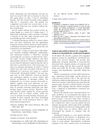
February 2006 in “Clinical and Experimental Dermatology” A benign tumor developed at a girl's BCG vaccination site, not previously linked to the vaccine.
 12 citations
,
March 2013
12 citations
,
March 2013 This report describes a case where a 4-year-old boy with congenital alopecia due to hypohidrotic ectodermal dysplasia experienced significant hair growth after using topical minoxidil.
 11 citations
,
January 1998 in “Dermatology”
11 citations
,
January 1998 in “Dermatology” This study observed that isotretinoin was effective in treating acneiform eruptions in HIV-positive women, although side effects like skin xerosis and hair loss were reported.
 11 citations
,
December 1921 in “Archives of dermatology and syphilology”
11 citations
,
December 1921 in “Archives of dermatology and syphilology” This article reviews historical cases and descriptions of perifolliculitis capitis abscedens et suffodiens, highlighting its characteristics and treatment, but reports no new clinical findings.
 10 citations
,
February 2006 in “Archives of dermatology”
10 citations
,
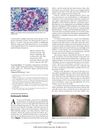
February 2006 in “Archives of dermatology” A man's chest hair turned white after a shingles infection, possibly due to virus-damaged pigment cells.
 7 citations
,
June 2010 in “Journal of The American Academy of Dermatology”
7 citations
,
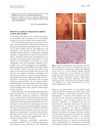
June 2010 in “Journal of The American Academy of Dermatology” This paper reports a single case of lichenoid cutaneous sarcoidosis that was unresponsive to standard treatments but showed marked improvement with the administration of oral tranilast.