 May 2025 in “The Journal of Rheumatology”
 This case report describes a 47-year-old woman with dilated cardiomyopathy as the first sign of primary antiphospholipid syndrome, highlighting the need for APS screening in similar patient presentations.
 May 2025 in “The Journal of Rheumatology”
 This case report highlights a rare instance of diffuse alveolar hemorrhage in a patient with catastrophic antiphospholipid syndrome, emphasizing the importance of early recognition and multidisciplinary management.
 May 2025 in “The Journal of Rheumatology”
 This case report details a rare instance of primary adrenal insufficiency as a manifestation of antiphospholipid syndrome, with the patient successfully managed through glucocorticoids, warfarin, and hydroxychloroquine.
 May 2025 in “The Journal of Rheumatology”
 This case report describes a woman whose initial presentation of SLE was persistent watery diarrhea, diagnosed as lymphocytic enterocolitis, and shows that immunosuppressive therapy resulted in symptom relief.
 1 citations
,
June 2017 in “International Journal of Toxicology”
1 citations
,
June 2017 in “International Journal of Toxicology” This symposium reviewed strategies to advance stalled drug molecules, discussed common regulatory hurdles, and explored options for repurposing drugs, but it reported no new research findings.
 119 citations
,
June 1993 in “BMJ”
119 citations
,
June 1993 in “BMJ” This article discusses the high toxicity and potential use of thallium as a poison, highlighted by two cases of intentional thallium poisoning.
 June 2026 in “Ophthalmology and Therapy”
 This review concluded that near-infrared and red light photobiomodulation shows potential for certain ocular conditions like age-related macular degeneration and dry eye disease, but clinical evidence is still mixed and insufficient to establish it as a standard therapy.
 January 1983 in “Side effects of drugs annual”
 This chapter reviews adverse effects of anti-anginal and beta-blocker drugs, stating that starting a beta-blocker may temporarily affect driving ability, but it reports no new clinical findings.
 June 2011 in “CRC Press eBooks”
 Low-Level Laser Therapy can stimulate healing and cell function, potentially leading to wider medical use.
 1 citations
,
November 2008 in “Gerontology”
1 citations
,
November 2008 in “Gerontology” This article discusses the increasing use of lifestyle drugs by healthy individuals to alter appearance or slow aging and emphasizes the need for doctors to consider side effects and contraindications, but it reports no new clinical findings.
 September 2022 in “Farmacja Polska”
 This review discusses the role of biotin in enzyme function and its effects on hair, skin, and nail health, noting that significant improvements are mostly seen in people with biotin deficiency, and reports no new clinical results.
 January 2018 in “Springer eBooks”
 Terbinafine is the most effective medicine for fungal nail infections, especially for diabetics and those with weak immune systems.
 4 citations
,
December 2025 in “Frontiers in Immunology”
4 citations
,
December 2025 in “Frontiers in Immunology” This systematic review of Mendelian randomization studies reports that autoimmune thyroid disease is associated with increased risk for numerous health conditions, including coronary atherosclerosis and rheumatoid arthritis, while decreasing risks for others, such as lung cancer.
 11 citations
,
February 2004 in “Clinical and Experimental Ophthalmology”
11 citations
,
February 2004 in “Clinical and Experimental Ophthalmology” In this case report, the authors suggest an association between prolonged finasteride use and anterior subcapsular cataracts, as observed in a 43-year-old man, marking the first reported instance.
 9 citations
,
February 2004 in “Clinical and Experimental Ophthalmology”
9 citations
,
February 2004 in “Clinical and Experimental Ophthalmology” This report documents the second known case of Castleman's disease in the lacrimal gland, diagnosed in an 84-year-old woman through histological examination after excising a left upper lid mass.
 5 citations
,
February 2004 in “Clinical and Experimental Ophthalmology”
5 citations
,
February 2004 in “Clinical and Experimental Ophthalmology” This study presents two cases correlating the clinical appearance of adult-onset foveomacular vitelliform dystrophy with optical coherence tomography findings, describing the location of the yellow vitelliform material.
 19 citations
,
March 2011 in “Cutaneous and Ocular Toxicology”
19 citations
,
March 2011 in “Cutaneous and Ocular Toxicology” Some chemicals absorbed through the skin can cause serious health problems.
 2 citations
,
January 2019 in “Elsevier eBooks”
2 citations
,
January 2019 in “Elsevier eBooks” This review discusses biotin's role in nutrition and suggests no benefit to supplementing it for hair, nails, and skin in healthy individuals; it reports preliminary findings that high dosages may help some multiple sclerosis patients.
 January 2025 in “Hospital Pharmacology - International Multidisciplinary Journal”
 In this study, researchers explored the effects of various medications on eye health, noting that systemic and local ophthalmic drugs can lead to both widespread and specific ocular side effects, with serious adverse events most associated with neurotropic, immunotropic, and antitumor medications.
 October 2017 in “The American journal of gastroenterology”
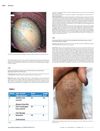
 This case series highlights severe micronutrient deficiencies and complications in three patients who did not adhere to follow-up care after Roux-en-Y gastric bypass, emphasizing the importance of regular nutritional monitoring.
 191 citations
,
May 2018 in “British journal of dermatology/British journal of dermatology, Supplement”
191 citations
,
May 2018 in “British journal of dermatology/British journal of dermatology, Supplement” This study reviewed recent theories on alopecia areata's pathogenesis, highlighting its autoimmune nature due to immune privilege disruption in hair follicles, and noted current treatments have limited efficacy with high relapse rates, underscoring the need for further research into its mechanisms for better therapies.
 50 citations
,
June 1999 in “Annals of Oncology”
50 citations
,
June 1999 in “Annals of Oncology” This study found that long-term weekly administration of docetaxel is feasible at doses up to 45 mg/m² per week with acceptable toxicity, and suggests further evaluation with 40 mg/m² for phase II studies.
 25 citations
,
November 2008 in “Ophthalmic Plastic and Reconstructive Surgery”
25 citations
,
November 2008 in “Ophthalmic Plastic and Reconstructive Surgery” This study found no significant differences in sensation recovery or scar formation between radiofrequency and scalpel incisions in upper blepharoplasty, although radiofrequency caused greater tissue damage.
 February 2024 in “PloS one”
 This review concluded that oral tofacitinib and adalimumab are promising treatments for cicatricial alopecia, showing effectiveness in improving signs and symptoms but requiring regular monitoring for adverse effects. The authors emphasize the need for further extensive studies to solidify these findings.
 October 2023 in “Biomedical science and engineering”
 Innovative methods are reducing animal testing and improving biomedical research.
 11 citations
,
January 2019 in “Skin appendage disorders”
11 citations
,
January 2019 in “Skin appendage disorders” This article reports a case of a 30-year-old woman developing alopecia after a hyaluronic acid injection, with trichoscopic findings described for the first time.
 1057 citations
,
November 2011 in “Annals of Biomedical Engineering”
1057 citations
,
November 2011 in “Annals of Biomedical Engineering” This review discusses the applications of low level laser therapy (LLLT) in wound healing, pain reduction, and treating various conditions, but reports no new clinical results; the authors highlight the need for randomized controlled trials for serious diseases.
 59 citations
,
February 2021 in “BMJ”
59 citations
,
February 2021 in “BMJ” This study found a strong dose-related increase in the risk of intracranial meningiomas associated with high doses of cyproterone acetate, with some reduction in risk after stopping the treatment.
 23 citations
,
November 2001 in “Archives of Dermatology”
23 citations
,
November 2001 in “Archives of Dermatology” This review discusses recent advances in the genetic understanding of inherited hair and nail disorders and reports no new clinical results.
 15 citations
,
April 2007 in “Journal of child neurology”
15 citations
,
April 2007 in “Journal of child neurology” This case report describes an 11-month-old boy with Menkes disease, highlighting symptoms such as developmental delays and poor therapeutic response due to significant brain and vascular abnormalities.