9 citations
,
January 2004 in “Journal of dermatological treatment” This study reports that oral rifampicin effectively treated the pustular lesions of tufted hair folliculitis in a 47-year-old woman, with no relapses after one year.
 52 citations
,
January 2004 in “Medical mycology”
52 citations
,
January 2004 in “Medical mycology” This study reported an increase in tinea capitis in Stockholm children, mainly caused by Trichophyton violaceum and associated with immigration from Africa and family spread.
15 citations
,
March 2023 in “BioMed” This review discusses multisystem inflammatory syndrome in adults (MIS-A) related to SARS-CoV2 and outlines the existing knowledge and unanswered questions, reporting no new clinical results.
9 citations
,
December 1985 in “JAMA” This article highlights the rising recognition of tinea capitis in children, noting a shift from Microsporum to Trichophyton tonsurans as the main causative agent, with potential implications for day-care centers.

This study highlights that traumatic anserine folliculosis is a benign condition often seen in young males, which can be diagnosed without invasive biopsies using clinical examination and dermoscopy.
24 citations
,
June 1999 in “The Pediatric Infectious Disease Journal” In this case report, a 2-year-old boy initially diagnosed with Sweet syndrome was later found to have chronic granulomatous disease, highlighting the importance of considering CGD in unusual cases of Sweet syndrome.
January 2003 in “Hepatology”  June 2017 in “Çocuk Enfeksiyon Dergisi/Journal of Pediatric Infection”
 This report describes two cases of urticarial id reaction linked to tinea capitis profunda, highlighting a potential new etiology for this rare condition.
 3 citations
,
April 2002 in “The Lancet”
3 citations
,
April 2002 in “The Lancet” In this case report, the authors identified giant cell arteritis as the underlying cause of bitemporal hair loss and scalp tenderness in a 70-year-old woman, initially misdiagnosed as age-related symptoms.
 December 2023 in “JEADV Clinical Practice”
 In this report, a young Caucasian woman developed a hairy tongue as an unusual side effect during baricitinib therapy for severe alopecia areata, which was managed by daily toothbrush debridement.
 21 citations
,
January 1988 in “Critical Care Medicine”
21 citations
,
January 1988 in “Critical Care Medicine” Critically ill patients may experience temporary hair loss after a fever.
June 2010 in “Institutional Repositories DataBase (IRDB)” Self-induced vomiting in anorexia can lead to rare gout complications.
3 citations
,
May 2018 in “Psychiatry and Clinical Psychopharmacology” In this report, an 18-year-old female with trichotillomania was successfully treated using the glutamate modulator n-acetylcysteine.
December 2024 in “Medicina” This study investigated the presence of Helicobacter pylori and Chlamydia trachomatis in women with PCOS, finding no significant association between these infections and PCOS, while also reporting higher inflammation markers and related health issues in the PCOS group compared to controls.
1 citations
,
November 2009 in “Nurse prescribing” This study reports that a 6–12-week course of oral griseofulvin can achieve mycological cures in 70% to 100% of tinea capitis cases.
 3 citations
,
March 2024 in “Cureus”
3 citations
,
March 2024 in “Cureus” This study found that PRP may effectively reduce TMJ pain and improve jaw function and quality of life in young adults with mild TMD.
 1 citations
,
May 2023 in “Curēus”
1 citations
,
May 2023 in “Curēus” In this case report, a rare pilar cyst was found in the left temporal region of a 75-year-old male, highlighting the potential for such cysts to mimic temporal space infections and complicate treatment plans.
 11 citations
,
October 2011 in “Allergologia et immunopathologia”
11 citations
,
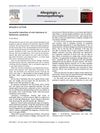
October 2011 in “Allergologia et immunopathologia” A girl with Netherton syndrome was able to eat wheat without allergies after a special treatment.
April 1946 in “Archives of Dermatology” This report describes two cases of tinea capitis: one resistant to local iodine treatment after partial improvement, and another cured with the same treatment, in African American and Caucasian children, respectively.
 May 2021 in “Journal of the American College of Cardiology”
 This case report suggests that Kawasaki disease should be considered in the differential diagnosis for children presenting with alopecia following a febrile illness with mucositis and conjunctivitis.
22 citations
,
September 1993 in “Archives of Dermatology” This case report details a 4-year-old girl who developed a fever and widespread papular, pruritic rash resembling a heat rash, with a progression to thick, scaly patches but had sterile blood and urine cultures.
 January 2023 in “Brazilian Journals Editora eBooks”
 People with cleft lip and palate often have respiratory problems.
 October 2022 in “The Journal of Family Practice”
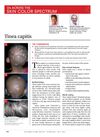
 This article describes cases of tinea capitis in young Black and Latina children, highlighting the condition's diverse presentations such as erythema, scaling, and subtle signs like comma hairs, but reports no new clinical results.
1 citations
,
January 2012 in “Médecine et Maladies Infectieuses” The man's symptoms improved significantly after penicillin treatment for syphilis.
3 citations
,
February 2022 in “Canadian Medical Association Journal” This case report describes a 72-year-old man who developed symptoms of fatigue and cold intolerance after discontinuing his levothyroxine treatment for hypothyroidism six months earlier.
January 2026 in “JCEM Case Reports” The researchers reported a case of a 51-year-old woman with primary hypothyroidism who developed anaphylaxis to intravenous levothyroxine after being unresponsive to oral formulations, highlighting potential allergic reactions to IV treatments in such patients.
 5 citations
,
February 2015 in “New England journal of medicine/The New England journal of medicine”
5 citations
,
February 2015 in “New England journal of medicine/The New England journal of medicine” This diagnostic case study describes a 25-year-old man with oral ulcers, body rash, and erythematous nodules.
 December 2014 in “Berkala Ilmu Kesehatan Kulit dan Kelamin”
 This case report describes successful treatment of a four-year-old boy with kerion-type tinea capitis caused by T. mentagrophytes using griseofulvin, erythromycin, wet dressing, and ketokonazole shampoo, with improvement after 8 weeks.
18 citations
,
December 2010 in “Transplantation Proceedings” This study reported that black hairy tongue can occur after allogeneic stem cell transplantation and may indicate cutaneous graft-versus-host disease, highlighting the need for histopathologic evaluation.
 20 citations
,
February 1991 in “Archives of dermatology”
20 citations
,
February 1991 in “Archives of dermatology” In this study, researchers found that high-dose tryptophan ingestion before symptom onset may be linked to clinical features resembling eosinophilia-myalgia syndrome in patients with eosinophilic fasciitis.