23 citations
,
July 2003 in “Journal of Investigative Dermatology” Genetic testing for hairless gene mutations is crucial to correctly diagnose and treat atrichia with papular lesions.
15 citations
,
October 1976 in “Biochemical Journal” This study found that Naked trait mice exhibit a decrease in certain low-molecular-weight proteins in their hair, which contain high levels of glycine and tyrosine, compared to normal mice.
7 citations
,
February 2011 in “Journal of dermatology” This study identified a specific LIPH gene mutation (736T>A) as common in Japanese patients with autosomal recessive woolly hair/hypotrichosis, potentially indicating its role in the condition's manifestation within this population.
29 citations
,
August 1999 in “Journal of Investigative Dermatology” New mutations in hair keratin genes cause the rare hair disorder monilethrix.
32 citations
,
January 2000 in “Human Heredity” This study found that the mutation Glu402Lys in keratin hHb6 may be associated with monilethrix, and homozygous patients in a consanguineous family exhibited more severe symptoms.
4 citations
,
October 2003 in “Annales de Génétique” This study identified a mutation in the KRTHB6 gene in two monilethrix families of Indian origin, linking specific genetic variations to different severities of hair defects within the families.
20 citations
,
July 2005 in “Experimental dermatology” This study found that the fuzzy mutation in mice is linked to both structural hair defects and accelerated hair follicle cycling, influencing the regulation of hair cycle phases such as catagen and anagen.
64 citations
,
February 2008 in “Cancer Research” This study reports that eliminating both Trp53 and Rb genes in mouse epidermis accelerates aggressive squamous cell carcinoma development due to early activation of the epidermal growth factor receptor/Akt pathway.
 13 citations
,
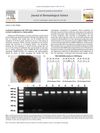
November 2009 in “Journal of Dermatological Science”
13 citations
,
November 2009 in “Journal of Dermatological Science” This article discusses various dermatological studies cited by previous authors and reports no new clinical results.
 January 2012 in “Journal of Investigative Dermatology”
 Some Greek melanoma patients have gene mutations linked to increased cancer risk, a new color feature helps diagnose melanoma, the incidence of a skin condition in the Netherlands is rare, and a gene possibly affects male-pattern baldness.
1 citations
,
April 2018 in “Journal of Investigative Dermatology” The Trichodysplasia spinulosa virus protein can cause abnormal hair growth in mice.
22 citations
,
March 1994 in “Journal of Heredity” In this study, researchers identified a mutation in mice that causes hair loss and immune system issues, located on chromosome 18.
130 citations
,
April 2001 in “Journal of Investigative Dermatology” This study reports the first keratin gene mutation affecting the tail domain, leading to a unique cytoskeletal abnormality and severe epidermal hyperkeratosis, highlighting the tail domain's critical role in keratin organization.
21 citations
,
June 2009 in “Mammalian genome” This study describes a mouse model for Marie Unna Hereditary Hypotrichosis, identifying mutations in the hairless gene that result in sparse or absent hair and cyst-like hair follicles.
 December 2013 in “Appetite”
 This study identified a nonfunctional Itpr3 gene in BTBR mice, attributed to a 12-bp deletion, which likely causes their simultaneous hair loss and taste perception deficits.
This study mapped the curly mutation in mice to a specific region on chromosome 11, identifying it as a candidate model for studying human genetic hair disorders.
May 2018 in “The journal of immunology/The Journal of immunology” This study identified that patients with compound heterozygous mutations in FOXN1 exhibited severe T-cell lymphopenia but retained normal hair and nail development, indicating a distinct clinical phenotype from classic FOXN1 cases.
September 1997 in “Clinical and Experimental Dermatology” 578 citations
,
April 1993 in “Cell” This study found that mice with a disrupted TGFα gene display a curly whisker-coat phenotype, similar to waved-1 mice, suggesting TGFα's crucial role in skin architecture and hair development.
June 2018 in “Journal of the American Veterinary Medical Association” Three related Persian cats have a rare, likely hereditary skin condition causing hair loss and poor coat quality, with limited treatment options.
76 citations
,
January 1998 in “Mammalian Genome”  December 2024 in “Kırıkkale Üniversitesi Tıp Fakültesi Dergisi”
 This study found that chromosomal microarray analysis identified copy number variations in 12% of patients with dysmorphic features and congenital anomalies, demonstrating its potential as a diagnostic tool, especially for rare CNVs and immune deficiency linked to the deletion of CTLA4.
9 citations
,
January 2014 in “Molecular Genetics and Metabolism Reports” This study discovered that a specific G to C mutation in the ornithine aminotransferase gene is linked to the retarded hair growth phenotype in mice and may serve as a model for human gyrate atrophy.
10 citations
,
March 1997 in “Pediatric Dermatology” This case report describes a patient with trichothiodystrophy presenting with autism, mental retardation, and seizures, characterized by distinct hair abnormalities under microscopy.
 June 2023 in “British Journal of Dermatology”
 In this case report, researchers described a female child with total alopecia due to a mutation in the SNRPE gene, emphasizing the need for updated genetic testing as knowledge advances to avoid diagnostic delays in hereditary nonsyndromic hypotrichosis.
 76 citations
,
June 2018 in “EMBO Reports”
76 citations
,
June 2018 in “EMBO Reports” This study demonstrates that YAP and TAZ are essential for initiating basal and squamous cell carcinomas in mice, and suggests targeting these pathways could be beneficial for treating skin cancers.
78 citations
,
May 2012 in “Journal of Investigative Dermatology” A specific gene mutation causes woolly hair and hair loss.
100 citations
,
November 1997 in “Human Genetics” In this study, researchers found that the prevalent Glu 410 Lys mutation in hHb6 and a new Glu 403 Lys mutation in hHb1 are linked to monilethrix, suggesting a mutational hotspot in type II hair keratins.
5 citations
,
June 2008 in “British Journal of Dermatology” March 2026 in “Journal of Investigative Dermatology”