 February 2020 in “Definitions”
 This study found that finasteride treatment may decrease contraction of seminal vesicle tissue and alter some semen parameters in male rabbits.
November 2025 in “OPAL (Open@LaTrobe) (La Trobe University)” This study found that the leaf extract of Tectona grandis and its major bioactive constituents moderately inhibit the 5α-reductase enzyme, which is linked to androgenetic alopecia, and also possess anti-inflammatory properties, showing promise as dual-action candidates for managing this condition.
 3 citations
,
February 2021 in “Molecules”
3 citations
,
February 2021 in “Molecules” In this study, researchers developed a sensitive assay to measure the inhibition of steroid 5-α reductase (5AR) by chemicals like finasteride and dutasteride, revealing species-specific differences in inhibitor efficacy between human and fish cell lines.
 13 citations
,
August 2007 in “Bioorganic & medicinal chemistry letters”
13 citations
,
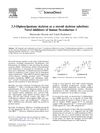
August 2007 in “Bioorganic & medicinal chemistry letters” This study developed a new competitive 5alpha-reductase inhibitor with an IC(50) of 0.84 microM using a novel chemical structure.
5 citations
,
January 2018 in “Interdisciplinary sciences: computational life sciences” Accurate protein modeling can help develop new treatments for prostate cancer and other diseases.
3 citations
,
June 2018 in “Bioorganic & medicinal chemistry” This study identified that derivatives 4, 4b, and 4c strongly inhibited the enzyme type 1 5α-reductase and decreased reproductive organ weights in hamsters, suggesting potential as prodrugs for prostate tumor growth inhibition.
![Benzo[c]quinolizin-3-ones: A Novel Class of Potent and Selective Nonsteroidal Inhibitors of Human Steroid 5α-Reductase 1](/images/assets/ff6e6cbe-cb9c-4d11-87ef-671d28ffd4fa/small/15506.jpg) 28 citations
,
September 2000 in “Journal of Medicinal Chemistry”
28 citations
,
September 2000 in “Journal of Medicinal Chemistry” This study identified novel compounds as selective inhibitors of the type 1 isoenzyme of 5α-reductase, displaying promising potential for treating DHT-dependent disorders such as acne and androgenic alopecia.
 August 2025 in “ACS Omega”
 This study synthesized and evaluated hydroxycinnamate derivatives for their ability to inhibit human SRD5A1, finding that three compounds showed significant inhibitory activity and low cytotoxicity. Compound 10a notably reduced SRD5A1 protein expression in cells, suggesting potential for nonsteroidal treatment of androgen-related conditions.
54 citations
,
November 1995 in “The Journal of Clinical Endocrinology & Metabolism” In this study, females with 5 alpha-reductase-2 deficiency exhibited decreased body hair, normal sebum production, and delayed menarche, suggesting a role for DHT in hair growth and menstrual function.
 4 citations
,
August 2021 in “Biomedicine & Pharmacotherapy”
4 citations
,
August 2021 in “Biomedicine & Pharmacotherapy” This review summarizes the association between 5-alpha reductase inhibitors and depression, discussing potential mechanisms such as neuroactive steroid alterations and neuroinflammation, but reports no new clinical results.
 April 1992 in “Current opinion in therapeutic patents”
 This study reports the development of novel 4-amido-Δ4,6-steroids as potential inhibitors of 5α-reductase, showing promising in vitro results for conditions like acne and benign prostatic cancer.
August 2025 in “OPAL (Open@LaTrobe) (La Trobe University)” This study found that hydroxycinnamate derivatives, especially a compound named 10a, effectively inhibited SRD5A1 activity and protein expression in cell assays, suggesting potential for treating androgen-related conditions.
April 2011 in “Journal of Medicinal Plants Research” This study found that Ocimum basilicum L. showed the highest 5α-reductase inhibitory activity among ten Thai plants, despite no correlation between enzyme inhibition and total phenolic content.
 1 citations
,
October 2020 in “Current Drug Discovery Technologies”
1 citations
,
October 2020 in “Current Drug Discovery Technologies” This study investigated various synthesized 5-reductase inhibitors and found that compound 6 had the highest anti-androgenic activity and receptor affinity compared to finasteride, showing potential due to its improved efficacy and bioavailability for further research in treating lower urinary tract symptoms.
18 citations
,
December 2005 in “Journal of Medicinal Chemistry” In this study, novel substituted benzoyl benzoic acids and phenylacetic acids were potent and selective inhibitors of human steroid 5alpha-reductase type 2, with one compound showing promising bioavailability in rats for potential clinical evaluation.
 July 2020 in “bioRxiv (Cold Spring Harbor Laboratory)”
 This study reports that structural and biochemical analysis of steroid 5α-reductases clarifies how they mediate steroid reduction with NADPH, potentially aiding in designing targeted therapies.
 August 2024 in “Biomedical Journal of Scientific & Technical Research”
 This review discusses the role of steroid 5 alpha reductase 2 in converting testosterone to DHT and its association with conditions like benign prostatic hyperplasia and prostate cancer; it reports no new results.
56 citations
,
December 2002 in “The Journal of Clinical Endocrinology & Metabolism” This study suggests that in human osteoblast-like cells, the 5alpha-reductase type 1 isozyme predominantly catalyzes the conversion of testosterone to DHT, which may play a role in bone homeostasis.
 137 citations
,
March 2006 in “Cns Drug Reviews”
137 citations
,
March 2006 in “Cns Drug Reviews” This review explores finasteride's effects on neuroactive steroid levels and their potential influence on disorders like depression and alcohol withdrawal but reports no new clinical findings.
10 citations
,
March 2023 in “Journal of Chemistry” This study identified ten novel compounds that may effectively target steroid 5 alpha-reductase 2 (5αR-2) for potential treatment of benign prostate hyperplasia, exhibiting comparable binding energies to existing drugs like finasteride and dutasteride.
 12 citations
,
February 1997 in “British Journal of Dermatology”
12 citations
,
February 1997 in “British Journal of Dermatology” This study found that 5α–reductase activity is higher in infrainfundibular keratinocytes compared to interfollicular epidermal keratinocytes, suggesting a potential role in acne-related follicular changes.
 April 2026 in “Communications Biology”
 In this study of Danioninae species, researchers reported that the presence of breeding tubercles on the pectoral fins is conserved in certain species and linked to local androgen conversion, with steroid 5-α-reductase playing a crucial role in their development.
8 citations
,
June 2017 in “Steroids” This study evaluated novel steroid compounds for their ability to inhibit 5α-reductase, showing that compound 16a significantly reduced rat prostate weight more than epristeride and exhibited excellent in vitro inhibitory potency, indicating its potential as a lead candidate for further benign prostatic hyperplasia drug research.
 37 citations
,
September 2018 in “Psychoneuroendocrinology”
37 citations
,
September 2018 in “Psychoneuroendocrinology” This study found that finasteride treatment in male rats led to enduring effects on depressive-like behavior, hippocampal neurogenesis and neuroinflammation, and gut microbiota composition after withdrawal.
 44 citations
,
July 2012 in “Endocrine Practice”
44 citations
,
July 2012 in “Endocrine Practice” This review highlights the need for a deeper understanding of 5alpha-reductases and neuroactive steroids to reduce potential adverse effects of 5alpha-reductase inhibitors used for conditions like benign prostatic hyperplasia and androgenic alopecia, but reports no new clinical results.
 November 2012 in “Endocrine Practice”
 This review outlines the physiological roles of 5a-reductases and highlights the need for further research to better understand their function and minimize adverse effects from their inhibitors used in treatment.
91 citations
,
May 2003 in “PubMed” This study found that neuroactive steroids, through their interaction with the sigma1 receptor, influence the acquisition of cocaine's rewarding effects in mice, suggesting a role in drug addiction vulnerability.
This study found that 2-hydroxy-1,4-naphthoquinone was the most effective inhibitor of steroid 5α-reductase, showing stronger inhibition than avicequinone C in HaCaT cell assays.
 22 citations
,
January 2001 in “Chemical & Pharmaceutical Bulletin”
22 citations
,
January 2001 in “Chemical & Pharmaceutical Bulletin” This study found that two new progesterone derivatives showed higher antiandrogenic effects and 5α-reductase inhibition than finasteride in hamsters, particularly reducing seminal vesicle weight and flank organ size.
 December 2018 in “Actas urológicas españolas”
 This study reported that cognitive biopsy diagnosed prostate cancer in 44% of patients with at least one previous negative biopsy, with higher detection rates in lesions classified as PI-RADS 4 and 5.