6 citations
,
August 2016 in “Journal of Visualized Experiments” This article describes a method using the CUBIC protocol to clarify and visualize molecular and cellular interactions in mouse skin biopsies at single cell resolution, but does not provide new biological findings.
March 2026 in “Journal of the European Academy of Dermatology and Venereology” This study introduced and validated the VESALT, a visual extension of the Severity of Alopecia Tool, finding it offers improved reliability and user-friendliness over SALT by incorporating pattern recognition and broader coverage, including non-scalp regions, in assessing alopecia areata severity.
 April 2023 in “The journal of investigative dermatology/Journal of investigative dermatology”
 This study found that treatment with ritlecitinib led to significant scalp hair regrowth in patients with alopecia areata at Weeks 24 and 48, with higher response rates observed in those receiving 50 mg compared to 30 mg doses.
1 citations
,
January 2015 In this study, gel containing apigenin and celery herb extract was observed to effectively stimulate hair growth and did not cause skin irritation in male Sprague-Dawley rats.
 December 2024 in “Clinical and Experimental Dermatology”
 In this study, researchers found that ritlecitinib, a JAK3/TEC inhibitor, significantly improves hair regrowth, quality of life, and psychological well-being in patients with severe alopecia areata who had inadequate or no response to baricitinib, a JAK1/2 inhibitor.
March 2026 in “Pediatric Dermatology” This study observed that GPT-4o, a generative AI model, showed high concordance with human providers in automating image-based SALT scores for assessing alopecia areata, suggesting its potential in assisting clinical evaluations without additional training.
97 citations
,
January 1999 in “International Journal of Dermatology” Pityriasis rubra pilaris is a rare skin disorder with reddish-orange patches and thickened skin, needing better treatment understanding.
2 citations
,
July 2025 in “Drug development & registration” This study developed and tested a new algorithm for analyzing coat and skin coloration in laboratory animals, using digital images and hierarchical color clustering, which effectively quantified color proportions and tracked changes over time without specialized software.
 November 2024 in “SKIN The Journal of Cutaneous Medicine”
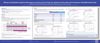
 This study found that ritlecitinib, taken daily, led to scalp, eyebrow, and eyelash hair regrowth in patients aged 12 and older with severe and very severe alopecia areata over a 24-month period.
July 2025 in “Journal of Neonatal Surgery” This study utilized U-Net's image-processing capabilities to achieve 92% accuracy in segmenting individual hair strands, enhancing early detection and reliable identification of hair fall areas, which assists in addressing challenges of subtle hair thinning that are difficult to see otherwise.
 September 2019 in “Journal of Investigative Dermatology”
 In this study, dose-response modeling predicted that once-daily abrocitinib doses of 100 mg and 200 mg may provide a clinically meaningful response in treating moderate-to-severe atopic dermatitis compared to placebo.
17 citations
,
January 2016 in “Journal of Drug Delivery” In this study, PEG and keratin scaffolds selectively influenced protein release rates based on charge and size, suggesting their potential for targeted delivery of protein therapeutics.
 January 2024 in “American journal of clinical dermatology”
 This study reports that ritlecitinib, when used for up to 24 months in patients aged 12 and older with alopecia areata, has an acceptable safety profile, with a similar proportion of adverse events in both ritlecitinib and placebo groups in the placebo-controlled cohort.
March 2026 in “SKIN The Journal of Cutaneous Medicine” This study found that ritlecitinib was well tolerated in children aged 6 to under 12 years with severe alopecia areata, with ongoing trials examining its efficacy and safety over a 24-week period and in long-term use up to 36 months.
November 2024 in “SKIN The Journal of Cutaneous Medicine” This study found that daily treatment with ritlecitinib 50 mg over 24 months reduced the number of patients in the highest categories of scalp hair loss, with improvements seen in patient responses over time.
76 citations
,
January 1998 in “Mammalian Genome” February 2026 in “The Journal of Dermatology” This study reports that ritlecitinib 50 mg, with or without an initial loading dose, demonstrated meaningful and sustained efficacy up to 24 months in the Asian subpopulation with severe alopecia areata, showing significant scalp, eyebrow, and eyelash hair regrowth, along with an acceptable safety profile.
October 2021 in “bioRxiv (Cold Spring Harbor Laboratory)” This study introduces the Hair Cell Analysis Toolbox (HCAT), a machine-learning software that automates the analysis of cochlear hair cells, enabling unbiased and comprehensive imaging data interpretation.
 45 citations
,
January 2010 in “Journal of Veterinary Medical Science”
45 citations
,
January 2010 in “Journal of Veterinary Medical Science” This study identified a mutation in the keratin 71 gene that causes curly hair in certain rats, advancing our understanding of hair formation.
7 citations
,
July 2023 in “Immunotherapy” Ritlecitinib works well and is safe for treating alopecia areata.
54 citations
,
February 1994 in “Journal of Investigative Dermatology” January 2025 in “Interdisciplinary Research in Medical Sciences Specialty” This article proposes a novel approach to remodel the microenvironment of radiotherapy-induced skin defects, highlighting the lack of a standardized animal model as a barrier to progress in this field.
 September 2021 in “Physiology News”
 This abstract appears to consist entirely of repeated color specifications and logo guidelines, providing no research findings or new results.
 February 2026 in “Zenodo (CERN European Organization for Nuclear Research)”
 This study introduces the N-K Healing Series, an alternative geometric approach to medicine, claimed to restore tissue fully and eliminate pain without the traditional drawbacks, allegedly achieving results beyond mainstream medical treatments in simulated injury scenarios.
 2 citations
,
June 2024 in “Frontiers in Plant Science”
2 citations
,
June 2024 in “Frontiers in Plant Science” This study found that RALF peptides, through liquid-liquid phase separation, form condensates with pectin and other proteins, playing a pivotal role in plant development and stress response regulation.
 2 citations
,
July 2005 in “International Joint Conference on Artificial Intelligence”
2 citations
,
July 2005 in “International Joint Conference on Artificial Intelligence” This study suggests that EREG, released from ORS cells, may promote hair growth by activating specific receptors and modulating ROS generation, offering a potential new treatment for hair loss.
This meta-analysis reports that ritlecitinib significantly improved hair growth in alopecia areata patients compared to placebo, although its potential requires further clinical exploration.
 January 2026 in “http://isrctn.com/”
 The food supplement may help reduce hair shedding and improve hair growth.
 6 citations
,
February 2016 in “British Journal of Dermatology”
6 citations
,
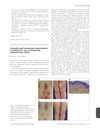
February 2016 in “British Journal of Dermatology” A woman with a drug allergy to anakinra was successfully desensitized, allowing her to continue treatment without allergic reactions.