February 2026 in “Exploration” This review summarizes research on scar formation and inhibition mechanisms, discussing emerging therapies like gene therapy and stem cell treatments, but notes ongoing challenges for clinical application, including treatment personalization and outcome sustainability.
This study identified the FGF5:c.578C>T variant as linked to long hair in Akitas in Japan and suggests that genetic testing could help improve their breeding practices and welfare.
May 2023 in “Asian Journal of Transfusion Science” In this study, conducted at a tertiary care hospital in Chennai, adverse events during blood donation were observed in 0.42% of donors, predominantly affecting first-time male donors, and were mostly vasovagal reactions such as giddiness and sweating.
 February 2026 in “Pharmaceuticals”
 This study introduced the KRDQN predictive framework, which outperformed existing methods in predicting adverse drug reactions and provided interpretable insights into drug mechanisms, aiding pharmacovigilance and clinical decision-making.
This study suggests that the ANE syndrome mutation in yeast Nop4, analogous to human RBM28, disrupts protein folding and protein-protein interactions, contributing to ribosomal dysfunction.
82 citations
,
July 2022 in “Bioengineering & Translational Medicine” This review examines how biochemical and biophysical induction factors influence cell fate in tissue engineering and reports no new experimental results.
 August 2023 in “European Journal of Plastic Surgery”
 This study found that although three-dimensional bioprinting in plastic and reconstructive surgery is rapidly advancing, complete tissue systems have not yet been successfully printed due to ongoing challenges.
 December 2023 in “LA Referencia (Red Federada de Repositorios Institucionales de Publicaciones Científicas)”
 Both photobiomodulation and low-frequency treatments effectively reduce body measurements.
June 2020 in “Journal of Face Aesthetics” This article describes a case report where platelet-rich plasma mesotherapy was used as an alternative treatment for androgenetic alopecia, noting its autologous nature, minimal invasiveness, and absence of serious side effects, but reports no new results.
December 2020 in “Journal of Face Aesthetics” This study found that trichoscopy, a non-invasive diagnostic method, may effectively differentiate between types of focal alopecia in the parietal area in adult women, indicating specific trichoscopic features for conditions like alopecia areata, discoid lupus erythematosus, and lichen planopilaris.
16 citations
,
February 2014 in “Iranian Red Crescent Medical Journal” This qualitative study revealed that women with PCOS often see themselves as less feminine, affected by symptoms like excess hair and irregular menstruation, which challenged their gender roles.
March 2021 in “LA Referencia (Red Federada de Repositorios Institucionales de Publicaciones Científicas)” This case report highlights the successful treatment of dermatophytosis in a Shih Tzu caused by Trichophyton rubrum, suggesting it should be considered in differential diagnoses for crusted skin lesions in dogs.
 4 citations
,
July 2017 in “British Journal of Dermatology”
4 citations
,
July 2017 in “British Journal of Dermatology” This review presents the top 10 research priorities for hair loss management (excluding alopecia areata) as identified by a Hair Loss Priority Setting Partnership aimed at guiding future studies important to patients and clinicians.
 5 citations
,
September 1998 in “Atlas of the oral and maxillofacial surgery clinics of North America”
5 citations
,
September 1998 in “Atlas of the oral and maxillofacial surgery clinics of North America” Hair transplantation and micrografting, used for baldness, involve moving hair follicles from hair-rich to bald areas, requiring careful procedure and post-care for success.
This abstract discusses pellagra as a nutritional disorder characterized by a known set of symptoms but reports no new clinical findings; the authors review existing knowledge and suggest further research.
 41 citations
,
April 2017 in “JAMA Dermatology”
41 citations
,
April 2017 in “JAMA Dermatology” This study found that the top 10 film villains have a higher frequency of significant dermatologic features than the top 10 heroes, which may contribute to societal prejudice against individuals with skin conditions.
 32 citations
,
September 1989 in “Medical Clinics of North America”
32 citations
,
September 1989 in “Medical Clinics of North America” This review describes the types of skin lesions associated with systemic lupus erythematosus, discussing their histopathological features, serologic associations, pathogenesis, and prognostic implications.

A bald man grew hair on his head after taking a drug called diazoxide, but lost it again when he stopped the medication.
 June 2023 in “Romanian Medical Journal”
 In this case study, a 53-year-old female with multiple autoimmune symptoms was diagnosed with Mixed Connective Tissue Disease, confirmed by specific antibodies, and showed significant clinical improvement after one year of treatment.
 29 citations
,
January 2007 in “Dermatologic Clinics”
29 citations
,
January 2007 in “Dermatologic Clinics” This study found that photodynamic therapy using 5-aminolevulinic acid or methyl aminolevulinate is a safe and effective treatment for acne vulgaris, particularly with 30 to 60 minutes of contact time and three treatments for significant long-term improvement.
 12 citations
,
December 2002 in “Archives of Dermatology”
12 citations
,
December 2002 in “Archives of Dermatology” This case report describes a 49-year-old woman with Sweet syndrome who experienced complete resolution of skin lesions after a prednisone treatment regimen.
 March 2022 in “The Journal of Family Practice”
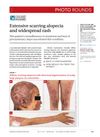
 Following treatment plans is crucial to prevent worsening skin and hair conditions.
 98 citations
,
May 2008 in “British Journal of Dermatology”
98 citations
,
May 2008 in “British Journal of Dermatology” This review discusses evidence-based guidance for managing primary cicatricial alopecias but reports no new clinical results, highlighting significant gaps in knowledge and the need for more quality trials.
 37 citations
,
August 2013 in “Facial Plastic Surgery Clinics of North America”
37 citations
,
August 2013 in “Facial Plastic Surgery Clinics of North America” This review discusses facial hair transplantation techniques for natural-appearing results in restoring eyebrows, beards, goatees, sideburns, and repairing alopecic scarring, reporting no new clinical results.
 18 citations
,
July 2008 in “Current Oncology Reports”
18 citations
,
July 2008 in “Current Oncology Reports” EGFR cancer drugs often cause a rash, which can lead to distress and isolation, but may also improve outcomes for some cancer patients. Current treatments for the rash are limited, but a compound called menadione shows promise.
 7 citations
,
June 2010 in “Journal of The American Academy of Dermatology”
7 citations
,
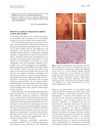
June 2010 in “Journal of The American Academy of Dermatology” This paper reports a single case of lichenoid cutaneous sarcoidosis that was unresponsive to standard treatments but showed marked improvement with the administration of oral tranilast.
 6 citations
,
July 2017 in “Clinics in Plastic Surgery”
6 citations
,
July 2017 in “Clinics in Plastic Surgery” This article reviews the management of head and neck burns across different phases but presents no new clinical results.
 4 citations
,
December 2013 in “International Journal of Dermatology”
4 citations
,
December 2013 in “International Journal of Dermatology” This correspondence discusses nasal sporotrichosis in children and does not report any clinical results.
 2 citations
,
July 2008 in “Paediatrics & child health”
2 citations
,
July 2008 in “Paediatrics & child health” This case report describes a 10-year-old girl with advanced puberty signs and resistant acne, highlighting potential early-onset puberty with associated growth patterns.
 1 citations
,
December 2021 in “Journal of drugs in dermatology”
1 citations
,
December 2021 in “Journal of drugs in dermatology” In this double-blind study, a novel hyaluronic acid gel for lip augmentation was found to be as effective and safe as a commercially available gel, with similar adverse event profiles and high patient and investigator improvement ratings over six months.