 January 2024 in “International Ayurvedic medical journal”
 This study explores how Ayurveda concepts, specifically Prakruti, relate to male pattern baldness, suggesting that individual constitutional types may predict susceptibility to earlier hair loss when influenced by modern lifestyle factors.
 September 2025 in “International Journal of Ayurvedic Medicine”
 This study observed distinct variations in hair medulla patterns among people with different Ayurvedic Prakruti types, linking stronger hair integrity to Kapha-dominant types and weaker, fragmented medullae to Vata and Pitta-dominant types, potentially aiding in Dosha-specific hair care and assessment.
 June 2023 in “Journal of Ayurvedic and Herbal Medicine”
 This study concluded that age is a significant risk factor for hair fall, as older age increases the likelihood of developing male pattern baldness among adults.
 January 2025 in “Journal of Ayurveda and Integrated Medical Sciences”
 This review compiles references from classical Ayurveda texts on hair health, disorders, and treatments, emphasizing a holistic approach without reporting new clinical results.
June 2026 in “International Journal of Ayurvedic Medicine” The study found that Asthimajjapachak Churna led to greater improvement in managing hair fall among young females compared to Shwadamshtradi Rasayana Churna, particularly through alleviation of Asthigata dosha.
 14 citations
,
September 2020 in “Clinical, cosmetic and investigational dermatology”
14 citations
,
September 2020 in “Clinical, cosmetic and investigational dermatology” This study found that a hair serum containing amla extract, freeze-dried coconut water, and selenium significantly improved hair growth rate, density, and reduced hair fall among healthy volunteers over 90 days.
 1 citations
,
October 2022 in “Asian journal of medical sciences”
1 citations
,
October 2022 in “Asian journal of medical sciences” This study found trichoscopy to be a highly sensitive, non-invasive method for diagnosing tinea capitis in children, which could be valuable in resource-limited settings lacking mycological culture facilities.
January 2026 in “Clinical Case Reports” This review discusses the etiology of moth-eaten alopecia patterns in lichen planopilaris and emphasizes the importance of early diagnosis and treatment to prevent permanent scarring, offering no new empirical findings.
 March 2025 in “Journal of Controlled Release”
 This study found that a biocomposite microneedle system, which includes selenium nanozyme and hypoxic extracellular vesicles, enhanced hair density and follicle diameter in androgenetic alopecia mice by fighting inflammation, promoting blood vessel growth, reducing reactive oxygen species, and counteracting androgen effects.
 January 2021 in “Indian journal of sexually transmitted diseases and AIDS”
 A dermatologist helped identify syphilis in a teenager who only had hair loss.
 2 citations
,
March 2015 in “Clinical and Experimental Dermatology”
2 citations
,
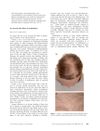
March 2015 in “Clinical and Experimental Dermatology” This article addresses an unusual side effect of azathioprine but provides no abstract or detailed results, focusing instead on a specific dermatological perspective.
 1 citations
,
July 2019 in “Clinical Rheumatology”
1 citations
,
July 2019 in “Clinical Rheumatology” Leflunomide is more likely to help treat alopecia areata than cause it.
 August 2023 in “International Ayurvedic medical journal”
 This case study describes the successful treatment of a 7-year-old girl with alopecia areata using Ayurvedic approaches targeting skin and autoimmune issues, suggesting a potential alternative to long-term oral corticosteroids, which can cause undesirable side effects.
 May 2023 in “Journal of complementary medicine & alternative healthcare”
 The authors concluded that Ayurveda's concepts of eight undesired body types, such as hereditary obesity and albinism, align with modern genetic understanding, suggesting these traits have genetic predispositions as originally mentioned in ancient Indian medical texts.
 February 2021 in “PDEAS International Journal of Research in Ayurved and Allied Sciences”
 This article reviews Ayurvedic concepts and treatments related to hair and reports no new clinical results.
 October 2020 in “Ayurline: international journal of research in indian medicine”
 This review investigates the causes of greying hair in children, but reports no new clinical findings.
 43 citations
,
October 2008 in “Indian Journal of Plastic Surgery”
43 citations
,
October 2008 in “Indian Journal of Plastic Surgery” This narrative review explores the historical use and significance of cosmetics in ancient India, detailing various formulations and botanical ingredients documented in Ayurvedic texts, but it reports no new research findings.
 1 citations
,
April 2018 in “International journal of Ayurvedic medicine”
1 citations
,
April 2018 in “International journal of Ayurvedic medicine” This review discusses Ayurvedic approaches to premature greying of hair, focusing on detoxifying therapies like panchakarma and various rejuvenative treatments, but presents no new empirical findings.
 11 citations
,
July 2020 in “International Journal of Ayurvedic Medicine”
11 citations
,
July 2020 in “International Journal of Ayurvedic Medicine” This study identified 26 bioactive compounds in the ethanol extract of Indigofera tinctoria leaves, which are linked to various therapeutic activities, supporting its traditional medicinal use in treating numerous health conditions.
 10 citations
,
May 2018 in “Nutrition and Cancer”
10 citations
,
May 2018 in “Nutrition and Cancer” This article reviews current research on spice-derived nutraceuticals for treating melanoma and skin cancer, noting emerging evidence that these natural substances may offer preventative and protective benefits against cancer, amidst increased global interest.
 2 citations
,
December 2023 in “Journal of Ayurveda and Integrated Medical Sciences”
2 citations
,
December 2023 in “Journal of Ayurveda and Integrated Medical Sciences” In this case study, a 16-year-old boy with alopecia areata experienced complete hair regrowth after 4 months of Ayurvedic treatments, including Shamana Chikitsa and Raktamokshna, with no adverse effects reported.
 1 citations
,
April 2022 in “International journal of Ayurveda and pharma research”
1 citations
,
April 2022 in “International journal of Ayurveda and pharma research” This case study reports on an Ayurvedic treatment approach for a 22-year-old woman with Polycystic Ovarian Disease showing symptomatic relief and improvements in ultrasound findings.
 June 2026 in “International Journal of Ayurvedic Medicine (Hyderabad)”
 This study reviewed trichoscopic images to assess hair loss, finding that ayurvedic signs (lakshanas) aligned with modern trichoscopic parameters, potentially aiding accurate diagnosis and management of hair conditions.
 June 2026 in “International Journal of Ayurvedic Medicine”
 In this study, researchers investigated the alignment of trichoscopic findings with ayurvedic signs (lakshanas) for diagnosing hair loss, suggesting that integrating these perspectives could enhance diagnostics and management of hair and scalp conditions.
 June 2026 in “International Journal of Ayurveda and Pharma Research”
 This study documented a case where Ayurvedic treatments for plaque psoriasis significantly reduced the severity of symptoms, as measured by an 84% improvement in the Psoriasis Area and Severity Index score from 6.5 to 1.04.
 May 2026 in “International Research Journal of Ayurveda & Yoga”
 This review explores the Charaka samhita's concept of Ashtanindita purusha, identifying eight physical constitutions traditionally regarded as undesirable due to their association with various diseases, and aims to correlate these with contemporary genetic, endocrinological, and metabolic disorders.
 January 2026 in “AYUSHDHARA”
 This case study highlights that an Ayurvedic treatment approach involving Basti Chikitsa and Tilmooladi Churna over 3 months may improve menstrual regularity and hormonal profiles in a woman with polycystic ovary syndrome.
 December 2025 in “International Journal of Research in Ayurveda and Pharmacy”
 This case report details a 19-year-old female with autoimmune hair loss successfully managed using an integrated Ayurvedic approach, achieving complete hair regrowth and symptom resolution within two months, suggesting potential efficacy for autoimmune conditions warranting further study.
 September 2025 in “AYUSHDHARA”
 This case report describes a 5-year-old girl with Folliculitis Decalvans, whose symptoms of scaling, itching, and painful pustules improved after two weeks of Ayurvedic treatment, suggesting this approach may be effective for managing infectious scalp diseases.
 September 2025 in “International Journal of Ayurveda and Pharma Research”
 In this clinical study, researchers found that treating hair loss with Anutaila Nasya combined with Keshamitra Yoga was more effective in alleviating symptoms of Keshpatana compared to Keshamitra Yoga alone, with a significant reduction in hair fall observed.