10 citations
,
January 1925 in “Archives of Dermatology” This article discusses a historical case of a rare skin disorder involving alopecia and follicular plugs reported in 1907; it presents no new findings.
5 citations
,
May 2015 in “JRSM open” If a child is losing a lot of eyelashes and it keeps happening, doctors should look carefully at their health history because it might be a sign of a different health problem.
1 citations
,
March 2022 in “Anais brasileiros de dermatologia/Anais Brasileiros de Dermatologia” This study found that trichoscopy is a useful tool in differentiating between alopecia areta and trichotillomania on the eyebrows based on distinct hair and follicle features.
19 citations
,
March 1999 in “PubMed” This review discusses trichotillomania, its prevalence, and treatment options, emphasizing that many sufferers experience delays in treatment due to secrecy and shame, but reports no new research findings.
September 2024 in “Actas Dermo-Sifiliográficas” This study discusses trichodynia, a painful scalp condition often linked to various forms of alopecia and psychiatric comorbidities, highlighting its clinical diagnosis, lack of specific treatments, and suggesting the need for more research to explore effective therapies.
 October 2025 in “Indian Dermatology Online Journal”
 In this case report, researchers documented a young girl's eyebrow hair loss attributed to trichotillosis influenced by observing Jain monks' ritualistic hair plucking, highlighting the role of cultural practices in shaping compulsive behaviors.
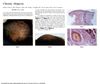 June 1995 in “Archives of Dermatology”
 This case report describes a 27-year-old woman with a family history of hair thinning and a 6-year history of alopecia on the scalp.
 September 2016 in “Journal of The American Academy of Dermatology”
 This case study identified the condition as Monilethrix in a 17-year-old female, characterized by a beaded hair appearance and linked to a genetic cause.
10 citations
,
March 1997 in “Pediatric Dermatology” This case report describes a patient with trichothiodystrophy presenting with autism, mental retardation, and seizures, characterized by distinct hair abnormalities under microscopy.
This chapter reviews the clinical and morphological diagnostic features of various hair dysplasias, including atypical pili torti, pseudomonilethrix, and trichothiodystrophy, and reports no new results.
219 citations
,
September 2016 in “American Journal of Psychiatry” This article reviews trichotillomania, highlighting its differences from OCD and recommending treatments like habit reversal therapy and specific medications, but reports no new clinical results.
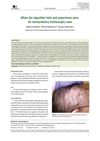 January 2026 in “Forum Dermatologicum”
 This case study examined a 72-year-old woman with unique hair shaft constrictions consistent with monilethrix, despite features atypical for this condition, ultimately reaching a diagnosis that led to successful improvement using oral minoxidil and reduced hair trauma.
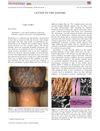 1 citations
,
February 2018 in “Australasian journal of dermatology”
1 citations
,
February 2018 in “Australasian journal of dermatology” Advanced imaging techniques are crucial for accurately diagnosing Monilethrix, a rare hair disorder.
January 2022 in “Clinical Cases in Dermatology” This review discusses the characteristics, potential genetic components, and treatment options for trichotillomania, a psychiatric condition that involves compulsive hair pulling, without reporting new clinical results.
42 citations
,
September 1985 in “British Journal of Dermatology” This study found that trichothiodystrophic hair shows reduced and disoriented protein deposition in follicles, with both the cuticle and cortex affected, providing localized structural insights into keratin abnormalities.
2 citations
,
May 2024 in “International Journal of Dermatology” 175 citations
,
December 1980 in “Archives of Dermatology” In this study, researchers examined two new cases of trichothiodystrophy and observed that the condition is linked to decreased synthesis of high-sulfur matrix proteins in hair.
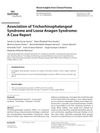 1 citations
,
January 2020 in “Skin appendage disorders”
1 citations
,
January 2020 in “Skin appendage disorders” This case study documents the co-existence of trichorhinophalangeal syndrome and loose anagen syndrome in a patient, highlighting a previously unreported association between the two conditions.
July 2025 in “Dermatology Practical & Conceptual” In this study, researchers found that hair alterations such as frontal-occipital inversion in males and a high occipital hairline may aid in diagnosing the uncommon condition TRPS.
47 citations
,
November 1966 in “Archives of Dermatology” This study found that trichorrhexis nodosa, a common cause of unexplained hair loss, is primarily caused by trauma rather than a metabolic defect.
June 2026 in “Journal of Clinical Practice and Medical Case Report.” This case report described a 16-year-old girl with trichotillomania, highlighting the challenges in diagnosing the condition due to its similarity with alopecia areata and the sociocultural barriers preventing acceptance of psychiatric treatment.
 15 citations
,
May 2014 in “Journal of dermatology”
15 citations
,
May 2014 in “Journal of dermatology” This review suggests the existence of a new syndrome characterized by keratosis pilaris, ulerythema ophryogenes, and monosomy 18p, emphasizing its potential utility in diagnosing monosomy 18p.
 13 citations
,
June 2012 in “Journal of Dermatological Case Reports”
13 citations
,
June 2012 in “Journal of Dermatological Case Reports” This report describes an 8-year-old male with trichotillomania, confirmed by trichoscopy showing characteristic hair damage and patterns.
 January 2026 in “Cosmoderma”
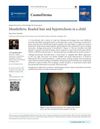
 In this clinical case study, a 9-year-old girl was diagnosed with monilethrix, a hereditary hair shaft disorder characterized by weak, beaded hair, with management focusing on minimizing hair trauma.
13 citations
,
November 1985 in “International Journal of Dermatology” This study examined patients with trichostasis spinulosa and identified distinct differences in the distribution and microscopic appearances of lesions compared to keratosis pilaris and eruptive vellus hair cysts.
4 citations
,
January 2011 in “International Journal of Trichology” This case series reported that patients with trichotillomania and pseudofolliculitis experienced improvement in itch symptoms and hair regrowth after receiving topical steroids, topical, or oral antibiotics.
5 citations
,
March 1981 in “PubMed” This case report details a 2-year-old girl who developed hypertrichosis on areas of her skin affected by multiple insect bites and subsequent scratching, resulting in unusual hair growth.
125 citations
,
February 2003 in “Journal of the American Academy of Dermatology” This review discusses various forms and categories of hypertrichosis, as well as methods for managing the condition, but does not report new clinical results.
 1 citations
,
January 2013 in “International Journal of Trichology”
1 citations
,
January 2013 in “International Journal of Trichology” A girl with red hair developed hair-pulling and body image disorders after being bullied for her hair color.
 8 citations
,
September 2021 in “Skin appendage disorders”
8 citations
,
September 2021 in “Skin appendage disorders” This review discusses trichotillomania, including its diagnosis and management, and emphasizes the importance of a psychiatry-dermatology liaison alongside behavioral therapy and pharmacological options.