 January 2025 in “Acta Dermato Venereologica”
 In this study, infants born to mothers with alopecia areata had a higher risk of adverse birth outcomes, including preterm birth, low birth weight, Caesarean section, and congenital malformations.
 October 2024 in “Irish Journal of Medical Science (1971 -)”
 Continuous glucose monitoring and GLP-1 receptor agonists improve diabetes management, but personalized care and education are crucial.
 April 2022 in “Our Dermatology Online”
 This case report details a 40-year-old woman with idiopathic hirsutism, as she exhibited terminal hair on the left side of her chin without signs of hyperandrogenism.
 January 2022 in “Acta dermatovenerologica Alpina, Pannonica et Adriatica (Tiskana izd.)”
 This article presents an overview of uncombable hair syndrome, emphasizing its clinical and molecular characteristics and noting systemic manifestations such as neuropsychiatric, ophthalmic, and cardiopulmonary issues.
 November 2019 in “Harper's Textbook of Pediatric Dermatology”
 This index of Harper's Textbook of Pediatric Dermatology, Fourth Edition, provides no clinical results or new findings.
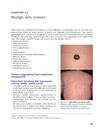
This chapter classifies various benign skin tumors and discusses their characteristics, treatment indications, and potential for recurrence, but reports no new clinical findings.
 November 2016 in “Elsevier eBooks”
 This chapter reviews genetic defects in female sexual differentiation, focusing on 46,XX disorders of sex development and the impact of genetic factors and sex steroids on development, but reports no new clinical findings.
 December 2012 in “Journal of Dermatological Science”
 In this study, estradiol was found to increase VEGF expression in cultured dermal papilla cells at physiological levels similar to pregnancy, suggesting that declining estrogen might contribute to female pattern hair loss in older Japanese women.
 May 2012 in “Research and reports in neonatology”
 This article presents a case of Klippel-Trénaunay syndrome with limb hypertrophy, port-wine stains, angiokeratoma, and venous varicosities, but reports no new findings beyond this case description.
 143 citations
,
September 1991 in “Archives of Dermatology”
143 citations
,
September 1991 in “Archives of Dermatology” In this study, patients with generalized pustular psoriasis were classified into subgroups to better understand the disease's variability and assist in treatment selection, highlighting the role of localized infections in triggering flares.
 37 citations
,
June 2002 in “The Laryngoscope”
37 citations
,
June 2002 in “The Laryngoscope” This study describes the otolaryngologic manifestations and multidisciplinary management strategies for 12 patients with ectodermal dysplasia, emphasizing the importance of early recognition for effective treatment.
 25 citations
,
July 2021 in “Journal of Medical Virology”
25 citations
,
July 2021 in “Journal of Medical Virology” This review focuses on the various skin symptoms associated with COVID-19 but reports no new clinical findings.
 21 citations
,
January 2018 in “Anticancer Research”
21 citations
,
January 2018 in “Anticancer Research” This study suggests that NBCCS and BFHS may be the same genetic condition, which could help improve identification and management of misdiagnosed cases with specific surveillance strategies.
 7 citations
,
December 2008 in “Expert Review of Dermatology”
7 citations
,
December 2008 in “Expert Review of Dermatology” This article reviews hair and nail disorders in children, emphasizing their prevalence, congenital and acquired origins, and the diagnostic challenges compared to treatment, but reports no new clinical results.
 1 citations
,
January 2020
1 citations
,
January 2020 This study found that Ift20 is essential for hair follicle stem cell identity and hair regrowth, and it regulates keratinocyte migration during wound healing through focal adhesion integrin recycling, independently of ciliogenesis.
December 2025 in “Anatomy (International Journal of Experimental and Clinical Anatomy)” In this study, researchers found that the congenital absence of the palmaris longus muscle was relatively uncommon and showed no significant differences according to sex, side, or digit ratio (2D:4D) among individuals assessed using MRI and radiographs.
 April 2017 in “Journal of Investigative Dermatology”
 This case study reports that a heterozygous missense GJA1 mutation, p.Gly138Ser, in a 2-year-old boy with oculodentodigital syndrome primarily resulted in syndactyly, fifth finger hypoplasia, and hypotrichosis, without neurological or craniofacial abnormalities.
June 2025 in “British Journal of Dermatology” This case series highlighted three pediatric patients with congenital nail anomalies, revealing underlying developmental or genetic issues such as symbrachydactyly and potential Adams–Oliver syndrome, underscoring the critical role of dermatologists in early detection and diagnosis of these conditions.
2 citations
,
June 2013 in “Journal of Dermatological Case Reports” This article presents a case of Olmsted syndrome in a 5-year-old boy, adding to the limited number of reported cases of this rare keratinization disorder.
November 2025 in “Indian Journal of Dermatology” This study reports a rare cluster of four patients with ectodermal dysplasia, highlighting its typical dental and dermatological manifestations and the necessity of multidisciplinary management.
1 citations
,
August 2024 in “Pediatric Dermatology” In this report, researchers describe an unusual case of congenital pili multigemini, a hair follicle disorder, presenting on the eyebrow of a female infant, highlighting its rarity and atypical location.
13 citations
,
June 2012 in “European journal of medical genetics” In this study, researchers observed monochorionic diamniotic twins with discordant clinical phenotypes, where one had high-grade trisomy 12p mosaicism in certain tissues, while the other showed confined mosaicism likely due to twin-to-twin transfusion.
27 citations
,
June 1989 in “Journal of Medical Genetics” This case report describes four patients with hypertrichosis cubiti and short stature, but could not determine a genetic link between hypertrichosis cubiti and skeletal dysplasia.
 15 citations
,
May 2014 in “Journal of dermatology”
15 citations
,
May 2014 in “Journal of dermatology” This review suggests the existence of a new syndrome characterized by keratosis pilaris, ulerythema ophryogenes, and monosomy 18p, emphasizing its potential utility in diagnosing monosomy 18p.
3 citations
,
December 2013 in “Balkan Journal of Medical Genetics” This case report highlights the use of microarray analysis to identify cryptic chromosomal rearrangements in a young woman with intellectual disability and multiple congenital anomalies.
10 citations
,
July 2001 in “PubMed” This case report describes two patients with a likely new type of pachyonychia, characterized by nail thickening and severe generalized hypotrichosis, possibly linked to a mutation in a hard keratin.
 9 citations
,
April 2020 in “Journal of dermatology”
9 citations
,
April 2020 in “Journal of dermatology” This case report describes a Thai male with TRPS1 who exhibited unique and unreported features such as hypoplastic mandibular condyles, double mental foramina, and distinctive hair abnormalities.
5 citations
,
February 2003 in “American Journal of Medical Genetics Part A” This case report describes a 6.5-year-old girl with a balanced chromosome translocation involving chromosomes 1 and 6, linked to developmental speech delay and features suggestive of ectodermal dysplasia.
2 citations
,
January 2007 in “Actas Dermo-Sifiliográficas” This case report describes a unilateral contact dermatitis caused by shoe dye containing 4-aminoazobenzene, which was confirmed with patch testing, highlighting its atypical presentation.
 3 citations
,
June 2022 in “European journal of human genetics”
3 citations
,
June 2022 in “European journal of human genetics” This study reports the first cases of recessive KRT17-related pachyonychia congenita involving all ectodermal derivatives in seven members of two consanguineous Pakistani families.