 39 citations
,
November 2015 in “Pediatric Nephrology”
39 citations
,
November 2015 in “Pediatric Nephrology” In this study, rituximab treatment for children with steroid-dependent nephrotic syndrome was associated with a longer remission time and fewer side effects compared to cyclophosphamide.
May 2025 in “CPT Pharmacometrics & Systems Pharmacology” This study examined the safety profile of ritlecitinib, a drug for alopecia areata, and found that it does not cause significant QTc prolongation or severe lymphopenia, with no unique safety risks expected in adolescents.
4 citations
,
April 2024 in “Journal of Drugs in Dermatology” In this case report, a severe case of pediatric alopecia areata was treated with topical ruxolitinib, a Janus kinase inhibitor, highlighting the limited but promising evidence for this treatment in children.
 August 2023 in “The journal of investigative dermatology/Journal of investigative dermatology”
 This study reports that a patient with rare linear lichen planopilaris experienced complete hair regrowth after 12 weeks of treatment with the antibody ixekizumab, suggesting it as a potential targeted therapy.
 April 2016 in “Journal of The American Academy of Dermatology”
 Ixekizumab is effective and safe for patients who did not improve with etanercept treatment for psoriasis.
19 citations
,
September 2006 in “Journal of Pediatric Gastroenterology and Nutrition” In this case study, a 12-year-old girl with severe Crohn colitis achieved impressive clinical and endoscopic remission after receiving infliximab and azathioprine as first-line treatment, suggesting potential benefits of early intensive therapy.
20 citations
,
December 2021 in “Journal of the American Academy of Dermatology” This study found that the oral JAK inhibitors ritlecitinib and brepocitinib were effective in maintaining hair regrowth in alopecia areata with continuous use, though efficacy decreased after withdrawal.
August 2026 in “Canadian Journal of Health Technologies” This study found that Litfulo improved hair regrowth in patients aged 12 and older with severe alopecia areata but did not meaningfully improve anxiety or depression symptoms compared to placebo.
This study found that P144 (Disitertide) significantly reduced collagen deposition and improved muscle organization in a rabbit model of post-radiotherapy fibrosis, suggesting potential antifibrotic effects.
25 citations
,
March 2017 in “International Journal of Dermatology” In this case report, two women with chronic alopecia areata and acute alopecia universalis experienced sustained and near-complete hair regrowth after over a year of treatment with oral ruxolitinib, without significant side effects.
71 citations
,
May 2024 in “New England Journal of Medicine” This study investigated the impact of the JAK inhibitor ruxolitinib on APS-1 patients, reporting that treatment decreased excessive T-cell-derived interferon-γ, normalized inflammatory markers, and led to remission of several autoimmune symptoms without serious adverse effects.
 2 citations
,
March 2005 in “Cancer biology & therapy”
2 citations
,
March 2005 in “Cancer biology & therapy” This study found that 95% of untreated advanced-stage follicular lymphoma patients responded to a single course of the Bexxar regimen, with 75% achieving complete remission and remaining disease-free for years.
June 2026 in “JAAD Case Reports” 52 citations
,
July 1998 in “Urology” This study found that liarozole is more effective than cyproterone acetate for improving PSA response and survival in metastatic prostate cancer after first-line endocrine therapy, while maintaining quality of life.
This study found that a short-term treatment with all-trans retinoic acid may effectively stabilize platelet counts in idiopathic thrombocytopenic purpura patients experiencing fluctuations during thrombopoietin receptor agonist therapy.
36 citations
,
March 2014 in “Annals of the Rheumatic Diseases” This study found that activating liver X receptors with an agonist reduced skin fibrosis in experimental models, particularly in inflammation-driven conditions, by inhibiting macrophage infiltration and interleukin-6 release.
 157 citations
,
December 2015 in “Journal of the American Academy of Dermatology”
157 citations
,
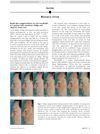
December 2015 in “Journal of the American Academy of Dermatology” This case study reported significant but temporary hair regrowth and skin repigmentation in a patient with vitiligo and alopecia areata during treatment with oral ruxolitinib.
October 2025 in “Frontiers in Medicine” This study confirmed known adverse events and identified new ones related to ixekizumab, offering preliminary safety insights for its clinical use, but noted limitations such as potential underreporting and confounding factors in the spontaneous adverse event reporting systems.
 April 2023 in “Journal of Investigative Dermatology”
 This study found that PX-12 inhibited the NLRP3 inflammasome and reduced psoriasis-like symptoms in a mouse model, suggesting its potential as a treatment for psoriasis.
 September 2024 in “Drugs & Therapy Perspectives”
 In this study, ritlecitinib, an oral medication approved for adolescents and adults, significantly reduced scalp hair loss and promoted eyebrow and eyelash regrowth in severe alopecia areata patients, with benefits sustained over 48 weeks and generally well-tolerated minor side effects.
 196 citations
,
September 2016 in “JCI insight”
196 citations
,
September 2016 in “JCI insight” This study explored the effectiveness of the oral JAK1/2 inhibitor ruxolitinib in treating patients with moderate-to-severe alopecia areata, building on prior success with JAK inhibitors in mice, but results are not reported in this abstract.
1 citations
,
November 2022 in “Journal of Investigative Dermatology” This study found that ALRN-6924, a clinical-stage dual inhibitor, can selectively protect human scalp hair follicles from paclitaxel-induced toxicity and damage by inducing transient cell cycle arrest in healthy cells without affecting cancer cells, potentially reducing chemotherapy-induced alopecia.
 April 2023 in “Journal of Investigative Dermatology”
 This study found that NIMP-R14-conjugated nanoparticles, loaded with roflumilast, effectively targeted neutrophils to reduce inflammation and improve symptoms in a mouse model of psoriasiform dermatitis, suggesting potential for targeted therapy in autoimmune skin diseases.
September 2013 in “Oncology Times” This article discusses the discontinuation of the Bexxar regimen for non-Hodgkin's lymphoma, noting that despite its effectiveness, it was under-prescribed due to marketing and development challenges without reporting new clinical results.
23 citations
,
October 2015 in “Plastic and reconstructive surgery/PSEF CD journals” This article reviews the author's experience and favored techniques for using Radiesse in cosmetic treatments but reports no new clinical trial results.
January 2026 in “Journal of Dermatology & Dermatologic Surgery” In this case report, a 26-year-old man with alopecia universalis, resistant to multiple standard treatments, achieved complete and sustained hair regrowth with ruxolitinib, highlighting its potential as a promising option for patients with refractory AU.
March 2026 in “The Journal of Dermatology” This study found that ritlecitinib 50 mg is cost-effective compared to no treatment for patients in Japan with alopecia areata and significant scalp hair loss, demonstrating an incremental cost-effectiveness ratio below the country's cost-effectiveness threshold.
March 2026 in “SKIN The Journal of Cutaneous Medicine” This study found that ritlecitinib was well tolerated in children aged 6 to under 12 years with severe alopecia areata, with ongoing trials examining its efficacy and safety over a 24-week period and in long-term use up to 36 months.

In this study using C3H/HeJ mice, a single subcutaneous injection of the fusion protein PTH-CBD increased anagen hair follicle counts and promoted hair regrowth comparably to daily oral ruxolitinib, potentially by enhancing beta-catenin production and stimulating anagen transition.
2 citations
,
March 2010 in “Acta Biochimica Polonica” This study observed that conjugates of the anticancer drug raltitrexed with dextran and albumin were more cytotoxic than the free drug at high concentrations, altering cell cycle effects.