 16 citations
,
March 2013 in “International Journal of Dermatology”
16 citations
,
March 2013 in “International Journal of Dermatology” This study found that infectious skin diseases were prevalent in immigrant Latino poultry processors and manual workers in North Carolina, with tinea pedis and onychomycosis being particularly common.
11 citations
,
January 2017 in “Dermato-endocrinology” This study observed that common skin changes in patients with type 2 diabetes included peripheral hair loss, xerosis, anhydrosis, and nail alterations, underscoring the importance of controlling blood sugar and foot care to prevent neuropathy complications.
11 citations
,
July 2010 in “European Journal of Dermatology” In this study, researchers confirmed linkage of a form of hair-nail ectodermal dysplasia to chromosome 12 in a Pakistani family, suggesting a possible non-coding mutation in KRTHB5 or a mutation in an unknown gene.
7 citations
,
July 2021 in “PubMed” This review assesses the role of vitamins A, B, C, and D in treating dermatologic conditions and highlights promising applications, although further research is required to confirm their efficacy.
5 citations
,
February 2003 in “American Journal of Medical Genetics Part A” This case report describes a 6.5-year-old girl with a balanced chromosome translocation involving chromosomes 1 and 6, linked to developmental speech delay and features suggestive of ectodermal dysplasia.
 3 citations
,
January 2022 in “Einstein (São Paulo)”
3 citations
,
January 2022 in “Einstein (São Paulo)” This study found that during the early pandemic months of 2020, there was a significant increase in dermatological conditions linked to stress and behavioral changes compared to the same period in 2019.
 3 citations
,
August 2020 in “PubMed”
3 citations
,
August 2020 in “PubMed” This review discusses the potential efficacy and applications of platelet-rich plasma in dermatology, highlighting its use in various skin conditions but reporting no new clinical results; the authors call for standardization of preparation and treatment methods.
 2 citations
,
January 2019 in “Elsevier eBooks”
2 citations
,
January 2019 in “Elsevier eBooks” This review discusses biotin's role in nutrition and suggests no benefit to supplementing it for hair, nails, and skin in healthy individuals; it reports preliminary findings that high dosages may help some multiple sclerosis patients.
August 2026 in “British journal of healthcare and medical research” This article reviews the history and medical literature on minoxidil, highlighting its approved topical use for hair disorders like androgenic alopecia and potential new applications, such as in yellow nail syndrome and vitiligo treatment alongside phototherapy.
In this study, researchers developed an AI-powered platform called VitaDetect, which screens for vitamin deficiencies using image analysis of nails, tongue, and skin, aiming to provide an accessible and early-stage detection tool in resource-limited settings.
 September 2024 in “Meditsinskiy sovet = Medical Council”
 This source reports that biotin, a water-soluble vitamin B7, may benefit skin, hair, and nail health, including various types of alopecia, without the risk of hypervitaminosis even at high doses.
 July 2024 in “Medical alphabet”
 This study found that the SBN system effectively evaluates and describes the severity and clinical variant of alopecia areata using a standardized scale, aiding in patient management and disease course prediction.
 October 2019 in “Journal of Evolution of Medical and Dental Sciences”
 This case report describes a 56-year-old male with chronic watery diarrhea, hyperpigmentation, and alopecia, in whom colonoscopy revealed multiple polypoidal lesions from the distal transverse colon to the rectum.
 January 2019 in “International journal of dermatology, venereology and leprosy sciences”
 This study evaluated the prevalence and pattern of skin disorders in patients with chronic kidney disease, observing various dermatological issues that may impact quality of life and suggesting treatments to reduce morbidity.
This study identified novel mutations associated with ectodermal dysplasias in Pakistani families, including a missense mutation in the KRTHB5 gene linked to pure hair-nail ectodermal dysplasias and mutations in the EDAR gene related to hypohidrotic ectodermal dysplasia.
7 citations
,
January 2020 in “Skin Pharmacology and Physiology” In this study using ex vivo porcine ear skin, researchers found that standard nail varnish applied gently creates effective follicular closures, preventing penetration of certain substances like fluorescein sodium salt and caffeine into hair follicles, whereas solvent-free varnish and rapid application techniques were less effective.
 4 citations
,
July 2017 in “British Journal of Dermatology”
4 citations
,
July 2017 in “British Journal of Dermatology” This review presents the top 10 research priorities for hair loss management (excluding alopecia areata) as identified by a Hair Loss Priority Setting Partnership aimed at guiding future studies important to patients and clinicians.
1 citations
,
June 2023 in “Medicina” In this study, all 26 patients with epidermolysis bullosa were found to have extensive dental caries, with various dental and oral complications varying by EB type, due in part to inadequate oral care and associated physical limitations.
 1 citations
,
February 2013 in “InTech eBooks”
1 citations
,
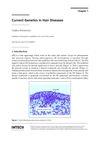
February 2013 in “InTech eBooks” Genetic mutations cause various hair diseases, and whole genome sequencing may reveal more about these conditions.
 February 2018 in “British Journal of Dermatology”
 We need better research to improve alopecia treatment and patient care.
4 citations
,
February 2018 in “Annales de Dermatologie et de Vénéréologie” Onychomatricome is a benign nail tumor with specific dermoscopic features that help distinguish it from cancer.
 January 2016 in “Skin appendage disorders”
 The document discusses various nail and hair disorders and their treatments.
 May 2015 in “Journal of The American Academy of Dermatology”
 The treatments for fungal nail infection, hair loss in men, benign nail tumor, and chemotherapy-associated nail bed inflammation are effective and safe.
 May 2009 in “Medical and surgical dermatology/Medical & surgical dermatology”
 Hair and nail conditions can stabilize or improve over time, and new treatments show promise.
 February 2005 in “Journal of The American Academy of Dermatology”
 Doctors should recognize various nail disorders, new allergens, and metabolic syndrome in patients, and use botulinum toxin carefully in aesthetic procedures.
 February 2005 in “Journal of The American Academy of Dermatology”
 This discussion covers various nail disorders, including tumors and non-neoplastic issues, emphasizing that not all nail abnormalities are due to fungal infections, but it reports no new clinical findings.
 January 2001 in “Clinical and Experimental Dermatology”
 A test for nail fungus was most accurate with PAS stain, low-dose spironolactone helped two-thirds of acne patients, metformin reduced symptoms of HIV-related fat distribution changes with some side effects, and skin examination with dermoscopy was better at detecting abnormal moles, while temporary tattoos can cause skin reactions.
 1 citations
,
January 2010 in “Springer eBooks”
1 citations
,
January 2010 in “Springer eBooks” Certain micronutrients may improve hair and nail health, but more research is needed to confirm their benefits.

Aluminum phosphide poisoning can cause horizontal nail grooves and hair loss.
 March 2012 in “Journal of The American Academy of Dermatology”
 Hand-foot-mouth disease may cause nail loss in children.