 April 2025 in “International Journal of Homoeopathic Sciences”
 In this case report, a 7-year-old boy with patchy hair loss due to alopecia areata showed significant hair regrowth and improvement in psychological well-being after a holistic homeopathic treatment identified emotional distress as a root cause.
June 2024 in “Current Developments in Nutrition” This study found that a nutritional intervention in dogs led to changes in skin microbiome and immune-related gene expression, with reduced levels of certain fungal pathogens and a potential alleviation of atopic dermatitis symptoms.
 April 2023 in “JOJ dermatology & cosmetics”
 In this study, researchers highlighted the complexity of managing psychocutaneous disorders, emphasizing the need for a multidisciplinary approach involving dermatologists, psychiatrists, family physicians, and social support to address associated psychiatric diagnoses, risk factors like suicide, and ensure effective treatment.
 January 2023 in “Cancer research, statistics, and treatment/Cancer research, statistics and treatment”
 This narrative from Vijaya, a breast cancer patient, shares her personal experience with diagnosis, treatment, and support, highlighting the importance of emotional resilience and support groups.
August 2008 in “Pediatrics in Review” This review of literature on complementary and alternative medical therapies for pediatric asthma found mixed evidence, highlighting potential promise in treatments like ivy leaf extract and massage, but inconclusive or unsupported effects for others such as homeopathy and dietary modifications.
 December 2025 in “The American Journal of Medical Sciences and Pharmaceutical Research”
 This study suggests that integrating barber care with medical treatment improves scalp condition and psychological well-being in early stages of hair loss, by enhancing medication efficacy and reducing stress.
 January 2024 in “Wiadomości Lekarskie”
 This presentation explored recent developments in treating alcohol, opioid, and cannabis addiction, highlighting promising pharmacological and behavioral therapies, such as extended-release naltrexone for alcohol use and long-acting buprenorphine for opioids, alongside emerging strategies for cannabis use disorder.
This overview highlights the effectiveness of fractional lasers, particularly fractional erbium:YAG, in treating various skin conditions with customizable settings and a short recovery time, while noting potential risks and the importance of tailored applications for different skin types.
 2 citations
,
September 2012 in “Pharmaceutical patent analyst”
2 citations
,
September 2012 in “Pharmaceutical patent analyst” This editorial reviews recent European legal developments related to patents on second medical uses and dosage regimes, with no new research findings reported.
January 2023 in “Minds at UW (University of Wisconsin)” This study suggests that while DI water significantly impacts hair, the effects of citric acid, hydrogen peroxide, and sodium chloride in shampoo on hair remain unclear, requiring further investigation.
1 citations
,
October 2018 in “Open MIND” In this study, treating diabetic rats with mulberry leaf decoction for 14 days lowered blood glucose levels and influenced metabolic and tissue changes related to diabetes.
 August 2026 in “Open MIND”
 This study found strong evidence that microneedling, when used alongside topical agents like minoxidil, is effective in improving hair density and overall hair growth outcomes for those experiencing androgenic alopecia.
In this research presented at the BEYOND Biohacking Conference 2026, a regenerative skincare serum using plant-derived Consortia Factors® showed significant age spot lightening and improvements in skin smoothness, firmness, and radiance over eight weeks in a study with 35 women.

This scoping review seeks to map existing research on appearance care and self-management for adolescent and young adult cancer survivors in Japan, aiming to highlight knowledge gaps and guide future studies and interventions to enhance supportive care for this population.

This study highlights the lack of direct evidence to differentiate between alopecia areata and androgenic alopecia but underscores the importance of clinical, trichoscopic, and histopathologic evaluations for accurate diagnosis, particularly when symptoms overlap.
This review concluded that 5α-reductase inhibitors like finasteride and dutasteride offer limited additional feminising effects in hormone therapy for transfeminine individuals, with the clearest use being androgenetic alopecia treatment; more research is needed for other potential benefits.

This source reports that baricitinib significantly promotes hair regrowth in patients with severe alopecia areata, particularly those with a SALT score of 50 or higher, in clinical trials.
This review explores the Ayurvedic perspective of Indralupta, linked to Alopecia areata in modern medicine, highlighting disease progression through Tridosha imbalance and comparing it with contemporary understanding of Alopecia's pathogenesis.

This research indicates that topical minoxidil seems to be the safest option for treating hair loss in dialysis patients, but caution is advised with oral treatments like low-dose minoxidil due to potential systemic side effects.

This source discusses treatment options for androgenetic alopecia in post-operative transgender women, highlighting traditional therapies like minoxidil and finasteride and promising alternatives such as platelet-rich plasma and low-level laser therapy, noting that treatment decisions depend on individual patient circumstances and the availability of specialized research.
In this study, researchers developed an AI-powered platform called VitaDetect, which screens for vitamin deficiencies using image analysis of nails, tongue, and skin, aiming to provide an accessible and early-stage detection tool in resource-limited settings.
This study reports that FDA-approved scalp cooling caps, like DigniCap and Paxman, can help 50-66% of breast cancer patients retain at least 50% of their hair during chemotherapy, with specific recommendations and limitations discussed for different patient groups.

Topical finasteride effectively treats hair loss with fewer side effects than the oral form.

Minoxidil and finasteride are recommended for male pattern baldness.

This review highlights that managing androgenetic alopecia in women involves a variety of treatments including approved drugs like minoxidil, as well as newer therapies such as PRP and LLLT, yet emphasizes the need for more research on long-term outcomes and treatment standardization.
 April 2026 in “Open MIND”
 This case report suggests that Post-Finasteride Syndrome may involve a sustained imbalance in gut bacteria, with fermenting and hydrogen sulphide-producing bacteria disrupting hormone and mitochondrial functions.
 April 2026 in “Open MIND”
 This review article discusses the aesthetic impacts of GLP-1 medications like Ozempic (semaglutide), including "Ozempic Face," skin sagging, and loss of lean mass, and explores potential recovery methods such as biostimulators, HIFU, endolaser, and PRP.
 March 2026 in “Open MIND”
 Hair loss after childbirth usually reverses in a few months.
 March 2026 in “Open MIND”
 This review evaluates PRP, microneedling, and LLLT for alopecia and telogen effluvium, reporting improvements of 30-40% but offers no new clinical data.
 March 2026 in “Open MIND”
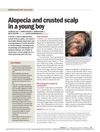
 Early treatment of scalp infections can prevent permanent hair loss.