 9 citations
,
February 2018 in “The Journal of Dermatology”
9 citations
,
February 2018 in “The Journal of Dermatology” This study identified a novel splice site mutation in the LIPH gene associated with autosomal recessive woolly hair, contributing to understanding the genetic basis of this condition.
9 citations
,
June 2017 in “American journal of ophthalmology. Case reports” This case report identifies a novel CDH3 gene mutation associated with hypotrichosis with juvenile macular dystrophy in a 13-year-old Turkish girl, highlighting implications for future genetic analysis and counseling.
8 citations
,
June 2020 in “The journal of investigative dermatology/Journal of investigative dermatology” This study provides definitive evidence that a homozygous mutation in the DSC3 gene causes skin fragility and hypotrichosis in humans.
7 citations
,
August 2008 in “Immunogenetics” A gene mutation in mice causes increased mast cells and disorganized hair follicles in their skin.
6 citations
,
April 2015 in “Plastic surgical nursing” This study reports that applying bimatoprost ophthalmic solution 0.03% to the upper eyelid margin enhances eyelash growth by increasing length, thickness, and darkness, with a favorable safety profile.
 5 citations
,
July 2020 in “JAMA Dermatology”
5 citations
,
July 2020 in “JAMA Dermatology” Minoxidil solution applied twice daily improved hair growth in patients with Woolly Hair/Hypotrichosis due to LIPH gene issues, with mild side effects.
5 citations
,
January 2017 in “Arquivos Brasileiros de Oftalmologia” This report describes a novel mutation in the CDH3 gene in an 11-year-old Iranian boy with hypotrichosis and juvenile macular dystrophy, indicating a new genetic variant associated with the disorder.
5 citations
,
November 1979 in “PubMed” This study reported that 19 out of 29 examined individuals from a family spanning seven generations exhibited the distinctive symptoms of hypotrichosis congenita hereditaria Marie Unna type.
 4 citations
,
January 2018 in “International Journal of Trichology”
4 citations
,
January 2018 in “International Journal of Trichology” This case report describes a 4-year-old girl with hypotrichosis and juvenile macular dystrophy, linked to mutations in the cadherin 3 gene affecting P-cadherin expression.
 4 citations
,
August 2016 in “JEADV. Journal of the European Academy of Dermatology and Venereology/Journal of the European Academy of Dermatology and Venereology”
4 citations
,
August 2016 in “JEADV. Journal of the European Academy of Dermatology and Venereology/Journal of the European Academy of Dermatology and Venereology” This case report observed that after 6 months of treatment with topical cetirizine and oral vitamin D, hair density and quality improved in three girls with congenital hypotrichosis due to ectodermal dysplasia.
3 citations
,
December 2020 in “Skin Appendage Disorders” This case report highlights a family member with a confirmed diagnosis of hypotrichosis with juvenile macular dystrophy due to a CDH3 gene mutation, emphasizing the importance of genetic testing for accurate counseling.
2 citations
,
July 2021 in “Genes” This study identified a new genetic variant in the KRT71 gene responsible for a breed-specific form of hypotrichosis in Hereford cattle, potentially serving as a model for similar human conditions.
 1 citations
,
June 2022 in “Chinese medical journal/Chinese Medical Journal”
1 citations
,
June 2022 in “Chinese medical journal/Chinese Medical Journal” This study identified two novel mutations in the CDH3 gene causing HJMD in a Chinese patient, expanding the genetic and phenotypic understanding of the disorder.
1 citations
,
September 2020 in “Journal of dermatology” This study identified a novel mutation and confirmed a previous mutation in the LIPH gene in a woman with autosomal recessive woolly hair, expanding the mutation spectrum for this condition.
 1 citations
,
August 2019 in “Pediatric dermatology”
1 citations
,
August 2019 in “Pediatric dermatology” This study reports that topical minoxidil 5% foam may effectively promote hair growth in congenital alopecia and hypotrichosis linked to desmoplakin mutations, as demonstrated by significant hair growth in an 8-year-old boy.

In a case report, this study identified a new genetic variant in a six-year-old girl from Saudi Arabia with hypotrichosis and juvenile macular dystrophy, expanding the understanding of the genetic spectrum of this rare condition in the region.
 January 2026 in “Frontiers in Medicine”
 This study suggests that coexisting LSS and TSPEAR variants might contribute to a complex phenotype of congenital hypotrichosis and ectodermal abnormalities in a child, and highlights the need for cautious interpretation of genotype-phenotype links and the potential value of broader genetic testing.
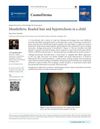 January 2026 in “Cosmoderma”
 In this clinical case study, a 9-year-old girl was diagnosed with monilethrix, a hereditary hair shaft disorder characterized by weak, beaded hair, with management focusing on minimizing hair trauma.
 December 2025 in “Frontiers in Medicine”
 This review details the global mutation patterns of genes associated with autosomal recessive woolly hair/hypotrichosis and highlights potential, yet unproven, treatments like minoxidil and regenerative therapies, reporting no new clinical results.
September 2025 in “Indian Journal of Dermatology” In this case report, researchers detailed a 22-year-old Turkish woman diagnosed with autosomal recessive woolly hair/hypotrichosis (ARWH/H), linked to a mutation in the LIPH gene, resulting in sparse, poorly growing, curly hair, highlighting the need for genetic consideration in similar hair conditions.
July 2025 in “Human Genomics” This source reports that a comprehensive review of LSS gene variant phenotypes enhances understanding of congenital hypotrichosis 14 and could guide more precise genetic counseling and future research into disease mechanisms and potential therapies.
July 2025 in “Frontiers in Medicine” This study identified compound heterozygous mutations, c.1101del and c.736 T > A, in the LIPH gene responsible for causing autosomal recessive woolly hair in a child, with c.1101del being a novel frameshift mutation.
May 2025 in “Dermatology Reports” In this case study from King Fahad University Hospital, an 11-month-old Saudi boy with a history of short, non-growing hair was diagnosed with autosomal recessive woolly hair/hypotrichosis, attributed to a homozygous mutation in the LIPH gene.
 May 2025 in “Frontiers in Genetics”
 This study reported discovering a novel missense variant in a case of autosomal recessive woolly hair in a 31-year-old Chinese woman, which significantly reduced secretion of the encoded protein, likely leading to disease by impairing its hydrolytic function.
 January 2025 in “Frontiers in Genetics”
 In this study, researchers reported significant hair growth in an 8-year-old with hypotrichosis simplex of the scalp after treatment with a combination of oral botanical extracts and minoxidil, marking the first documented use of botanical extracts as a potential therapeutic approach for this condition.
November 2023 in “Вопросы современной педиатрии” This study reported that genetic testing is crucial for accurately diagnosing hypotrichosis, especially in cases with subtle symptoms or coexisting severe atopic dermatitis, as demonstrated in a young girl with a DSG4 gene mutation.
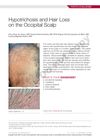 September 2023 in “Cutis”
 This study presents a case of a 6-month-old infant girl with hypotrichosis and an alopecic plaque in the occipital region, characterized by broken and dystrophic hairs with follicular papules and perifollicular hyperkeratosis, suggesting a diagnostic consideration.
May 2023 in “Pharmaceuticals” In this in silico study, researchers analyzed nonsynonymous SNPs in the LIPH gene linked to hypotrichosis and identified three potentially harmful variants (W108R, C246S, and H248N) out of 215 total, using sequence- and architecture-based bioinformatics techniques to differentiate between harmful and benign SNPs.
 February 2023 in “Journal of dermatology”
 This letter reports the first known Japanese case of autosomal recessive woolly hair/hypotrichosis with compound heterozygous mutations in the LIPH gene.
 August 2022 in “Frontiers in genetics”
 This study identified a novel bi-allelic missense variant in the DSC3 gene linked to severe Hypotrichosis with Recurrent Skin Vesicles in a Saudi child, supporting its role in the condition.