 September 2025 in “Journal of Ayurveda and Integrated Medical Sciences”
 In this study, adults with diffuse hair loss applied Bhringraj Taila to their scalps daily, resulting in significant reductions in hair fall, dandruff, and itching after four weeks, without reported adverse effects.
 May 2026 in “Zenodo (CERN European Organization for Nuclear Research)”
 This study developed a herbal hair dye gel using natural ingredients like henna and amla, which was found to provide natural color, improve hair texture, and clean the scalp without causing irritation, making it a safe and effective alternative to chemical hair dyes.
2 citations
,
December 2016 in “Springer eBooks” This review highlights the importance of dermatologists understanding cultural hair practices among immigrant populations, acknowledging that some practices may contribute to hair and scalp disorders, and reports no new results.
 March 2026 in “Zenodo (CERN European Organization for Nuclear Research)”
 In this report, a clinical case demonstrated complete hair regrowth in a 29-year-old male with recurrent alopecia areata following five months of Ayurvedic treatments, including Virechan therapy, Shamana Chikitsa, and leech therapy, with no adverse effects reported.
 June 2026 in “International Journal Of Ayurvedic And Herbal Medicine”
 In this case report, a 23-year-old male with alopecia areata in the beard area experienced significant improvement, with tiny hairs appearing, after 10 days of combined Ayurvedic Shamana and Shodhana therapies.
 February 2026 in “Zenodo (CERN European Organization for Nuclear Research)”
 This study evaluated an herbal shampoo formulated with Amla, Aloe vera, and Bhringraj, finding it to have good cleansing capability, acceptable foaming, suitable pH, and conditioning performance, suggesting it as a stable, safe, and effective alternative to synthetic shampoos for hair and scalp health.
March 2025 in “AYUSHDHARA” In this study, a 50-year-old woman with symptoms of thyroid dysfunction improved after receiving Ayurvedic treatment with Gandharvahastadi Kwath and lifestyle modifications, which alleviated symptoms like fatigue, muscle cramps, and dry skin, and normalized her TSH levels.
 December 2024 in “Indian Dermatology Online Journal”
 This study presents a compilation of dermatological disorders that are descriptively compared to the "Navaratnas," or nine planetary gems from Vedic astrology, highlighting unique diagnostic terms and their clinical presentations to make dermatology more accessible and memorable for practitioners and patients.
 3 citations
,
January 2017 in “International journal of research - granthaalayah”
3 citations
,
January 2017 in “International journal of research - granthaalayah” In this study, thirty participants applied a paste made from Elaeocarpus serratus and Psidium guajava leaves on their scalps, resulting in significant improvements in dandruff symptoms, with over 40% achieving complete remission and no adverse effects reported.
4 citations
,
January 2018 in “Scholar Commons (University of South Carolina)” This study provides choral conductor-educators with strategies, including vocal exercises and inclusive language practices, to support healthy vocal transitions for transgender singers while promoting a safe learning environment.
 January 2002 in “Hair transplant forum international”
 This commentary elaborates on Edwin Epstein's journey into hair restoration surgery without presenting new research findings.
December 2024 in “Jurnal Agronomi Indonesia (Indonesian Journal of Agronomy)” This study found that vernalization treatment enhanced flowering and true shallot seed production across several shallot genotypes, suggesting it as an effective strategy for increasing shallot yields in highland areas.
 3 citations
,
June 2019 in “Asian Journal of Biological Sciences”
3 citations
,
June 2019 in “Asian Journal of Biological Sciences” This study found that a herbal formulation made from Withania somnifera collected in Uttarakhand promoted in vivo hair growth in male Wistar rats, as supported by follicular histological analysis.
 January 2024 in “Bright Sky Publications eBooks”
 This study investigated the prevalence of Helicobacter pylori in patients with gastritis in Southern Iraq, but the abstract does not report any specific results.
December 2025 in “Zenodo (CERN European Organization for Nuclear Research)” This case study reports that a 30-year-old woman with persistent hair fall experienced marked improvement following leech therapy (Jalaukavacharana) performed according to classical Ayurvedic protocols.
1 citations
,
September 2023 in “Journal of the American Academy of Dermatology” Guselkumab significantly improves quality of life for people with moderate to severe psoriasis.
 May 2026 in “International Journal of Versatile Research and Analysis”
 In this study, a polyherbal hair serum containing extracts of hibiscus petals and amla fruits showed significant antifungal activity against Candida albicans and exhibited satisfactory stability, physicochemical properties, and potential for improving hair health and reducing dandruff.
 September 2024 in “The Professional Medical Journal”
 This observational retrospective study conducted at Lahore General Hospital reported that scabies, followed by tinea and acne, were the most common skin diseases, primarily affecting females and prevalent in the summer months among the studied population.
March 2018 in “Ayurline: IJ-RIM” In this study, Ayurvedic Keshya gel, formulated with specific herbs and essential oils, was found to be effective in reducing hair fall and improving hair quality in both men and women.
 September 2010 in “Hair transplant forum international”
 This article discusses the evolving speciality of hair transplant surgery and reports no new clinical findings; it emphasizes the need for innovative organizational approaches.
 1 citations
,
January 2023 in “European Journal of Research in Dentistry”
1 citations
,
January 2023 in “European Journal of Research in Dentistry” This study found that topical application of tideglusib in a bacterial cellulose-based hydrogel showed positive effects on the healing of palatal wounds in rats.
 November 2019 in “International journal of research in Ayurveda and pharmacy”
 In this case report, a 35-year-old male experiencing hair loss showed improvement with new hair growth after receiving Ayurvedic Rakta Mokshana therapy, including Pracchana and Cupping, within 15 days.
 December 2022 in “Proceeding Bengkulu International Conference on Health”
 This study concluded that a 5% concentration of celery extract in hair gel provided the best preparation characteristics, including standard parameters for organoleptic properties and spreadability.
 December 2024 in “Qlantic Journal of Social Sciences and Humanities”
 This study found that among adult balding men in Rawalpindi and Islamabad, those seeking hair transplants exhibited higher levels of perfectionism and body dysmorphic disorder symptoms compared to those not seeking treatment.
December 2025 in “Zenodo (CERN European Organization for Nuclear Research)” This case study reported marked improvement in hair loss symptoms for a 30-year-old woman using Ayurvedic leech therapy (Jalaukavacharana), highlighting its potential as a gentle and minimally invasive alternative to conventional alopecia treatments.
January 2020 in “International Research Journal of Ayurveda & Yoga” This study reported that using hair gel is a cheap and practical method for preventing hair interference during otoplasty surgeries, as it keeps hair in place under sterile conditions without patient complaints about maintaining the gel for two days post-operation.
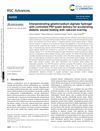 January 2026 in “RSC Advances”
 This study found that the natural polymer-based hydrogel Gel/SA@PL released growth factors in a controlled way, which enhanced tissue regeneration and minimized scarring in the healing of diabetic wounds.
 22 citations
,
October 2019 in “International Journal of Nanomedicine”
22 citations
,
October 2019 in “International Journal of Nanomedicine” This study suggests that the hydrogel nanoparticle formulation of hair growth-promoting compounds may enhance hair follicle penetration and induce hair growth in tested models, demonstrating its potential as a hair growth treatment.
 August 2023 in “International Ayurvedic medical journal”
 This case study describes the successful treatment of a 7-year-old girl with alopecia areata using Ayurvedic approaches targeting skin and autoimmune issues, suggesting a potential alternative to long-term oral corticosteroids, which can cause undesirable side effects.