 43 citations
,
February 2008 in “Journal of cutaneous pathology”
43 citations
,
February 2008 in “Journal of cutaneous pathology” This study revealed that during fetal development, MITF and Mart-1 expressing melanocytes progress from the dermis to the epidermis and hair follicles, with MITF possibly marking follicular stem cells.
 41 citations
,
September 2005 in “Wound Repair and Regeneration”
41 citations
,
September 2005 in “Wound Repair and Regeneration” This study found that hydrogen peroxide interfered with scarless healing in a murine fetal wound repair model, potentially by inducing transforming growth factor-beta1, which may contribute to increased fibrosis.
4 citations
,
January 2019 in “Micron” This study observed that fetal hair follicle melanocytes varied in morphology and development stages, with melanosomes undergoing degradation into irregular pigment particles within keratinocytes.
 2 citations
,
January 2018 in “European journal of pediatric surgery reports”
2 citations
,
January 2018 in “European journal of pediatric surgery reports” This case report described a girl with a cervical lymphangioma whose hair texture unexpectedly changed due to Horner's syndrome following tumor resection surgery.
June 2020 in “Authorea (Authorea)” This study observed that pregnant women experienced an increase in hair cortisol concentrations, with primiparae having significantly higher levels in the last trimester compared to multiparae.

This study found that fetal canine hair follicle-derived stem cells exhibited pluripotency markers, suggesting potential for therapeutic applications in hair and skin repair.
 November 2014 in “Elsevier eBooks”
 This article reviews the clinical and biochemical features of genetic mutations affecting dihydrotestosterone production and their potential role in male pseudo-hermaphroditism, but presents no new clinical results.
 September 2008 in “Fertility and Sterility”
 This study found that in female dogs, exposure to free fatty acids increased androgen production, suggesting a potential link to factors characteristic of polycystic ovary syndrome.
 168 citations
,
August 2000 in “American Journal of Pathology”
168 citations
,
August 2000 in “American Journal of Pathology” This study suggests that fibromodulin may regulate transforming growth factor-β activity during scar formation, influencing the transition from fetal scarless repair to adult scar-forming repair in rats.
 118 citations
,
May 2003 in “Toxicological Sciences”
118 citations
,
May 2003 in “Toxicological Sciences” This study found that prenatal exposure to finasteride in rats led to permanent changes in developmental endpoints like anogenital distance and nipple retention, which were predictive of further reproductive tract malformations.
87 citations
,
February 2000 in “Journal of Investigative Dermatology” Stem cells in developing hair follicles move to specific areas as they mature.
 67 citations
,
February 1997 in “Teratology”
67 citations
,
February 1997 in “Teratology” This study demonstrated that high oral doses of finasteride caused external genital abnormalities in male rhesus monkey fetuses, but intravenous doses did not lead to abnormalities.
64 citations
,
January 1995 in “Cells Tissues Organs” This study found that the development and differentiation of Merkel cells in C57BL mouse embryos' dorsolateral skin are linked to tylotrich follicle formation rather than to neural influences.
 58 citations
,
June 2006 in “Plastic and Reconstructive Surgery”
58 citations
,
June 2006 in “Plastic and Reconstructive Surgery” This study successfully developed a reproducible mouse model demonstrating fetal scarless wound healing, which may provide insights for minimizing scarring in adults.
 57 citations
,
November 1987 in “Pediatric Dermatology”
57 citations
,
November 1987 in “Pediatric Dermatology” This article reviews common hair growth abnormalities in children, emphasizing the importance of distinguishing normal development from potential signs of metabolic disorders and indicates no new clinical results.
53 citations
,
January 1986 in “Endocrinology” This rat study suggests that 5α-dihydrotestosterone plays a critical role in inhibiting nipple development in male fetuses by causing the regression of the nipple anlage in utero.
 39 citations
,
June 1982 in “The BMJ”
39 citations
,
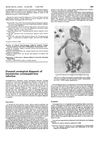
June 1982 in “The BMJ” Blood tests confirmed a baby in the womb had a CMV infection.
26 citations
,
September 2005 in “Pharmacology Biochemistry and Behavior” This study found that inhibiting the 5alpha-reductase 2 pathway in male rats affects brain sexual differentiation and leads to reproductive changes, including increased pre-implantation loss despite unchanged copulatory potential.
21 citations
,
January 2000 in “Fetal Diagnosis and Therapy” This study found that trichothiodystrophy can be diagnosed prenatally in the second trimester using an endoscopically-guided fetal eyebrow biopsy, with sulfur content analysis being the most reliable test.
19 citations
,
April 1999 in “British Journal of Dermatology” This study shows that keratin 2e exhibits distinct temporal and regional expression patterns in fetal epidermis, suggesting different regulatory and functional roles from other epidermal keratins.
18 citations
,
March 2004 in “The Journal of Urology” In this study, researchers used a hypospadiac rat model to demonstrate abnormal genital development, similar to human penoscrotal hypospadias, highlighting the model's value for studying penile growth and differentiation.
 15 citations
,
September 1999 in “British Journal of Dermatology”
15 citations
,
September 1999 in “British Journal of Dermatology” This study found that epimorphin is closely linked to developing hair follicles in human fetuses, suggesting it plays a significant role in hair follicle morphogenesis.
 14 citations
,
April 2022 in “Functional & Integrative Genomics”
14 citations
,
April 2022 in “Functional & Integrative Genomics” This study identified specific miRNAs and mRNAs involved in the development of secondary hair follicles in cashmere goats, particularly noting a targeted relationship between chi-miR-30e-5p and DLL4.
12 citations
,
February 2017 in “International journal of developmental neuroscience” This study observed that reduced in utero exposure to the neurosteroid allopregnanolone increased anxiety-like behavior in female guinea pigs during the juvenile period without affecting long-term allopregnanolone levels.
 11 citations
,
March 2020 in “Immunology”
11 citations
,
March 2020 in “Immunology” This study reports that immunologically inert and skewed immune cell populations in developing human skin may contribute to wound healing and structural changes during skin development.
11 citations
,
June 2017 in “Asian-Australasian journal of animal sciences” In this study, researchers found that the FoxN1, FoxE1, and FoxI3 genes are likely involved in hair follicle growth and development in cashmere goat fetuses.
9 citations
,
May 2020 in “bioRxiv (Cold Spring Harbor Laboratory)” This study identifies novel subpopulations of human epidermal melanocytes and specific transcriptional programs that differ from model organisms, providing insights into melanoma dedifferentiation.
7 citations
,
January 2010 in “JAMA” This abstract highlights that preliminary results from the REDUCE trial indicate dutasteride may lower prostate cancer incidence by 23% in older men compared to a placebo.
 4 citations
,
August 2021 in “Theriogenology”
4 citations
,
August 2021 in “Theriogenology” This study found that blocking neurosteroid synthesis in pregnant sheep increased HPA axis activity, particularly under stress, suggesting neurosteroids help modulate stress response.
4 citations
,
June 2002 in “Veterinary Dermatology” In this study, prenatal exposure to all-trans-retinoic acid in pregnant mice resulted in increased BrdU-positive nuclei in hair bulbs without altering hair follicle morphogenesis, suggesting potential for non-teratogenic studies on skin diseases.