3 citations
,
June 2020 in “Frontiers in Immunology” This mouse study found that offspring of parents with uveitis showed increased susceptibility to experimental autoimmune uveitis, potentially due to altered immune and cellular processes.
 3 citations
,
January 2018 in “Indian Dermatology Online Journal”
3 citations
,
January 2018 in “Indian Dermatology Online Journal” This study found that normal physiological cutaneous changes were the most common skin changes during pregnancy in Northeast India, while specific dermatoses were rare and not significantly influenced by ethnicity or geography.
 3 citations
,
May 2013 in “Pediatric Dermatology”
3 citations
,
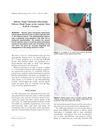
May 2013 in “Pediatric Dermatology” This case report documents the second known instance of a salivary gland choristoma on the chest wall of a newborn, highlighting its benign nature and the importance of accurate diagnosis.
3 citations
,
August 2000 in “Anatomia Histologia Embryologia” In this study, prenatal exposure to a non-teratogenic dose of all-trans-retinoic acid showed no adverse effects on vibrissal follicle development in NMRI mice.
 2 citations
,
May 2017 in “Springer eBooks”
2 citations
,
May 2017 in “Springer eBooks” Pregnancy can cause skin changes and affect existing skin conditions, with limited treatment options due to the need for fetal safety.
 1 citations
,
November 2018 in “Journal of pathology and translational medicine”
1 citations
,
November 2018 in “Journal of pathology and translational medicine” Fetal death was caused by umbilical cord stricture with hair growth in the Wharton jelly.
 1 citations
,
June 2014 in “International Journal of Dermatology”
1 citations
,
June 2014 in “International Journal of Dermatology” This correspondence discusses follicular mucinosis in association with pregnancy but does not report new clinical results, instead calling attention to the observed connection.
1 citations
,
December 2013 in “BMJ case reports” This case report describes a 27-year-old pregnant woman with Werner9s syndrome and uncontrolled hypertension, resulting in her death during an emergency caesarean section, though her baby survived and tested negative for the condition.
1 citations
,
January 1997 in “Skin Pharmacology and Physiology” In this study, researchers found a significant decrease in the modulus of elasticity of hair shafts in premature neonates compared to full-term ones, potentially due to differences in disulphide bonds or microfibril arrangement.
 March 2026 in “DergiPark (Istanbul University)”
 This study evaluated pregnant women's skincare and cosmetic usage habits, revealing that despite continued use during pregnancy, their awareness and practices of sun protection were insufficient. The researchers suggest that educational programs could improve knowledge on safe cosmetic choices and sun protection for expectant mothers.
 August 2025 in “BMC Pregnancy and Childbirth”
 In this study, prenatal ultrasonography was found to be a valuable tool for screening ectodermal dysplasia during pregnancy, and a new EDA gene variant associated with X-linked hypohidrotic ectodermal dysplasia was identified, aiding in more accurate diagnoses and reproductive decision-making.

This study found that self-monitoring blood pressure among pregnant women with hypertension did not significantly improve clinical outcomes compared to usual care, though women reported positive cognitive and emotional responses.
March 2022 in “Journal of Pakistan Association of Dermatologists” This case report describes a pregnant woman with pemphigus vulgaris whose condition improved with systemic corticosteroid treatment, highlighting the challenges of managing PV during pregnancy and the importance of intensive monitoring.
 January 2022 in “Bio web of conferences/BIO web of conferences”
 This study concluded that the elemental composition of tail brush hair in newborn calves can indicate trace element supply to the fetus during the last months of pregnancy.
 September 2018 in “Fertility and Sterility”
 This study observed that inflammatory stimuli significantly altered gene expression in rat theca-interstitial cells, affecting pathways related to growth and androgen production, which are central features of polycystic ovary syndrome.
 August 2014 in “Warwick Research Archive Portal (University of Warwick)”
 This study found that obesity in women may impair endometrial stromal function and contribute to reproductive complications, possibly due to metabolic influences rather than immune cell differences.
 December 2012 in “Journal of dermatological science”
 This study observed that Langerhans cells and melanocytes migrated to hair follicle sites during human embryogenesis, suggesting that Langerhans cells acquire immunoregulatory properties there.
September 2012 in “대한피부과학회지” In this study, Dsc 1 was highly expressed in certain layers of fetal epidermis and hair follicle but not in basal cells or oral mucosa, indicating its potential role in maintaining epithelial integrity.

This study found that prenatal exposure to finasteride in rats disrupted male reproductive development, causing physical alterations such as delayed preputial separation and increased nipple retention.
This study observed that the expression of EGF and EGFR increased during goat fetal skin development, suggesting these components play significant roles in skin maturation.
 January 1980 in “Journal of the Japan Veterinary Medical Association”
 This study suggests that iodine deficiency in sows may cause alopecia and other health issues in their newborn piglets.
122 citations
,
October 2013 in “PEDIATRICS” This study observed that cortisol concentrations in hair, indicating prolonged stress, are correlated between mothers and young children, suggesting potential heritable traits or maternal influence.
 86 citations
,
March 1993 in “Toxicology and Applied Pharmacology”
86 citations
,
March 1993 in “Toxicology and Applied Pharmacology” Finasteride affects male rat genitalia development, causing abnormalities during specific pregnancy days.
39 citations
,
March 2022 in “Nature Protocols” This study describes a protocol for generating hair-bearing skin organoids from human pluripotent stem cells, achieving full complexity resembling fetal skin tissue by day 130 in vitro.
34 citations
,
September 2010 in “Clinical and Experimental Dermatology” This study identified a new heterozygous mutation in the connexin 26 gene (c.263C>T; p.Ala88Val) in a premature neonate with KID syndrome, who later died from complications.
30 citations
,
July 1984 in “Journal of Animal Science” In this study, sows fed a diet with added biotin weaned more pigs per litter overall, though other reproductive and health metrics showed no improvement.
 29 citations
,
September 2012 in “Birth Defects Research”
29 citations
,
September 2012 in “Birth Defects Research” This review discusses the developmental regulation of wound healing mechanisms in mammals, focusing on the role of the Wnt and TGF‐β signaling pathways, and reports no new clinical findings.
 29 citations
,
December 2003 in “Teratology”
29 citations
,
December 2003 in “Teratology” This case report describes fetal malformations and placental abnormalities in a pregnant woman who applied minoxidil topically, suggesting potential risks of its use during pregnancy.
 19 citations
,
June 2020 in “Animals”
19 citations
,
June 2020 in “Animals” This study found that maternal sub-maintenance nutrition reduced the density and branching ratio of secondary wool follicles in Merino sheep fetuses and identified genes potentially involved in these processes.
15 citations
,
January 1999 in “Reproduction Fertility and Development” This study conclusively demonstrated that in Merino fetuses, secondary follicle initiation is completed several weeks before birth, with a peak 16 days prior and lower levels observed at and after birth.