14 citations
,
March 2018 in “The American journal of case reports” This study highlights the phenotypic variability in 5 patients with Woodhouse-Sakati syndrome carrying the c.436delC mutation, suggesting a broader range of clinical presentations than previously recognized.
12 citations
,
June 2016 in “Clinical and experimental dermatology” This study reported a previously undescribed G573V point mutation in the TRPV3 gene as a cause of familial Olmsted syndrome in a Mongolian family.
 8 citations
,
December 2009 in “Journal of The European Academy of Dermatology and Venereology”
8 citations
,
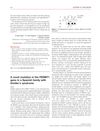
December 2009 in “Journal of The European Academy of Dermatology and Venereology” This article discusses a novel mutation in the FERMT1 gene identified in a Spanish family with Kindler’s syndrome but reports no new clinical results.
11 citations
,
November 2011 in “The Journal of Dermatology” This case report highlights the association of three CX26 gene mutations, particularly the D50N mutation, with keratitis–ichthyosis–deafness syndrome and its potential role in scalp squamous cell carcinoma and breast cancer development in a patient.
 August 2020 in “Pakistan Journal of Zoology”
 This study identified a novel genetic mutation, c.429delC in the hairless gene, associated with atrichia with papular lesions in two Pakistani families.
34 citations
,
November 1998 in “Journal of Investigative Dermatology” A common mutation in the hHb6 gene is linked to monilethrix, but other factors may also play a role.
 3 citations
,
February 2011 in “Journal of Biomedical Research/Journal of biomedical research”
3 citations
,
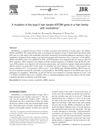
February 2011 in “Journal of Biomedical Research/Journal of biomedical research” This study identified a novel mutation, R430Q in the KRT86 gene, in a Han family with monilethrix, which may contribute to the disease's pathogenic mechanism.

This case report describes a 33-year-old Kashmiri woman with Woodhouse-Sakati syndrome who has a rare DCAF17 gene mutation, c.321+1G>A, providing further evidence for its role in the genetic basis of this neuroendocrine disorder.
This study mapped the curly mutation in mice to a specific region on chromosome 11, identifying it as a candidate model for studying human genetic hair disorders.
January 2022 in “Mammalian Genome” This study found that the wavy coat trait in Nakano cataract mice is polygenic, involving major and minor genes, and resembles human curly scalp hair associated with the PRSS53 gene alteration.
 24 citations
,
November 2008 in “Arquivos Brasileiros de Endocrinologia & Metabologia”
24 citations
,
November 2008 in “Arquivos Brasileiros de Endocrinologia & Metabologia” In this study, mutations in the vitamin D receptor were identified in Brazilian children with rickets and alopecia, leading to impaired receptor activation and reduced 24-hydroxylase expression.
 August 2025 in “BMC Pregnancy and Childbirth”
 In this study, prenatal ultrasonography was found to be a valuable tool for screening ectodermal dysplasia during pregnancy, and a new EDA gene variant associated with X-linked hypohidrotic ectodermal dysplasia was identified, aiding in more accurate diagnoses and reproductive decision-making.
1 citations
,
September 2021 in “Frontiers in genetics” This case report identifies a previously undocumented nonsense mutation in DCAF17 in a Chinese patient with Woodhouse-Sakati syndrome, inherited from consanguineous parents.
September 2022 in “Indian Journal of Paediatric Dermatology” This case report documents the first confirmed mutation-proved instance of Clouston syndrome in a large Chinese-Malaysian family, linked to the c.263C>T (A88V) mutation in the GJB6 gene, with no available treatment but highlighting the importance of genetic counseling.
35 citations
,
August 2006 in “Molecular genetics and metabolism” This study found significant variation in tissue mutant load in individuals with the T8993G mutation, which complicates genetic counseling and may inform genotype-phenotype correlations, especially using hair bulb mtDNA analysis.
4 citations
,
January 2023 in “Journal of Clinical Investigation” This study identified a recurrent mutation in the endothelin receptor type A associated with mandibulofacial dysostosis with alopecia, and proposed a mechanism involving increased ligand affinity due to structural changes.
3 citations
,
January 2011 in “生物医学研究杂志:英文版” In this study, a novel heterozygous transition mutation in the KRT86 gene was identified, which may be pathogenic for monilethrix in a Chinese family.
 6 citations
,
January 2013 in “The Journal of Dermatology”
6 citations
,
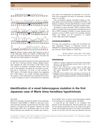
January 2013 in “The Journal of Dermatology” Researchers found a new genetic mutation causing a rare hair loss condition in the first Japanese child studied.
 6 citations
,
January 2020 in “BMC Medical Genetics”
6 citations
,
January 2020 in “BMC Medical Genetics” In this study, researchers identified a novel STS gene (c.287G > A; p.W96*) mutation in Pakistani individuals with X-linked ichthyosis, expanding the understanding of its genetic causes and aiding in genetic counseling.
 13 citations
,
November 2009 in “Journal of Dermatological Science”
13 citations
,
November 2009 in “Journal of Dermatological Science” This article discusses various dermatological studies cited by previous authors and reports no new clinical results.
June 2020 in “Zenodo (CERN European Organization for Nuclear Research)” This study suggests that the DNMT3B -579 G>T polymorphism may be a genetic risk factor for colorectal cancer in the Azerbaijani population.
 2 citations
,
August 2022 in “The journal of investigative dermatology/Journal of investigative dermatology”
2 citations
,
August 2022 in “The journal of investigative dermatology/Journal of investigative dermatology” This review discusses the genetic origins of autosomal recessive woolly hair with hypotrichosis and reports no clinical results; it highlights the link to homozygous variants in the K25 keratin gene.
January 1996 in “Studia iuridica” This study identified two novel point mutations in the hHb6 gene associated with monilethrix, suggesting these mutations could serve as diagnostic markers for this genetic hair disorder.
 10 citations
,
September 2015 in “PLoS ONE”
10 citations
,
September 2015 in “PLoS ONE” This case report documents a female toddler with novel compound heterozygous mutations in the VDR gene causing hereditary 1,25-dihydroxyvitamin D-resistant rickets, expanding the known mutation spectrum for this disease.
2 citations
,
January 2024 in “Revista Paulista de Pediatria” In this case report, researchers described a 6-year-old girl with severe mandibuloacral dysplasia type A, noting unique physical deformities and a rare homozygous LMNA gene mutation not commonly associated with the condition.
 November 2022 in “Journal of Investigative Dermatology”
 In this study, analysis of over 800 Iranian patients with epidermolysis bullosa identified 15 with pathogenic PLEC variants, highlighting a correlation between variant locations and phenotypic manifestations of plectinopathies.
1 citations
,
January 2016 in “Australasian Journal of Dermatology” This case study describes a 54-year-old man with an E600A mutation in the NOD-2 gene associated with Blau syndrome, who presented with skin involvement, differing from typical cases, and initially responded to colchicine treatment.
3 citations
,
March 2019 in “European Journal of Dermatology” A specific gene mutation (Y449H in K10) was found in a patient with severe skin disorder.
 2 citations
,
September 2022
2 citations
,
September 2022 In this study, researchers found that a PER3 gene SNP may be pathogenic for a new subtype of dyschromatosis universalis hereditaria, especially when combined with a SASH1 mutation.
26 citations
,
October 2002 in “Journal of Investigative Dermatology” This study identifies a mutation in the hairless gene that may impact thyroid receptor interaction, contributing to alopecia universalis congenita in an Arab Israeli patient.