 40 citations
,
January 2013 in “International journal of trichology”
40 citations
,
January 2013 in “International journal of trichology” This study found that among women with frontal fibrosing alopecia, 100% showed dermoscopic elements suggestive of the condition, with perifollicular erythema often indicating disease activity.
 4 citations
,
September 2012 in “Journal of dermatological science”
4 citations
,
September 2012 in “Journal of dermatological science” The hair follicle's connective tissue is a key source of a certain collagen in human scalp skin.
 January 2020 in “Annals of the Academy of Romanian Scientists Series of Medicine”
 This article discusses the proposed role of immunologic responses to staphylococcal superantigens in folliculitis decalvans and reports no clinical results; treatment should be tailored to the disease's severity.
1 citations
,
May 2020 in “bioRxiv (Cold Spring Harbor Laboratory)” In this study, researchers identified a temperature-sensitive mutation in the FERONIA gene of plants that prevents root hair formation at elevated temperatures, highlighting its role in maintaining root hair growth and response to plant hormones.
January 2026 in “Biomacromolecules” This study reports that a novel nanolipogel with moderate rigidity (NLG-2.5) enhances transdermal delivery of fucosterol, displaying superior permeability, targeting hair follicles, and promoting hair growth in androgenetic alopecia model mice by inhibiting inflammation and androgen pathways and promoting angiogenesis.
December 2021 in “Journal of pharmaceutical research international” This study found that trichoscopy can effectively differentiate female pattern hair loss from chronic telogen effluvium based on specific features like hair shaft diameter variability and density differences, aiding in targeted treatment planning.
 2 citations
,
April 2017 in “Actas Dermo-Sifiliográficas”
2 citations
,
April 2017 in “Actas Dermo-Sifiliográficas” This review discusses the etiology, pathogenesis, clinical presentation, and treatment of frontal fibrosing alopecia, noting the lack of clinical trial data and limited observational treatment results.
November 2025 in “The Journal of Immunology” This study found that CD80 expression in wound-activated hair follicle stem cells induces Foxp3 expression in effector T cells, facilitating wound repair by converting them into regulatory T cells.
 6 citations
,
January 2023 in “Medical Mycology Journal”
6 citations
,
January 2023 in “Medical Mycology Journal” In this case study of a 64-year-old woman with kerion celsi caused by Microsporum canis, treatment with the oral antifungal fosravuconazole resulted in symptom resolution without scarring or side effects over 12 weeks, suggesting its potential effectiveness for various dermatomycoses.
 14 citations
,
October 2018 in “PloS one”
14 citations
,
October 2018 in “PloS one” In this study, Far2-/- mice were observed to develop focal alopecia with altered sebaceous gland morphology and lower skin lipid levels compared to wildtype mice.
1 citations
,
May 2024 in “Communications Biology” This study found that Dab2 conditional knockout mice experienced delayed hair follicle cycles and reduced hair follicle stem cell activity, suggesting Dab2's crucial role in regulating stem cell activation and anti-aging process in hair follicles.
 2 citations
,
July 2021 in “JAAD Case Reports”
2 citations
,
July 2021 in “JAAD Case Reports” This case study suggests that trichoscopic examination of the beard can aid in diagnosing frontal fibrosing alopecia in men, especially when challenging to differentiate from androgenetic alopecia.
 9 citations
,
August 2014 in “Journal of The American Academy of Dermatology”
9 citations
,
August 2014 in “Journal of The American Academy of Dermatology” This article discusses the authors' concerns over the misinterpretation of studies linking smoking and frontal fibrosing alopecia, clarifying that neither study suggests smoking is protective against the condition.
 November 2023 in “The journal of investigative dermatology/Journal of investigative dermatology”
 This study found that engineered high-affinity soluble CD200R agonists, including ARQ-234, showed superior efficacy in reducing immune responses in various preclinical models of inflammatory conditions, suggesting potential as a therapeutic for atopic dermatitis and other related diseases.
22 citations
,
September 2011 in “Journal of Investigative Dermatology” This study found that impaired TCF/Lef1 signaling in mice leads to significant skin barrier defects due to altered lipid metabolism and epidermal differentiation.
2 citations
,
October 2024 in “Indian Journal of Orthopaedics”  33 citations
,
January 2010 in “International journal of trichology”
33 citations
,
January 2010 in “International journal of trichology” This case series reports 13 patients with folliculitis decalvans treated with antimicrobial therapy, highlighting the variability in response outcomes for this challenging condition.
 7 citations
,
September 2015 in “Actas Dermo-Sifiliográficas”
7 citations
,
September 2015 in “Actas Dermo-Sifiliográficas” This article reviews the challenges of treating frontal fibrosing alopecia and the potential role of hair transplantation, noting the lack of effective medical treatments and uncertainty surrounding transplant outcomes.
25 citations
,
April 2008 in “Clinical and experimental dermatology” This case series describes Erythromelanosis follicularis faciei et colli in five Indian patients, suggesting it may be more common than currently reported.
 7 citations
,
January 2023 in “Frontiers in cell and developmental biology”
7 citations
,
January 2023 in “Frontiers in cell and developmental biology” This study found that Celsr1, not Celsr2, is the primary protein involved in establishing planar cell polarity and hair follicle polarization in the epidermis of mice.
 18 citations
,
June 2017 in “Journal of The American Academy of Dermatology”
18 citations
,
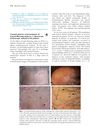
June 2017 in “Journal of The American Academy of Dermatology” In this study, trichoscopy consistently identified typical findings of frontal fibrosing alopecia, revealing three unusual clinical patterns in 18.4% of patients, which may aid in the differential diagnosis when clinical presentations are atypical.
 12 citations
,
April 2020 in “Facial Plastic Surgery Clinics of North America”
12 citations
,
April 2020 in “Facial Plastic Surgery Clinics of North America” This study reviews advancements in hair restoration surgery, noting that follicular unit excision significantly improves outcomes by enabling graft harvesting without scarring and reporting a graft transection rate under 4% when conducted with advanced equipment.
 225 citations
,
April 2018 in “Journal of Investigative Dermatology”
225 citations
,
April 2018 in “Journal of Investigative Dermatology” Two main types of fibroblasts with unique functions and additional subtypes were identified in human skin.
June 2026 in “ACS Applied Polymer Materials” This study reports a method for fabricating biofunctional polymer fibers by using DNA-programmable cell-free protein synthesis integrated through solution blow spinning, enabling in situ protein production and potential applications in respirators, sampling swabs, and other advanced materials.
 8 citations
,
February 2010 in “Journal für Kardiologie (Krause & Pachernegg GmbH)”
8 citations
,
February 2010 in “Journal für Kardiologie (Krause & Pachernegg GmbH)” This study developed a detailed classification system for functional androgenization in females that may enhance diagnosis and personalized treatment by identifying individual dysfunctions.
July 2026 in “Theranostics” This study developed a novel ferritin-based delivery system (LR@Fn) that effectively co-delivers RG108 and LLY283 for hearing loss treatment in animal models, reducing hair cell loss and synaptic damage more effectively than dexamethasone.
 44 citations
,
March 2015 in “PLOS ONE”
44 citations
,
March 2015 in “PLOS ONE” This study found that FGF-9 treatment in diabetic mice improved heart function after myocardial infarction by decreasing monocyte infiltration and promoting anti-inflammatory macrophage differentiation.
 29 citations
,
July 2010 in “Journal of Cutaneous Medicine and Surgery”
29 citations
,
July 2010 in “Journal of Cutaneous Medicine and Surgery” This study reported no significant improvement in patients with frontal fibrosing alopecia treated with various therapeutic agents, highlighting the need for more evidence-based treatments, especially in those with active disease.
September 2023 in “Facial Plastic Surgery” This article discusses safe planning and decision-making in follicular unit excision for beginner surgeons and reports no new clinical results.
 25 citations
,
January 2014 in “Annals of Dermatology”
25 citations
,
January 2014 in “Annals of Dermatology” Sfrp2 increases during hair follicle catagen phase and slows keratinocyte growth.