February 2026 in “Indian Dermatology Online Journal” This study reports that oral tofacitinib treatment in a patient with refractory lichen planus pigmentosus and frontal fibrosing alopecia resulted in near-complete resolution of hyperpigmentation and cessation of hairline recession over 18 months, and suggests it may be a promising therapy for these challenging conditions.
 May 2022 in “International journal of infectious diseases”
 In this case study, a 70-year-old woman with generalized favus caused by Trichophyton schoenleinii achieved a clinical and mycological cure after a one-month terbinafine treatment.
2 citations
,
October 2015 in “Mikrobiyoloji bülteni” This case report describes a 20-year-old female with favus caused by T. schöenleinii, which initially improved with antifungal treatment but recurred due to poor adherence, underscoring favus as an ongoing health issue in Turkey.
7 citations
,
July 2021 in “The Journal of Dermatology” This study in Asian females found that higher use of moisturizers and sunscreen among FFA patients may reflect appearance concerns rather than indicating a direct link to the disease mechanism.
 September 2024 in “Journal of the American Academy of Dermatology”
 This study found that phenoxyethanol is the most common contact allergen in over-the-counter hair loss products, but its role in the development or exacerbation of frontal fibrosing alopecia remains unclear.
This study found that the Arabidopsis thaliana protein Formin 2 localizes to plasmodesmata and is crucial for regulating their permeability by anchoring actin filaments, which affects virus susceptibility.
 1 citations
,
January 2019 in “Acta dermato-venereologica”
1 citations
,
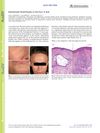
January 2019 in “Acta dermato-venereologica” The woman's skin and hair symptoms were confirmed as frontal fibrosing alopecia, and while facial papules are common in such cases, there's no effective local treatment, but systemic treatments can help.
 April 2018 in “Journal of Investigative Dermatology”
 This study found that the protein Fetuin A, when injected into fetal wounds that typically heal without scarring, caused scar formation and increased collagen production in fibroblasts in an animal model.
 63 citations
,
October 2011 in “Archives of Dermatology”
63 citations
,
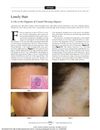
October 2011 in “Archives of Dermatology” Isolated long hairs at the original hairline can help diagnose Frontal Fibrosing Alopecia.
 2 citations
,
June 2021 in “Research Square (Research Square)”
2 citations
,
June 2021 in “Research Square (Research Square)” This study identified a novel missense mutation in the FGF5 gene associated with the longhair phenotype in about 3% of Maine Coon cats, suggesting it may be a breed-specific variant.
July 2024 in “Journal of Investigative Dermatology” The Fas/FasL pathway may play a role in alopecia areata.
 1 citations
,
May 2024 in “Dermatology and Therapy”
1 citations
,
May 2024 in “Dermatology and Therapy” This review article examines the current understanding of frontal fibrosing alopecia, noting its prevalence in different demographics and the roles of genetic and environmental factors in its pathogenesis, while highlighting that treatment approaches remain varied and lack standardization.
 3 citations
,
November 2020 in “Planta medica international open”
3 citations
,
November 2020 in “Planta medica international open” This study reported that plant-produced basic fibroblast growth factor effectively promoted cell proliferation and collagen production in vitro, suggesting potential applications in cosmetics for antiaging and hair growth.

This case study documented a 36-year-old woman with postpartum-onset frontal fibrosing alopecia who showed significant improvement in hair regrowth after early combination therapy with dutasteride, tofacitinib, and intralesional triamcinolone acetonide, suggesting potential benefits of multimodal treatment in this typically irreversible condition.
 January 2022 in “Дерматологія та венерологія”
 This paper presents two cases of frontal fibrosing alopecia in postmenopausal women, noting challenges in monitoring due to the invasive nature of the diagnostic process.
25 citations
,
May 1995 in “Journal of the American Academy of Dermatology” This article reports two new cases of erythromelanosis follicularis faciei in women and includes a literature review on this rarely diagnosed condition.
April 2026 in “Indian Journal of Dermatology” This case report documents an unusual instance of follicular vitiligo in a young woman, characterized by selective hair depigmentation on the forearms, distinctive dermoscopic and Wood's lamp findings, and histological evidence suggesting functional impairment rather than complete loss of follicular melanocytes.
June 2026 in “International Journal of Ayurvedic Medicine” This randomized clinical trial observed that Facia Men’s capsule significantly reduced hair shedding in men with androgenetic alopecia over 12 weeks without affecting renal or liver function, though a small change in blood glucose suggests monitoring metabolic health.
October 2024 in “Benha Journal of Applied Sciences” This study of fifty female patients with frontal fibrosing alopecia in Egypt found that it is a complex condition with no definitive treatment, as it often co-occurs with lichen planus and thyroid issues.
 89 citations
,
February 2002 in “Australasian journal of dermatology”
89 citations
,
February 2002 in “Australasian journal of dermatology” This case report describes the first known instance of fibrosing alopecia associated with cutaneous lichen planus, suggesting fibrosing alopecia may be a variant of lichen planopilaris.
April 2019 in “Journal of Investigative Dermatology” This study found that frontal fibrosing alopecia involves distinct molecular changes, such as downregulation of steroid and cholesterol pathways and upregulation of fibrotic and immune response genes, which may help guide treatment strategies.
March 2014 in “Oxford University Press eBooks” This narrative review explores the failure of fludalanine as an orally active antibiotic and highlights valuable insights into problem-solving strategies in drug discovery, without reporting new clinical results.
December 2025 in “JEADV Clinical Practice” This case study reports on a 72-year-old woman with frontal fibrosing alopecia and hair repigmentation, suggesting the rare occurrence of canities reversal could aid in diagnosing FFA.
August 2019 in “Journal of the American Academy of Dermatology” Frontal fibrosing alopecia may be caused by an autoimmune reaction and hormonal imbalance.
 January 2026 in “BIO Web of Conferences”
 This study suggests that fibroblast growth factors exhibit significant expression differences in rodent and primate skin, potentially related to their evolutionary paths and environmental adaptations.
September 2023 in “Journal of the American Academy of Dermatology” This meta-analysis found a significant positive association between frontal fibrosing alopecia and both sunscreen and moisturizer use, with the moisturizer association significant only in males.
 39 citations
,
July 2015 in “British Journal of Dermatology”
39 citations
,
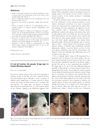
July 2015 in “British Journal of Dermatology” This article discusses the pseudo 'fringe sign' in frontal fibrosing alopecia, highlighting that it is not solely related to traction, and it reports no new clinical results.
54 citations
,
November 2007 in “Actas Dermo-Sifiliográficas” Early diagnosis of frontal fibrosing alopecia is crucial to prevent permanent hair loss.
83 citations
,
February 1991 in “Development” This study found that Fos protein expression is closely linked to epithelial cell differentiation, particularly during cornification and cell death, with overexpression observed in keratinization-blocked mutant epidermis.

This review discusses the potential link between contact allergy and frontal fibrosing alopecia, noting the presence of implicated allergens in current literature, but reports no new clinical findings.