 14 citations
,
October 2003 in “Annals of Oncology”
14 citations
,
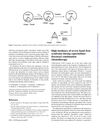
October 2003 in “Annals of Oncology” In this study, the researchers observed that the severity of capecitabine-induced hand-foot syndrome in advanced gastric cancer patients was not linked to the IVS14+1G→A mutation in the DPYD gene.
This study identified novel mutations associated with ectodermal dysplasias in Pakistani families, including a missense mutation in the KRTHB5 gene linked to pure hair-nail ectodermal dysplasias and mutations in the EDAR gene related to hypohidrotic ectodermal dysplasia.
5 citations
,
December 2014 in “Molecular cytogenetics” This study identified a 290 Kb microduplication in chromosome 1q22 in a family with members exhibiting neurodevelopmental disorders, suggesting a link between this genetic alteration and the observed neurological symptoms.
2 citations
,
May 2006 in “Archives of Pathology & Laboratory Medicine” This case report describes a 40-year-old woman with Birt-Hogg-Dubé syndrome diagnosed with multiple chromophobe renal cell carcinomas, highlighting the importance of recognizing associated dermatologic lesions for early intervention.
January 2024 in “Frontiers research topics” This research abstract outlines the innovative approach of the Frontiers journal series, which aims to transform academic publishing by providing open access, interdisciplinary journals that employ a rigorous peer-review process to serve both scholarly communities and the public.
 39 citations
,
January 2015 in “Annals of dermatology/Annals of Dermatology”
39 citations
,
January 2015 in “Annals of dermatology/Annals of Dermatology” This review discusses three newly identified forms of epidermolysis bullosa related to mutations in DST-e, EXPH5, and ITGA3, offering insights into their genetic and clinical characteristics but reports no new clinical results.
 4 citations
,
January 1970 in “Journal of Bangladesh College of Physicians and Surgeons”
4 citations
,
January 1970 in “Journal of Bangladesh College of Physicians and Surgeons” This report highlights a case of adrenoleukodystrophy, a rare disease, diagnosed in a young boy with neuropsychiatric symptoms and Addison's disease, stressing the importance of early diagnosis and genetic counseling.
 November 2022 in “Journal of the Endocrine Society”
 This case study suggests that genetic susceptibility to PCOS and rare syndromes, such as Trichorhinophalangeal syndrome Type 1, should be considered in young men with unexplained hyperandrogenism.
 October 2024 in “Journal of the Endocrine Society”
 This case study reports on a rare form of vitamin D resistant rickets in a 37-year-old male, highlighting the condition's clinical features and the necessity for a thorough understanding of calcium and vitamin D metabolism in the diagnosis and management of metabolic bone diseases.
August 2024 in “American Journal of Medical Genetics Part A” In this case study, researchers detailed two Saudi cases of the ultra-rare Trichohepatoneurodevelopmental syndrome, identifying pathogenic variants in the CCDC47 gene and reinforcing a strong gene-disease association, which helps clarify the disorder's clinical features and genetic mutations.
July 2024 in “Journal of Investigative Dermatology” CRISPR/Cas9 and prime editing can potentially fix skin disorder genes safely and effectively.
74 citations
,
October 2012 in “The American Journal of Human Genetics” This study found that loss-of-function mutations in the HOXC13 gene cause autosomal-recessive pure hair and nail ectodermal dysplasia, emphasizing its role in hair and nail development.
January 1996 in “Studia iuridica” This study identified two novel point mutations in the hHb6 gene associated with monilethrix, suggesting these mutations could serve as diagnostic markers for this genetic hair disorder.
2 citations
,
November 2004 in “Blood” In this study, researchers reported that the Pinkie mutation in mice, affecting RXRa activity, leads to skewed Th1 development and suggests RXRa's role in Th2 differentiation, impacting immune responses.
 December 2023 in “The Sri Lanka Journal of Dermatology”
 In this case report, a 12-year-old girl was diagnosed with alopecia as part of the rare ALX4-related frontonasal dysplasia sequence, highlighting the condition's uniqueness in pediatric dermatology.
 5 citations
,
September 2015 in “BMC Medical Genetics”
5 citations
,
September 2015 in “BMC Medical Genetics” In this study, individuals with a c.1072C > T mutation in the EDAR gene showed more hair shaft deformations compared to non-mutation carriers, highlighting EDAR's role in hair follicle development.
60 citations
,
August 2022 in “ESMO Open” This review discusses managing common and notable adverse events associated with the antibody-drug conjugate trastuzumab deruxtecan in patients with HER2-positive unresectable/metastatic breast cancer and reports no new clinical results.
 6 citations
,
January 2011 in “Journal of pediatric endocrinology & metabolism/Journal of pediatric endocrinology and metabolism”
6 citations
,
January 2011 in “Journal of pediatric endocrinology & metabolism/Journal of pediatric endocrinology and metabolism” This report details the case of an 11-year-old girl with APECED syndrome carrying a unique homozygous mutation in the AIRE gene, the first of its kind documented.
October 2024 in “Developmental Dynamics” This paper highlights advances in Developmental Dynamics, noting how epoa-deficient zebrafish can model Diamond-Blackfan anemia like disorders for drug screening, Alx4 mouse models offer insights into craniofacial development, and mTORC1 signaling is crucial for retinal development.
 3 citations
,
April 2015 in “AFRICAN JOURNAL OF BIOTECHNOLOGY”
3 citations
,
April 2015 in “AFRICAN JOURNAL OF BIOTECHNOLOGY” This study found that certain Y-chromosome alleles may influence susceptibility to prostate cancer among Iraqi males, suggesting potential genetic screening markers for the disease.
28 citations
,
August 2013 in “Hypertension” The authors concluded that diazoxide reduces undesirable side effects compared to minoxidil while increasing elastic fiber content and decreasing cell number in the aorta, suggesting potential suitability for treating vascular conditions with low arterial elastin and hypertension.
 94 citations
,
July 2020 in “European Journal of Human Genetics”
94 citations
,
July 2020 in “European Journal of Human Genetics” This article provides guidelines for molecular genetic testing of congenital adrenal hyperplasia due to 21-hydroxylase deficiency, focusing on quality requirements, methodologies, and variant classification; it reports no new clinical results.
January 1982 in “Clinical Cosmetic and Investigational Dermatology” This case report describes a 54-year-old woman with familial dyskeratotic comedones who experienced slight improvement in her skin lesions after three months of treatment with topical retinoids and urea cream.
19 citations
,
February 2001 in “Journal of paediatrics and child health” This report documents a 14-year-old Chinese boy with mitochondrial encephalopathy, lactic acidosis, stroke-like episodes, and a de novo A3243G mitochondrial DNA mutation, highlighting the condition's multisystem involvement without ragged red fibers in muscle biopsy.
3 citations
,
September 2022 in “European Journal of Dermatology” This report identifies a novel splice-site variant in the LAMB3 gene linked to junctional epidermolysis bullosa, emphasizing the need for gene sequencing in diagnosing the disease.
22 citations
,
November 2016 in “International journal of molecular sciences” This study suggests that impaired VDR signaling in mice leads to dysregulated Ddit4 expression, impacting hair cycle progression and wound healing.
7 citations
,
November 1997 in “Pediatric Dermatology” This case report identifies an association between trichothiodystrophy and a urologic malformation with primary hypercalciuria, adding to the spectrum of TTD-related abnormalities.
 December 2024 in “Kırıkkale Üniversitesi Tıp Fakültesi Dergisi”
 This study found that chromosomal microarray analysis identified copy number variations in 12% of patients with dysmorphic features and congenital anomalies, demonstrating its potential as a diagnostic tool, especially for rare CNVs and immune deficiency linked to the deletion of CTLA4.
12 citations
,
July 2004 in “Molecular genetics and genomics” This study identifies a new mutation in the Scd1 gene in a strain of Kunming mice, causing skin and hair defects with the mildest impact among similar mutations.
January 2015 in “Journal of Neuromuscular Diseases” This case report describes two boys with Danon disease, initially misdiagnosed due to increased transaminases, who exhibited cardiac issues and muscle pseudohypertrophy.