 18 citations
,
August 2015 in “Biochemical and Biophysical Research Communications”
18 citations
,
August 2015 in “Biochemical and Biophysical Research Communications” This study found that the XEDAR receptor can activate the non-canonical NF-kB pathway involving p100 processing, which is regulated by interactions with TRAF proteins and specific kinases.
11 citations
,
December 2013 in “Clinical and experimental dermatology” This study reports a case of a child with congenital skin fragility, alopecia, and cardiomyopathy due to compound heterozygous mutations in the DSP gene causing desmoplakin deficiency.
39 citations
,
September 2018 in “American Journal of Medical Genetics Part A” This case report describes a 32-month-old girl with a newly identified pediatric disorder linked to a de novo mutation in the ODC1 gene, mirroring symptoms seen in a transgenic mouse model.
 April 2017 in “Journal of Investigative Dermatology”
 This case study reports that a heterozygous missense GJA1 mutation, p.Gly138Ser, in a 2-year-old boy with oculodentodigital syndrome primarily resulted in syndactyly, fifth finger hypoplasia, and hypotrichosis, without neurological or craniofacial abnormalities.
28 citations
,
November 2018 in “American Journal of Medical Genetics Part A” This report describes a neurometabolic disorder linked to gain-of-function variants in the ODC1 gene, characterized by developmental delay, ectodermal abnormalities, and notable facial and neuroimaging features.
4 citations
,
August 2021 in “Pediatrics in review” This review explores disorders of sex development, emphasizing the need for a systematic, multidisciplinary approach and the benefits of genetic testing for better diagnosis and gender assignment planning, but it reports no new clinical findings.
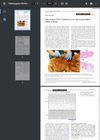 May 2024 in “Animal genetics”
 The researchers investigated a Maine Coon cat with suspected classical Ehlers-Danlos Syndrome and discovered a heterozygous deletion in the COL5A1 gene, underscoring the value of whole-genome sequencing for precise veterinary diagnostics.
3 citations
,
April 2012 in “Journal of the American Academy of Dermatology” Men with Addison disease should be screened for X-linked adrenoleukodystrophy if they have hair loss.
 109 citations
,
October 2007 in “American Journal of Human Genetics”
109 citations
,
October 2007 in “American Journal of Human Genetics” This study found that postnatal treatment with recombinant EDA normalized adult teeth, improved sweating, and restored normal lacrimation in dogs with XLHED, suggesting its potential as a treatment for the condition.
 8 citations
,
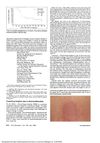
July 1990 in “Archives of Dermatology”
8 citations
,
July 1990 in “Archives of Dermatology” This case report details a fixed-drug eruption in a woman linked to the use of dextromethorphan, marking it as a previously unreported skin reaction to this medication.
5 citations
,
July 1996 in “Journal of Cutaneous Medicine and Surgery” This study explains that while trichothiodystrophy and xeroderma pigmentosum share genetic defects, TTD patients primarily exhibit issues in transcription initiation, not the increased skin cancer risk seen in XP.
3 citations
,
December 2013 in “Balkan Journal of Medical Genetics” This case report highlights the use of microarray analysis to identify cryptic chromosomal rearrangements in a young woman with intellectual disability and multiple congenital anomalies.
 20 citations
,
February 2019 in “Genes”
20 citations
,
February 2019 in “Genes” This study identifies a likely pathogenic homozygous missense variant in the AEBP1 gene in a patient with symptoms of classical Ehlers-Danlos syndrome, suggesting new perspectives for EDS classification and research.
 12 citations
,
January 2016 in “Journal of Orofacial Orthopedics / Fortschritte der Kieferorthopädie”
12 citations
,
January 2016 in “Journal of Orofacial Orthopedics / Fortschritte der Kieferorthopädie” This study identified a novel mutation in the EDA gene, which may impair protein stabilization and be involved in the development of oligodontia and mild ectodermal dysplasia phenotypes.
 November 2022 in “Journal of the Endocrine Society”
 This clinical case report identifies xanthomatous hypophysitis in a male patient, highlighting the mismatch between clinical symptoms and MRI findings, which led to a pituitary biopsy and accurate diagnosis instead of unnecessary surgery.
22 citations
,
September 2003 in “Journal of Investigative Dermatology” This study analyzed patients with X-linked dominant chondrodysplasia punctata and identified novel mutations in the emopamil-binding protein gene, highlighting the need for genetic testing alongside biochemical analysis for accurate diagnosis.
1 citations
,
April 2013 in “Journal of Investigative Dermatology” 4 citations
,
January 2017 in “Acta dermato-venereologica” A new EDA gene mutation was found in a Chinese family with a specific skin disorder.
11 citations
,
November 2011 in “The Journal of Dermatology” This case report highlights the association of three CX26 gene mutations, particularly the D50N mutation, with keratitis–ichthyosis–deafness syndrome and its potential role in scalp squamous cell carcinoma and breast cancer development in a patient.
February 2026 in “Pediatric Dermatology” 188 citations
,
June 1998 in “Molecular cell” This study found that mimicking the XPD point mutation in mice resulted in trichothiodystrophy-like symptoms, supporting the role of basal transcription and DNA repair defects in the disease.
68 citations
,
August 2009 in “American Journal of Medical Genetics Part A” This study systematically reviewed clinical findings in trichothiodystrophy patients and suggested a new clinico-genetic classification to help better understand the ichthyotic phenotype and its management.
8 citations
,
March 2011 in “Endocrine” In this study, researchers identified a novel p.R50X mutation in the vitamin D receptor gene, linked to hereditary vitamin D-resistant rickets in two siblings.
152 citations
,
April 2002 in “The journal of investigative dermatology/Journal of investigative dermatology” This study presents evidence that keratitis–ichthyosis–deafness syndrome is caused by a mutation in the connexin 26 gene, expanding the gene's known involvement in various disorders.
 3 citations
,
August 2023 in “Drug safety”
3 citations
,
August 2023 in “Drug safety” This source reports that trastuzumab deruxtecan improves outcomes in HER2-positive and HER2-low metastatic breast cancer, emphasizing the need for careful adverse event monitoring, particularly for interstitial lung disease, and managing emetic risk to maximize benefits.
 2 citations
,
August 2025 in “Scientific Reports”
2 citations
,
August 2025 in “Scientific Reports” This study analyzed pexidartinib-associated adverse events from FDA data and reported common events such as hepatic issues and systemic reactions. It highlighted sex-specific susceptibilities and reinforced the need for risk mitigation and long-term monitoring in tenosynovial giant cell tumor management.
 August 2025 in “International Journal of Contemporary Pediatrics”
 This case report presents a rare subtype of hypomyelinating leukodystrophy linked to a PYCR2 gene mutation, emphasizing exome sequencing's value in diagnosing undiagnosed childhood HLDs with atypical symptoms.
 1 citations
,
November 2017 in “Expert opinion on orphan drugs”
1 citations
,
November 2017 in “Expert opinion on orphan drugs” This review discusses the genetic basis of ectodermal dysplasia, highlighting that identification of gene pathologies enhances diagnosis and supports prenatal DNA testing, but it reports no new clinical results.
 January 2025 in “Dermatology Reports”
 This case report describes a 61-year-old Italian man with a rare, localized variant of junctional epidermolysis bullosa linked to the R795X mutation in the COL17A1 gene, highlighting the importance of precise diagnosis for effective management of rare genetic disorders.
46 citations
,
October 2012 in “Seminars in reproductive medicine” This review describes how recent discoveries in genetic defects and alternative pathways in androgen biosynthesis are reshaping our understanding of male sexual differentiation, but it presents no new clinical findings.