January 2026 in “International Journal of Molecular Sciences” This study found that inhibiting the Hedgehog pathway may reduce proliferation and migration in melanoma, suggesting its potential repurposing as a therapeutic target.
 6 citations
,
September 2023 in “Experimental physiology”
6 citations
,
September 2023 in “Experimental physiology” In this study, researchers identified the PLD-mGluR protein in primary mechanosensory terminals as the homomeric GluK2 kainate receptor, functioning purely metabotropically, which is suggested to be common to various sensory endings.
 5 citations
,
February 2004 in “Clinical and Experimental Ophthalmology”
5 citations
,
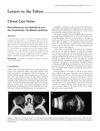
February 2004 in “Clinical and Experimental Ophthalmology” This study presents two cases correlating the clinical appearance of adult-onset foveomacular vitelliform dystrophy with optical coherence tomography findings, describing the location of the yellow vitelliform material.
 10 citations
,
September 2019 in “Experimental Eye Research”
10 citations
,
September 2019 in “Experimental Eye Research” This review discusses the role of RDH12 in vision, its structural and functional aspects, and related disease mechanisms, but reports no new clinical results; it aims to support therapy development for inherited retinal dystrophies.
 9 citations
,
February 2004 in “Clinical and Experimental Ophthalmology”
9 citations
,
February 2004 in “Clinical and Experimental Ophthalmology” This report documents the second known case of Castleman's disease in the lacrimal gland, diagnosed in an 84-year-old woman through histological examination after excising a left upper lid mass.
135 citations
,
March 2000 in “Journal of Biological Chemistry” This review discusses the roles of the Agouti and Agouti-related proteins in pigmentation and energy regulation and reports no new experimental findings.
 40 citations
,
November 2020 in “JAMA Dermatology”
40 citations
,
November 2020 in “JAMA Dermatology” This pharmacovigilance study found an increased association of suicidality and psychological adverse events with finasteride use, especially among younger patients using it for alopecia.
4 citations
,
March 2022 in “Journal of The American Academy of Dermatology” This study found an association between finasteride use and increased reporting of suicidality and depression in young patients with androgenetic alopecia, potentially mediated by sexual dysfunction.
1 citations
,
May 2021 in “JAMA Dermatology” This abstract is a website layout text and does not include any research findings or study results.
May 2022 in “The Journal of Sexual Medicine” This study detected a significant association between finasteride use and sexual dysfunction, particularly in younger patients with alopecia, suggesting that indication and reporting stimulation may influence the observed signal.
April 2022 in “The Journal of Sexual Medicine” This study found significant signals of sexual dysfunction associated with finasteride use, particularly in younger patients treated for alopecia, though confounding factors may partly contribute to reported cases.
August 2021 in “The Journal of Urology” This study found a significant association between finasteride use and reports of sexual dysfunction, particularly greater in young men using it for alopecia compared to older BPH patients.
 20 citations
,
February 2004 in “Clinical and Experimental Ophthalmology”
20 citations
,
February 2004 in “Clinical and Experimental Ophthalmology” This paper presents two cases of rare intraorbital ophthalmic artery aneurysms associated with arteriovenous malformations and discusses their clinical presentation, pathogenesis, and management, but reports no new clinical outcomes.
 23 citations
,
February 2004 in “Clinical and Experimental Ophthalmology”
23 citations
,
February 2004 in “Clinical and Experimental Ophthalmology” This case report describes a 68-year-old woman with metastatic breast cancer who experienced significant improvement in visual acuity after stopping tamoxifen, which was associated with bilateral optic neuropathies.
January 2016 in “e-Oftalmo CBO Revista Digital de Oftalmologia” This review discusses central serous chorioretinopathy, detailing its etiology, associated factors, diagnostic imaging, and therapeutic options, but provides no new clinical findings.
 29 citations
,
July 2014 in “PLoS ONE”
29 citations
,
July 2014 in “PLoS ONE” This study suggests that inactivation of β-catenin is necessary for chick retina regeneration, as it allows cells to enter the cell cycle during injury and promotes regeneration without needing FGF2.
39 citations
,
September 2018 in “American Journal of Medical Genetics Part A” This case report describes a 32-month-old girl with a newly identified pediatric disorder linked to a de novo mutation in the ODC1 gene, mirroring symptoms seen in a transgenic mouse model.
 5 citations
,
September 2015 in “Nepalese journal of ophthalmology”
5 citations
,
September 2015 in “Nepalese journal of ophthalmology” This case report highlights an 11-year-old girl with dermatopathia pigmentosa reticularis, identifying associated Salzmann's nodular degeneration of the cornea and emphasizing the need for a multidisciplinary management approach.
 April 2017 in “Journal of Investigative Dermatology”
 This case study reports that a heterozygous missense GJA1 mutation, p.Gly138Ser, in a 2-year-old boy with oculodentodigital syndrome primarily resulted in syndactyly, fifth finger hypoplasia, and hypotrichosis, without neurological or craniofacial abnormalities.
This case report describes a novel mutation in the CDH3 gene in an 11-year-old Iranian boy with sparse scalp hair and macular dystrophy, leading to altered P-cadherin synthesis.
 13 citations
,
February 2004 in “Clinical and Experimental Ophthalmology”
13 citations
,
February 2004 in “Clinical and Experimental Ophthalmology” This report describes the clinical and histopathological features of lipoid proteinosis in a brother and sister with lid lesions, highlighting the importance of recognizing such lesions for diagnosis.
 May 2025 in “Cermin Dunia Kedokteran”
 This study describes Coats disease as a non-hereditary, idiopathic retinopathy characterized by abnormal retinal vascular development, noting common symptoms such as leukokoria and strabismus, and emphasizes the use of imaging techniques to differentiate it from retinoblastoma.
23 citations
,
July 2016 in “JAMA Ophthalmology” This study observed that CDH3-related congenital hypotrichosis with juvenile macular dystrophy presents with childhood-onset progressive chorioretinal atrophy and universally thin and sparse scalp hair.
 4 citations
,
January 2018 in “International Journal of Trichology”
4 citations
,
January 2018 in “International Journal of Trichology” This case report describes a 4-year-old girl with hypotrichosis and juvenile macular dystrophy, linked to mutations in the cadherin 3 gene affecting P-cadherin expression.
15 citations
,
June 2019 in “Biochemical Journal” This study identified a heterozygous de novo mutation in the ODC1 gene causing a new disorder characterized by overgrowth and developmental delay, and suggests that DFMO treatment may help manage elevated ODC activity and putrescine levels.
This study found that mutant Cx43 impairs fibroblast function during wound healing and reduces hair follicle cell proliferation, likely contributing to hair growth defects in ODDD patients.
152 citations
,
April 2002 in “The journal of investigative dermatology/Journal of investigative dermatology” This study presents evidence that keratitis–ichthyosis–deafness syndrome is caused by a mutation in the connexin 26 gene, expanding the gene's known involvement in various disorders.
 19 citations
,
April 1995 in “Clinical Genetics”
19 citations
,
April 1995 in “Clinical Genetics” This report describes two siblings with a new familial association of loose anagen syndrome and ocular coloboma, despite unaffected parents and no family history.
September 2016 in “Journal of Dermatological Science” Polarizing light microscopy can easily and reliably diagnose congenital keratinizing disorders like Netherton syndrome.
January 2022 in “International journal of dermatology and venereology” This case study reports a 36-year-old man with KID syndrome caused by an N14Y GJB2 mutation, expanding the mutation spectrum of this condition in the Chinese population.