 June 2023 in “British Journal of Dermatology”
 This pilot study found that night shift workers showed fewer signs of wrinkle formation compared to day workers, but there were no significant differences in DNA amplification or collagen percentage.
 August 2018 in “Journal of The American Academy of Dermatology”
 Older men's scalp damage increases with age and sun exposure, a baby girl in the Philippines has Schimmelpenning syndrome, and thyroid screening is advised for children with hair loss and certain risk factors.
20 citations
,
February 1977 in “The anatomical record” This study found that excess vitamin A in organ cultures of mouse embryos led to significant changes in epidermis and hair follicles, altering morphogenesis and polysaccharide distribution.
 16 citations
,
September 2018 in “Journal of Molecular Liquids”
16 citations
,
September 2018 in “Journal of Molecular Liquids” This study investigated a nanostructured system using PS-b-PAA diblock copolymer for incorporating the hydrophobic photosensitizer ClAlPc, finding it effective in causing cellular damage in Caco-2 cells under light while demonstrating no cytotoxicity without light, suggesting its potential use in photodynamic therapy.
24 citations
,
December 1990 in “Pediatric Dermatology” This study observed that hair casts, seen in girls with tightly drawn hairstyles, may result from local circulatory disturbances and scalp inflammation.
 February 1938 in “Journal of the American Medical Association”
 This abstract contains no research results but appears to be a web navigation or user interface message.
9 citations
,
January 1975 in “Munich Personal RePEc Archive (Ludwig Maximilian University of Munich)” This report describes a case of Rothmund-Thomson type congenital poikiloderma, noting minor skin changes, hair loss, and slightly elevated lysine and cystine in the urine.
42 citations
,
August 1972 in “Archives of Disease in Childhood” This study observed that infants exposed to diazoxide in utero exhibited abnormal hair growth and, in some cases, impaired glucose tolerance, particularly those born to diabetic mothers.
 January 1980 in “Journal of the Japan Veterinary Medical Association”
 This study suggests that iodine deficiency in sows may cause alopecia and other health issues in their newborn piglets.
October 2025 in “International Journal of Homoeopathic Sciences” In this case report, a 5-year-old boy with premature greying and thinning of hair experienced reduced thinning and regained normal pigmentation after seven months of treatment with the homeopathic remedy Natrum muraticum.
April 1946 in “Archives of Dermatology” This report describes two cases of tinea capitis: one resistant to local iodine treatment after partial improvement, and another cured with the same treatment, in African American and Caucasian children, respectively.
5 citations
,
January 2024 in “Fermentation” This study found that fermenting porcine and equine placentas with a specific lactic acid bacterial strain enhanced the moisturizing abilities and cell proliferation properties compared to traditional placental extracts, suggesting their potential for cosmetic applications.
2 citations
,
March 2017 in “Sultan Qaboos University medical journal” This case report describes a six-month-old infant with focal scalp hair heterochromia and no detectable underlying abnormalities, which was still present at a one-year follow-up.
 April 2018 in “The journal of investigative dermatology/Journal of investigative dermatology”
 This study found that in a mouse model of Focal Dermal Hypoplasia, treatment with lithium carbonate improved skin disease symptoms compared to controls, though disease severity varied and posed interpretation challenges.
34 citations
,
December 1988 in “Pigment Cell Research” This article explores the use of monoclonal antibodies to study the presence and distribution patterns of melanocytes in developing human skin, but reports no new clinical results.
September 2015 in “Pediatrics in review” The 7-month-old boy has a persistent rash that doesn't improve with typical skin treatments.
 1 citations
,
February 2017 in “International journal of anatomy and research”
1 citations
,
February 2017 in “International journal of anatomy and research” This study found that the progression of fetal skin development, marked by key features like the appearance of hair follicles and eccrine sweat glands, can help determine fetal age and predict congenital skin diseases.
 7 citations
,
July 1975 in “Acta dermato-venereologica”
7 citations
,
July 1975 in “Acta dermato-venereologica” This case study reports a patient with Rothmund-Thomson type congenital poikiloderma, showing primarily skin changes and hair loss, along with slightly elevated lysine and cystine levels in urine.
11 citations
,
January 2022 in “Methods in cell biology” 1 citations
,
April 1983 in “Trends in Biochemical Sciences”  1 citations
,
November 2018 in “Journal of pathology and translational medicine”
1 citations
,
November 2018 in “Journal of pathology and translational medicine” Fetal death was caused by umbilical cord stricture with hair growth in the Wharton jelly.
 26 citations
,
August 2016 in “ACS Applied Materials & Interfaces”
26 citations
,
August 2016 in “ACS Applied Materials & Interfaces” In this study, cell membrane remodeling with a thermoresponsive boronic acid copolymer was shown to rapidly form spheroids from cancer or cardiac cell lines under standard conditions, promising advances in tissue engineering.
10 citations
,
January 1985 in “PubMed” This study observed that hair zinc concentration in normal infants decreased from birth to eight months before rising again at twelve months, with lower levels associated with hair loss and diaper rash.
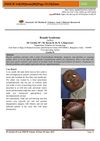 June 2022 in “Journal of medical science and clinical research”
 This case report describes a weaning infant diagnosed with Brandt syndrome displaying periorificial dermatitis and rapid symptom improvement following zinc supplementation.
December 2013 in “Bőrgyógyászati és venerológiai szemle” This case report describes a 14-year-old boy who developed toxic epidermal necrolysis, involving over 30% of his body surface, following treatment with amoxicillin-clavulanate, cefuroxime, and lamotrigine.
19 citations
,
July 2004 in “Journal of Medical Primatology” In this study, zinc toxicosis in infant baboons was attributed to excessive environmental exposure, highlighting the importance of cage design in captivity and potential use of baboons as a developmental model.
1 citations
,
May 2019 in “The Journal of Pediatrics” The baby's hair loss was due to congenital syphilis, which was treated with penicillin.
 1 citations
,
March 2019 in “KnE life sciences”
1 citations
,
March 2019 in “KnE life sciences” This case report suggests that human dermal papillae conditioned media may accelerate wound healing in congenital aplasia cutis due to varicella infection.
 June 2022 in “Farmacevtičnij časopis”
 This study developed a technology for a combined gel named "Biosedum Plus" intended for treating and preventing radiation skin damage, detailing its formulation and critical processing parameters.