 January 2009 in “Springer eBooks”
 The document concludes that managing skin conditions during pregnancy is important and requires specialized care.
 May 2002 in “British Journal of Dermatology”
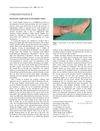
 A pregnant woman's skin condition improved after giving birth, possibly due to high estrogen levels during pregnancy.
 September 1999 in “The Journal of The British Menopause Society”
 This review discusses how menopause and hormone replacement therapy affect skin aging in women but reports no new clinical findings.
 February 1960 in “Journal of the American Medical Association”
 Treatments for hair loss include estrogen therapy and special shampoos.
 May 2002 in “British Journal of Dermatology”
 This brief article is a response from the authors about hair density, hair diameter, and female pattern hair loss, and it reports no new clinical findings.
1 citations
,
January 2018 in “International Journal of Trichology” This report discusses the characteristics of circle hairs, a type of body hair growth disorder, and emphasizes the value of trichoscopy for diagnosis.
March 2018 in “Chin J Reprod Contracep” This review outlines chlormadinone acetate's contraceptive and non-contraceptive applications but reports no new clinical findings, emphasizing its potential in treating dysmenorrhea and androgen-related conditions.
This article reviews the characteristics and diagnostic criteria of tricholemmoma and tricholemmal carcinoma, detailing their clinical presentations and associations but reports no new clinical findings.
5 citations
,
January 2002 in “European journal of pediatrics” "D-CHRAMPS syndrome" is a newly identified condition with multiple severe symptoms.
 47 citations
,
February 2015 in “European Journal of Clinical Investigation”
47 citations
,
February 2015 in “European Journal of Clinical Investigation” This review discusses Chrousos syndrome, a rare condition caused by NR 3C1 gene mutations leading to glucocorticoid resistance, and reports no new clinical results; early identification and genetic testing are recommended for diagnosis.
 1 citations
,
January 1980 in “Archives of Dermatology”
1 citations
,
January 1980 in “Archives of Dermatology” This exchange discusses interpretations of syphilitic chancres, noting disagreement over whether multiple lesions are atypical given historical references that describe primary chancres as often being single.
 1 citations
,
September 2011 in “Journal of Dermatology”
1 citations
,
September 2011 in “Journal of Dermatology” This letter reports a woman with nevoid basal carcinoma syndrome and pronounced androgenic alopecia associated with a novel PTCH gene mutation p.Leu1159fsx32, suggesting a genetic link in this case study.
 33 citations
,
January 2009 in “Contraception”
33 citations
,
January 2009 in “Contraception” This review summarizes the use of chlormadinone acetate for hormone replacement therapy and contraception, highlighting its anti-androgenic effects, contraceptive efficacy, and clinical tolerability, without offering new clinical results.
 December 2016 in “Springer eBooks”
 This review examines the clinical features, causes, diagnosis, and treatment of Chrousos syndrome but reports no new experimental findings on this condition.
January 2025 in “Indian Dermatology Online Journal” This case report describes a 27-year-old female with systemic lupus erythematosus who presented with chilblain lupus erythematosus and melanonychia striata, emphasizing the rarity of such presentations in SLE patients.

In this case report, a 65-year-old man's neck lesion was initially misdiagnosed as benign but later identified as trichilemmal carcinoma, with the authors recommending Mohs Micrographic Surgery as the preferred treatment option for this rare condition.
11 citations
,
January 2010 in “Journal of oral and maxillofacial surgery”  January 2025 in “Dermatology Review”
 The authors report a rare case of trichilemmal carcinoma in the thigh of a 71-year-old, emphasizing the importance of complete surgical excision to prevent recurrence and support patient prognosis.
19 citations
,
June 2020 in “BMC Cancer” This study reported that genetic changes in trichilemmal carcinoma resemble those in other skin cancers, with TP53 mutations associated with aggressive clinical outcomes.
 January 2009 in “Journal of the American Academy of Dermatology”
 This study reports on a patient whose symptoms, including trichoepitheliomas and clinical alopecia, may suggest a new syndrome possibly linked to myasthenia gravis.
 November 2018 in “DergiPark (Istanbul University)”
 This case report describes successful treatment of Malassezia overgrowth and resulting dermatitis in a Chinchilla cat using Terbinafine HCL and Omega fatty acid supplements, emphasizing Malassezia's potential as a marker for underlying diseases.
 March 2025 in “American Journal of Medical Genetics Part A”
 In this study, researchers found that mosaic PLCD1 hotspot variants, even without the recognized germline "risk allele," may be a rare but significant genetic cause of nevus trichilemmocysticus, warranting DNA testing and sensitive sequencing technologies for accurate diagnosis.
54 citations
,
November 1986 in “Journal of the American Academy of Dermatology” This case report identifies a potential new syndrome characterized by trichoepitheliomas and alopecia, which may be associated with myasthenia gravis.
 May 2020 in “Research Square (Research Square)”
 This study found that trichilemmal carcinoma shares genetic changes with other skin cancers, suggesting a similar pathogenesis, particularly in those with aggressive clinical courses linked to TP53 mutations.
 1 citations
,
January 2010 in “Türkiye klinikleri tıp bilimleri dergisi”
1 citations
,
January 2010 in “Türkiye klinikleri tıp bilimleri dergisi” This case report describes a man with metastatic thymoma and diffuse pleural dissemination mimicking malignant mesothelioma, who also had alopecia areata without the presence of myasthenia gravis.
 April 2020 in “Research Square (Research Square)”
 This study reported genetic mutations in trichilemmal carcinoma similar to those found in other skin cancers, including TP53 mutations associated with aggressive disease.
May 2025 in “Journal of Traditional Chinese Medical Sciences” In this study, S. chamaejasme extract applied topically to mice enhanced hair growth dose-dependently by increasing hair follicle size and dermal thickness, while upregulating mRNA expression related to hair growth, suggesting its potential as a hair growth treatment.
1 citations
,
March 2013 in “British Journal of Dermatology” This correspondence discusses eyebrow alopecia in the context of centrofacial trichoblastomatosis and reports no new clinical findings.
18 citations
,
February 2001 in “Der Hautarzt” This case study of a 50-year-old woman with myotonic dystrophy and multiple basal cell carcinomas suggests there could be a genetic predisposition for certain cutaneous tumors in such patients.
 10 citations
,
February 2015 in “Clinics in Dermatology”
10 citations
,
February 2015 in “Clinics in Dermatology” This article discusses various periocular conditions like madarosis, milphosis, trichomegaly, and dermatochalasis, and highlights their potential link to underlying local and systemic diseases, but reports no new clinical findings.