 136 citations
,
April 2013 in “Clinical Cancer Research”
136 citations
,
April 2013 in “Clinical Cancer Research” The study found that IPI-926 was well tolerated up to 160 mg once daily for 28-day cycles and showed activity as a single-agent treatment in Hedgehog pathway inhibitor-naïve patients with basal cell carcinoma.
 75 citations
,
October 2010 in “Mammalian genome”
75 citations
,
October 2010 in “Mammalian genome” In this study, specific genetic polymorphisms in the KRT71 gene were associated with hairless and curly phenotypes in Sphynx and Devon Rex cats.
This case study reports that a man with severe patch-type alopecia areata initially responded to baricitinib treatment but experienced a relapse despite ongoing therapy.
October 2025 in “Journal of Clinical Medicine” This study found that in patients with severe alopecia areata, those who responded early to baricitinib treatment typically had a lower baseline Severity of Alopecia Tool score, shorter disease duration, and higher erythrocyte sedimentation rate, suggesting these factors may predict therapeutic success.
June 2025 in “Revista Foco” This review assessed randomised clinical trials on the efficacy and safety of topical and systemic JAK inhibitors for alopecia areata, finding significant hair coverage improvement with ritlecitinibe and baricitinibe, though prolonged treatment is often needed to maintain results.
 January 2022 in “Figshare”
 I cannot summarize the document because it cannot be parsed.
This article provides a reference guide for various dermatological terms, treatments, and conditions, but reports no new clinical findings.
June 2023 in “Zenodo (CERN European Organization for Nuclear Research)” 2 citations
,
January 2012 in “Berkeley technology law journal” This review explores keyword advertising in online advertising, noting its appeal due to audience reach and campaign optimization, but reports no new research data.
 November 2023 in “Research Portal Denmark”
 This review highlights the variability and unpredictability of alopecia areata, ranging from single scalp patches to total body hair loss, and notes the 2022 approval of the first AA-specific drug, baricitinib, potentially spurring new research into targeted treatments.
 September 2017 in “Journal of Investigative Dermatology”
 This study found that in AGA, the risk allele at locus 2q35 alters WNT10A expression through EBF1, suggesting a potential androgen-dependent regulatory mechanism.
 26 citations
,
February 2020 in “Frontiers in genetics”
26 citations
,
February 2020 in “Frontiers in genetics” This study identified three candidate genes (CORT, FGF5, and CD36) associated with cold climate adaptation in Yanbian cattle through genome resequencing and comparison with African tropical cattle.
 2 citations
,
May 2011 in “Hair transplant forum international”
2 citations
,
May 2011 in “Hair transplant forum international” This abstract provides no results or study findings; it only includes author affiliations and general commentary.
September 1973 in “Primates” 3 citations
,
February 1983 in “Journal of Investigative Dermatology” This study found that plucking hair from rats' dorsal skin rapidly decreased ornithine decarboxylase activity, possibly due to an inhibitory substance that was activated by ammonium sulfate treatment.
 1 citations
,
December 2022 in “The Nishinihon Journal of Dermatology”
1 citations
,
December 2022 in “The Nishinihon Journal of Dermatology” This source reports that based on international Phase 3 trial results, the JAK1/2 inhibitor baricitinib was approved in Japan in June 2022 for treating extensive alopecia areata, offering a potentially useful treatment option.
 June 2026 in “Zenodo (CERN European Organization for Nuclear Research)”
 This source describes SH‑1 as a next-generation androgen receptor antagonist designed for localized treatment of androgenetic alopecia, aiming to reverse follicular miniaturization while maintaining endocrine balance. Unlike traditional therapies, SH‑1 offers tissue-specific action, avoiding systemic effects.
 January 2023 in “Annals of Dermatology”
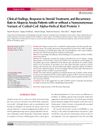
 This study found that alopecia areata patients with a CCHCR1 gene variant had higher recurrence rates and structural abnormalities in hair compared to those without the variant.
July 2025 in “Journal of Investigative Dermatology” Baricitinib stops hair loss and promotes regrowth in alopecia areata.
 November 2022 in “Van Sağlık Bilimleri Dergisi”
 This study found no association between W locus allele variations and phenotypic traits like eye color, head spotting, and fur length in Turkish Van cats, suggesting other genetic factors should be explored.
 February 2026 in “Dove Medical Press (Taylor and Francis Group)”
 This case report highlights two instances of alopecia areata, demonstrating diverse presentations, and suggests upadacitinib as a promising treatment option, resulting in hair regrowth within 3–6 months, without worsening sarcoidosis-related skin lesions.
 6 citations
,
April 2022 in “Frontiers in cell and developmental biology”
6 citations
,
April 2022 in “Frontiers in cell and developmental biology” This study identified differentially expressed proteins and pathways potentially involved in wool bending in Zhongwei goats, with specific genes like COL6A1 and CRNN emerging as important candidates in this process.
June 2026 in “Clinical Cosmetic and Investigational Dermatology” This case report found that a patient with ritlecitinib-resistant alopecia areata experienced significant recovery after 24 weeks of treatment with upadacitinib, highlighting its potential effectiveness and suggesting benefits of personalized treatment strategies targeting the JAK1-mediated pathway.
12 citations
,
January 2013 in “International Journal of Genomics” In this study, researchers used mRNA sequencing to identify and categorize over 49,000 contigs in goat skin, revealing significant gene activity related to metabolism, cell cycle, and cell division during hair growth.
 45 citations
,
January 2010 in “Journal of Veterinary Medical Science”
45 citations
,
January 2010 in “Journal of Veterinary Medical Science” This study identified a mutation in the keratin 71 gene that causes curly hair in certain rats, advancing our understanding of hair formation.
 September 2004 in “Hair transplant forum international”
 This article summarizes a meeting of the American Board of Hair Restoration Surgery's Board of Directors to discuss future plans, but does not report new experimental results.
In this study, researchers identified that the oncomodulin protein lineage, specifically the gene pvalb8, plays a crucial role in the development and function of auditory hair cells in zebrafish by promoting cell proliferation through the Wnt signaling pathway.