4 citations
,
June 1980 in “American Journal of Clinical Nutrition” Malnutrition can change hair color due to altered copper and zinc levels.
1 citations
,
May 2012 in “Clinical and Experimental Dermatology” This article discusses the presence of iron in segmented heterochromia of scalp hair and concludes that it occurs without iron-deficiency anemia, reporting no new clinical results.
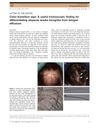 2 citations
,
March 2018 in “The Journal of Dermatology”
2 citations
,
March 2018 in “The Journal of Dermatology” This letter discusses a trichoscopic feature called the color-transition sign for differentiating between alopecia areata incognita and telogen effluvium, and reports no new clinical results.
March 2023 in “Journal of Cosmetic Dermatology” The researchers in this study described the use of trichoscopy to assist in diagnosing aplasia cutis congenita of the scalp in a dark-skinned newborn, noting that trichoscopic findings can differ from those seen in light-skinned patients, yet remain a valuable diagnostic tool.
 January 2022 in “Przegla̧d dermatologiczny”
 This case report describes a patient with argyria presenting alongside a delusional disorder.
June 2014 in “The Journal of Dermatology” This article describes a case of a patient with both ophiasis-type alopecia areata and ring chromosome 18 syndrome but reports no new research findings.
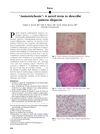 25 citations
,
April 2007 in “Journal of The American Academy of Dermatology”
25 citations
,
April 2007 in “Journal of The American Academy of Dermatology” This article introduces the term "anisotrichosis" to describe the significant variation in hair shaft diameters observed in pattern alopecia, drawing a parallel to anisocytosis seen in blood smears, but reports no new research findings.
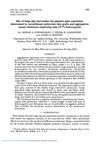 7 citations
,
October 1985 in “Genetics Research”
7 citations
,
October 1985 in “Genetics Research” This study found that in chimaeric mice models, the pigment distribution and pattern were influenced by the sash genotype, demonstrating the melanocyte-autonomous nature of the beige and leaden loci.
13 citations
,
June 2012 in “European journal of medical genetics” In this study, researchers observed monochorionic diamniotic twins with discordant clinical phenotypes, where one had high-grade trisomy 12p mosaicism in certain tissues, while the other showed confined mosaicism likely due to twin-to-twin transfusion.
June 2024 in “Indian Journal of Veterinary Medicine” This case report describes a Salem black kid with alopecia and other symptoms, which was diagnosed with anaplasmosis due to Anaplasma ovis infection combined with copper deficiency, as confirmed by laboratory tests including blood smears and serum biochemistry.
1 citations
,
June 2025 in “Journal of Drugs in Dermatology” In this study, researchers examined trichoscopic features in a cohort of Black patients with alopecia areata, identifying both common and novel characteristics, but found no statistical link between these features and the severity of alopecia.
84 citations
,
June 1970 in “Journal of Investigative Dermatology” 1 citations
,
July 2018 in “JAMA dermatology” This abstract contains navigation and subscription information for JAMA Dermatology and reports no new clinical findings.
28 citations
,
September 1986 in “Pediatric dermatology” In this study, hair anomalies associated with acrodermatitis enteropathica in a young girl improved significantly after two years of zinc therapy.
March 2026 in “Mendeley Data” This abstract presents supplementary materials illustrating trichoscopy in alopecia areata and scarring alopecia using different dermoscopy techniques but reports no clinical findings.
December 2023 in “Modern engineering and innovative technologies” This article explores the theoretical foundations of the ChromaLens Precision Mapping system for analyzing hair, but it does not present any new experimental findings.
 4 citations
,
July 2019 in “Clinics in Dermatology”
4 citations
,
July 2019 in “Clinics in Dermatology” This article reviews various "white diseases" characterized by hypopigmentation or depigmentation and emphasizes the role of melanosomes in skin and eye color, but it does not present new clinical results.
 12 citations
,
June 2010 in “Journal of dermatology”
12 citations
,
June 2010 in “Journal of dermatology” This study found that hyperpigmentation following contact immunotherapy for severe alopecia areata may indicate poor treatment responsiveness and aligns with characteristics of pigmented contact dermatitis.
7 citations
,
January 2008 in “Indian Journal of Dermatology” This review discusses the clinical manifestations and genetic basis of pigmentary mosaicism, highlighting its varied phenotypic expressions, but reports no new clinical results.
29 citations
,
June 2016 in “Experimental Dermatology” This study provides suggestive evidence that duplications in the MCHR2 gene may be involved in the pathogenesis of alopecia areata.
28 citations
,
June 1998 in “Clinical Genetics” This report describes a case of Ambras syndrome with a chromosomal inversion on chromosome 8, similar to a previous case, but not associated with altered androgen levels.
This study on Antirrhinum trichomes found that stickiness in A. hispanicum is due to a recessive allele and mapped it to a specific region on Chromosome 1, while baldness in A. siculum likely involves a novel hairy allele.
69 citations
,
May 2002 in “Journal of Investigative Dermatology” This study suggests that congenital atrichia with papular lesions may be more common than previously thought and proposes diagnostic criteria including the observation of hypopigmented whitish streaks on the scalp.
 July 2024 in “Dermatology and Therapy”
 This study found that individuals with black hair have a significantly higher risk of alopecia areata compared to those with dark brown hair, while lighter hair colors like red or blonde are associated with a lower risk.
 5 citations
,
December 1964 in “Australasian journal of dermatology”
5 citations
,
December 1964 in “Australasian journal of dermatology” This article discusses congenital atrichia and presents no new clinical findings.
September 2018 in “CRC Press eBooks” This review explores the trichoscopic features of dark scalp, particularly the brown honeycomb pigment network, and its variations in different types of alopecia, but it presents no new clinical findings.
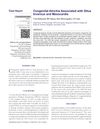 5 citations
,
January 2012 in “International journal of trichology”
5 citations
,
January 2012 in “International journal of trichology” This case report describes the first known instance of congenital atrichia combined with situs inversus and mesocardia in a 2-year-old male.
 13 citations
,
January 2009 in “The Open Dermatology Journal”
13 citations
,
January 2009 in “The Open Dermatology Journal” This article describes a case of oral pigmentation that posed a diagnostic challenge in determining Addison’s disease and includes a brief review, reporting no new clinical results.
 April 2024 in “Journal of cosmetic dermatology”
 This study analyzed dermoscopic findings in alopecia areata among children and adults, discovering that exclamation mark hairs are more common in children, while yellow dots appear more often in adults, indicating the importance of age-specific evaluation in diagnosing this condition.
March 2026 in “Mendeley Data” This abstract presents supplementary trichoscopy images for alopecia areata and scarring alopecia but reports no clinical findings.