12 citations
,
January 2019 in “Regenerative Medicine”
12 citations
,
January 2019 in “Regenerative Medicine” In this commentary, the authors discuss the challenges and proposals for responsibly translating regenerative therapies into clinical practice, emphasizing the need for patient education, quality control, and real-world evidence to validate these therapies and address ongoing misinformation in the field.
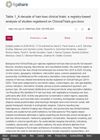
This study analyzed hair-loss clinical trials from 2015 to 2025 and found that, while the number of registrations increased globally, research activity was concentrated in certain regions and varied in therapeutic approaches and outcome specifications.
 February 2026 in “Journal of Aesthetic Medicine”
 This narrative review concluded that facial aging involves complex anatomical changes that require multimodal rejuvenation approaches, integrating fillers, collagen stimulators, botulinum toxin, and energy-based devices for effective results, while emphasizing the need for scientific evidence and patient safety in aesthetic treatments.
This study reviews existing literature on regenerative therapy for androgenetic alopecia, highlighting that integrating growth factors, biotin, D-pantenol, and other active ingredients using the Vittahair protocol may enhance hair follicle regeneration, increase hair density, and improve hair quality, providing a precise and evidence-based treatment alternative.
 September 2025 in “Cellular and Molecular Biology”
 This systematic review suggests that intraoperative corticosteroids can reduce postoperative edema in FUE hair transplantation donor areas, but highlights a need for more mechanistic studies to improve understanding of tissue regeneration.