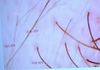
February 2026 in “Zenodo (CERN European Organization for Nuclear Research)” This study identified specific trichoscopic signs of secondary post-traumatic cicatricial alopecia in patients with mine-explosive injuries and burns and evaluated the effectiveness of hair transplantation procedures combined with PRP therapy, finding an average hair survival rate of 84.1% one year post-surgery.
February 2026 in “Zenodo (CERN European Organization for Nuclear Research)” This study observed that trichoscopic examination revealed specific signs of secondary post-traumatic cicatricial alopecia in patients with mine-explosive injuries and burns, and reported an 84.1% hair survival rate following transplantation and PRP therapy, with marked improvements in scalp condition after 12 months.
January 2024 in “Journal of Medicine in Scientific Research” This study concluded that adding platelet-rich plasma to hair transplantation in patients with cicatricial alopecia enhances hair density and shortens recovery time.
1 citations
,
October 2018 in “InTech eBooks” This article reviews treatment approaches for cicatricial alopecia, describing how medication efficacy varies and suggesting autologous hair transplantation for stable cases; no new clinical data are presented.
June 2026 in “Journal of Cutaneous and Aesthetic Surgery” This study examined five patients with cicatricial alopecia treated using the follicular unit extraction technique, finding an average graft survival rate of 64.2% and acceptable transection rates, despite the procedure's challenges compared to non-scarring alopecia.