Search
for

    Community Join

    5 / 1000+ results

      community Hims topical min/fin spray vs serum

       9 upvotes 2 years ago
      The conversation is about someone switching from a hair loss treatment spray with alcohol and propylene glycol to a serum with essential oils, questioning the absorption and effectiveness of the new product. The spray and serum both contain 0.3% finasteride and 6% minoxidil.
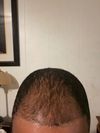

      community 3 month progress, topical min/fin/keto spray with (occasional) derm roll (40M)

       205 upvotes 4 months ago
      A 40-year-old user shared impressive hair regrowth results after three months using a topical spray containing minoxidil, finasteride, and ketoconazole, along with occasional dermarolling. The treatment, from the brand Hims, was effective despite initial skepticism, and the user credits the community for their support and information.

      community 10 months on topical spray (24M)

       61 upvotes 4 weeks ago
      The user experienced significant hair growth using a topical spray containing Finasteride 0.3%, Ketoconazole 2.2%, Minoxidil 7%, and Biotin 0.2% over 10 months. They apply the spray once daily, as recommended by the product company, Hims.

    Research

    5 / 44 results

    Learn

    7 / 800 results

      learn Minoxidil

      Vasodilator used on the scalp and, at low doses, as a tablet
      • Minoxidil 2%, 5% and 10% which is better to use? In a randomized trial in men, 5% topical minoxidil produced more hair growth than 2%, and in one small trial 10% did not beat 5% and caused more irritation. No 10% product is approved in the US, and approved strengths differ by sex, so check the label for your product.
      • From hypertension to hair: the unexpected story of minoxidil Minoxidil was developed as an oral blood-pressure drug and approved as Loniten in 1979; unwanted hair growth in patients led to topical Rogaine, approved for men in 1988 and for women in 1991. Trials support topical minoxidil for pattern hair loss, while low-dose oral minoxidil is a prescription drug used off-label and needs medical supervision.
      • Shampoos, vitamins and other promises: What does minoxidil really boost? Topical minoxidil is approved for pattern hair loss; there is no good evidence that shampoos, biotin or other added ingredients boost its effect.

      learn Ketoconazole

      • Ketoconazole: Can I use it with minoxidil or finasteride? No published study has tested ketoconazole shampoo together with minoxidil and finasteride, and no interaction between them has been reported; the only direct evidence for a pairing is a ten-patient finasteride-plus-ketoconazole arm in a 2002 study, and a 2020 systematic review calls topical ketoconazole promising while asking for randomized trials.

      learn Finasteride

      Popular 5-alpha reductase inhibitor that lowers DHT, taken as a pill or used topically

      learn RU58841

      • How does RU58841 compare with minoxidil and finasteride? Minoxidil and finasteride (men only) are approved medicines with labels that list their side effects. RU58841 is an unapproved research chemical with no published human trial for hair loss, and a small 2026 study found it reaches the blood after scalp use.

      learn Fluridil

      Topical anti-androgen sold as a cosmetic lotion

      learn Dutasteride

      5-alpha reductase inhibitor that blocks both enzyme types, a stronger DHT blocker than finasteride