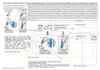
April 2026 in “The Breast” This study found that both scalp cooling systems and chemical cooling caps effectively reduced chemotherapy-induced alopecia in early breast cancer patients, with scalp cooling showing better early efficacy but chemical cooling providing greater psychological and quality of life benefits.
This review discusses various drugs and chemicals potentially causing hair loss, mechanisms involved, and suggests models for testing but reports no new clinical findings.
13 citations
,
December 1977 in “Journal of Toxicology and Environmental Health” This study found that exposure to heated phenyl glycidyl ether vapor caused alopecia and skin lesions in rats but not in dogs.
September 2024 in “Journal of Ethnopharmacology” In this study, Terminalia bellirica extracts promoted hair regrowth in testosterone-induced AGA mice, possibly by inhibiting type II 5α-reductase activity and enhancing the MAPK signaling pathway.
January 2019 in “Springer eBooks” This review discusses drugs and mechanisms possibly responsible for chemical- and drug-induced hair loss but presents no new research findings.