The Differences Between Aromatizable And Non-Aromatizable Androgens In Relation To Body Composition And Metabolic Syndrome Risk Factors In Men
March 2012
in “
The Journal of Steroid Biochemistry and Molecular Biology
”
Studysummary In this study of healthy men, low levels of testosterone and dihydrotestosterone were associated with higher body mass index, fat content, and insulin resistance, but their effects on lipid and glucose metabolism were similar in quality.
Our plain-language summary. Not medical advice or a treatment recommendation. Consult a qualified healthcare professional before changing treatment. Full disclaimer
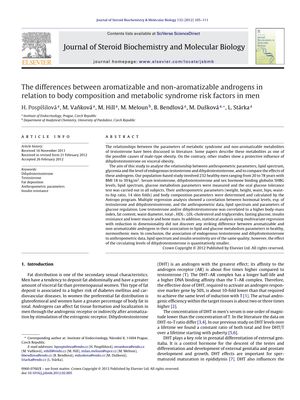
The study examined the effects of testosterone (T) and dihydrotestosterone (DHT) on body composition and metabolic syndrome risk factors in 232 healthy men aged 20 to 78 years. It found that low levels of T and DHT were associated with negative body composition and metabolic profiles, including higher BMI, fat content, waist diameter, cholesterol levels, triglycerides, fasting glucose, and insulin resistance, as well as lower muscle and bone mass. However, the study concluded that there were no significant differences between the effects of aromatizable (T) and non-aromatizable (DHT) androgens on lipid and glucose metabolism parameters in healthy men. Testosterone had a slightly stronger influence on certain parameters than DHT, but overall, both androgens were associated with a healthier body composition and metabolic profile, and the DHT/T ratio remained constant across different BMIs. The study suggests that physiological levels of DHT are equivalent to testosterone in their effect on body composition and do not offer any advantage over testosterone in terms of beneficial effects on metabolic parameters when maintained at physiological levels.