 March 2023 in “Journal of Cosmetic Dermatology”
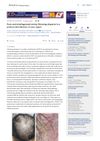
 This case report illustrates that fibrosing alopecia in a pattern distribution may be misdiagnosed as androgenetic alopecia due to similar hair loss patterns, but distinctive trichoscopic and histopathologic features help differentiate it.
 November 2019 in “Harper's Textbook of Pediatric Dermatology”
 This review discusses potential causes of alopecia and hair overgrowth in pediatric patients, detailing diagnostic techniques and treatments, but presents no new research findings.
 2 citations
,
March 2019 in “Journal of Dermatology”
2 citations
,
March 2019 in “Journal of Dermatology” This report describes a rare case of alopecia areata coexisting with primary scarring alopecia, diagnosed through detailed trichoscopic investigation, highlighting the importance of comprehensive examination for accurate diagnosis.
This study measured the force required to pluck anagen and telogen hair from volunteers, suggesting that trichotillometry could assess hair strength in alopecia patients and evaluate treatment efficacy.
June 2001 in “European Journal of Dermatology” This case study describes a 54-year-old woman with a rare pattern of asymmetrical hair loss resembling androgenetic alopecia, alongside sparse body hair and near absence of eyebrows and eyelashes, while other ectodermal features were normal.
29 citations
,
March 2000 in “Journal of Investigative Dermatology” The gene for Marie Unna hereditary hypotrichosis is located on chromosome 8p21.
189 citations
,
May 1991 in “Medical Entomology and Zoology” This abstract lists chapters on various hair and scalp conditions and treatments but reports no new research findings.

