13 citations
,
April 2022 in “Anais brasileiros de dermatologia/Anais Brasileiros de Dermatologia”
13 citations
,
April 2022 in “Anais brasileiros de dermatologia/Anais Brasileiros de Dermatologia” This comprehensive literature review highlighted that lichen planopilaris and frontal fibrosing alopecia, both primary scarring alopecias, are diagnosed via scalp biopsy, with no standardized treatments available, necessitating individualized therapeutic approaches based on patient characteristics.
16 citations
,
April 2020 in “JAMA dermatology” More inflammation leads to faster and worse hair loss in women with frontal fibrosing alopecia.
34 citations
,
January 2020 in “Expert opinion on drug delivery” This review discusses various novel drug delivery approaches to enhance scalp drug penetration for alopecia treatment but reports no new clinical results.
 37 citations
,
April 2019 in “Journal of The American Academy of Dermatology”
37 citations
,
April 2019 in “Journal of The American Academy of Dermatology” This review assessed the effectiveness of various treatments for frontal fibrosing alopecia and found that intralesional steroids and 5α-reductase inhibitors showed the most positive outcomes in slowing or halting hair loss, though the lack of placebo-controlled studies and consistent outcome measures limits definitive conclusions.
 61 citations
,
January 2019 in “American Journal of Clinical Dermatology”
61 citations
,
January 2019 in “American Journal of Clinical Dermatology” This review discusses the potential causes and treatments for frontal fibrosing alopecia but reports no new clinical findings, highlighting the need for further research to understand its pathogenesis and develop validated treatments.
 58 citations
,
December 2017 in “Journal of The European Academy of Dermatology and Venereology”
58 citations
,
December 2017 in “Journal of The European Academy of Dermatology and Venereology” This review highlights that microneedling shows some promise for improving hair growth in alopecia, particularly when used with other treatments, though more research is needed to establish its efficacy and protocols.
 4 citations
,
April 2016 in “Journal of The American Academy of Dermatology”
4 citations
,
April 2016 in “Journal of The American Academy of Dermatology” Microneedling with platelet-rich plasma can improve different types of hair loss.
 102 citations
,
April 2014 in “International Journal of Dermatology”
102 citations
,
April 2014 in “International Journal of Dermatology” This study found that early intervention and treatment with intralesional triamcinolone acetonide may stabilize hairline recession in patients with frontal fibrosing alopecia, although further research is needed for definitive treatment guidelines.
 339 citations
,
February 2014 in “Journal of The American Academy of Dermatology”
339 citations
,
February 2014 in “Journal of The American Academy of Dermatology” This study found that eyelash loss, facial papules, and body hair involvement were linked to severe frontal fibrosing alopecia, and antiandrogens were the most effective treatment.
 53 citations
,
January 2014 in “Journal of Cutaneous and Aesthetic Surgery”
53 citations
,
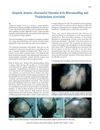
January 2014 in “Journal of Cutaneous and Aesthetic Surgery” Microneedling combined with triamcinolone can safely stimulate faster hair regrowth in people with Alopecia Areata.
 136 citations
,
January 2013 in “International Journal of Trichology”
136 citations
,
January 2013 in “International Journal of Trichology” This study found that adding microneedling to minoxidil treatment significantly improved hair growth in men with androgenetic alopecia compared to minoxidil alone across all assessed measures.
 64 citations
,
June 2009 in “Journal of The American Academy of Dermatology”
64 citations
,
June 2009 in “Journal of The American Academy of Dermatology” This article discusses frontal fibrosing alopecia, noting potential connections to lichen planopilaris, but reports no new clinical findings.