Implication of Human Bacterial Gut Microbiota on Immune-Mediated and Autoimmune Dermatological Diseases and Their Comorbidities: A Narrative Review
January 2021
in “
Dermatology and therapy
”
New to Alopecia Areata? There is a guide in the encyclopedia. Read the guide → 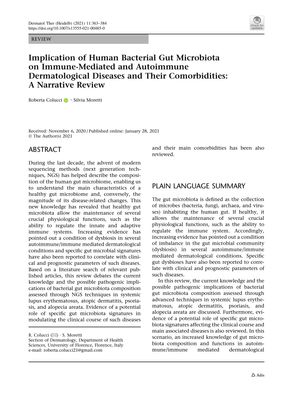
Studysummary This review discusses the role of gut microbiota in autoimmune and immune-mediated dermatological conditions like lupus and psoriasis, but reports no new clinical results; the authors emphasize the need for further study into microbial signatures and treatments.
Our plain-language summary. Not medical advice or a treatment recommendation. Consult a qualified healthcare professional before changing treatment. Full disclaimer
The review from January 2021 discussed how modern sequencing methods have advanced our understanding of the human gut microbiome and its role in maintaining physiological functions, particularly in regulating the immune system. It highlighted that an imbalance in the gut microbiota, known as dysbiosis, is associated with autoimmune and immune-mediated dermatological conditions such as systemic lupus erythematosus, atopic dermatitis, psoriasis, and alopecia areata. The review also noted that specific gut microbial signatures might correlate with the clinical outcomes and prognoses of these diseases. The potential for gut microbiota composition to influence the clinical course of these conditions and their comorbidities was considered, suggesting that a deeper understanding of gut microbiota could lead to new treatments and the ability to predict disease progression and associated comorbidities.