 3 citations
,
June 2017 in “Methods”
3 citations
,
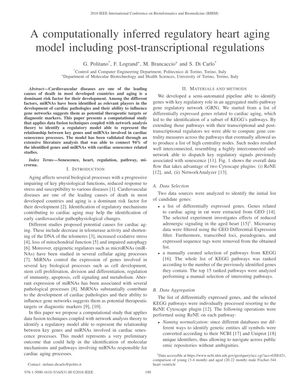
June 2017 in “Methods” This study used computational modeling to identify key genes and miRs involved in cardiac aging, finding a strong relationship supported by literature and some experimental validation in aged mouse hearts.
April 2020 in “The FASEB Journal” This study found that Rap1 deficiency in mice may lead to telomere shortening, DNA damage, and impaired mitochondrial function, contributing to cardiac aging and dysfunction.
 2 citations
,
December 2022 in “bioRxiv (Cold Spring Harbor Laboratory)”
2 citations
,
December 2022 in “bioRxiv (Cold Spring Harbor Laboratory)” In this study, overexpression of miR-29 in mice led to aging-related phenotypes and early lethality, demonstrating its significant role in driving aging processes.
 30 citations
,
July 2022 in “Scientific Reports”
30 citations
,
July 2022 in “Scientific Reports” This study developed a model using cardiovascular radiomics to estimate biological heart age, finding obesity and other health factors strongly correlated with accelerated heart aging.
 3 citations
,
October 2023 in “Frontiers in physiology”
3 citations
,
October 2023 in “Frontiers in physiology” This study reviewed competing endogenous RNA networks related to skin aging and wound healing, finding mechanisms like UVB-induced senescence and photoaging, as well as potential therapeutic targets for improving skin health and recovery.