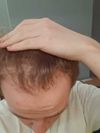
Temple regrowth!! 25yo male. 1mg fin 2.5mg oral min, and three months of 2mg ghk-cu. 3/29/2026
A 25-year-old male experienced noticeable temple regrowth using 1mg finasteride, 2.5mg oral minoxidil, and 2mg GHK-Cu over three months. The user is pleased with the progress, especially on the left temple.
View this post in the Community →
Similar Community Posts Join
5 / 5 resultscommunity 1 month on min and derma pen every 10 days. Can you see a difference?
A user has been using 5% minoxidil and a derma pen for one month, experiencing shedding but noticing potential new hair growth. They plan to add finasteride to their regimen.
community Hair Loss Drugs Ranked in Order of Efficacy
Dutasteride is likely the most effective treatment for male pattern baldness, followed by finasteride and minoxidil in various forms and dosages. Users discuss personal experiences, dosages, and potential side effects, with some considering combining treatments for better results.
community Crazy 6 month oral minoxidil and GHK-CU transformation
The user shared a 6-month update on using oral minoxidil and GHK-Cu for hair regrowth, noting significant improvement and increased confidence. Some commenters questioned the authenticity of the transformation, mentioning visible hair fibers, while others discussed the role of DHT blockers and religious perspectives.
community 18m 2.5 mg dut + topical min + 5 mg injectable ghk-cu progress. caught agressive loss early seemingly. may i have a few more years of handsomeness upon me.
An 18-year-old is using a high-dose treatment for hair loss, including 2.5 mg dutasteride, topical minoxidil, and injectable GHK-Cu, despite minimal hair loss. Many users suggest reducing the dutasteride dose due to potential side effects and recommend starting with finasteride instead.
community M17 regrowth journal
A 17-year-old is addressing hair loss with finasteride, topical minoxidil, and microneedling. They are considering adding GHK-Cu to their regimen, but others advise caution with finasteride due to age.
Related Research
6 / 6 resultsresearch Dermatologia e Procedimentos Estéticos Ed. XVIII
The abstract discusses the multidisciplinary nature and advancement of dermatology and aesthetic procedures within the health sciences, emphasizing the integration of diagnostic, corrective, preventive, and therapeutic approaches, but does not provide specific study results.
research Thermodynamically stable ionic liquid microemulsions pioneer pathways for topical delivery and peptide application
The researchers reported that a newly developed ionic liquid-based microemulsion significantly improved the local delivery of copper peptides in mice, enhancing hair growth-related factor activation while offering a safer, non-invasive alternative to existing treatments for hair loss.
research Efficacy and Tolerability of a Topical Gel Containing Mimicking Growth Factors Oligopeptides, Caffeine, Taurine and an Iron-Chelating Complex in Subjects with Androgenetic Alopecia Treated with Topical Minoxidil or Oral Finasteride: a Prospective, 6-Month, Randomized, Assessor-Blinded, 4-Arm, Parallel Group Study
In this study, the addition of a topical gel containing growth-factor mimicking oligopeptides and other ingredients showed improved efficacy in subjects with androgenic alopecia using minoxidil or finasteride compared to drug treatment alone.
research A decade of progress in androgenetic alopecia management: Emerging therapies and multimodal strategies
This review reports that the treatment of androgenetic alopecia is shifting from single therapies to personalized, multimodal approaches incorporating both traditional and emerging pharmacologics, regenerative strategies, nutraceuticals, cosmeceuticals, and device-based interventions, with combination regimens showing improved outcomes.
research Copper Tripeptide Associated with Photobiomodulation in the Treatment of Androgenetic Alopecia: A Case Report
This article discusses the potential of copper tripeptide (GHK-Cu) to support collagen synthesis and antioxidant activity in the context of androgenetic alopecia but reports no clinical results.
research Eyebrow and Eyelash Transplantation Using Chalazion Forceps (Dr. Min’s Method) and Importance of Post-Transplant Recovery in Hair Restoration
This study reports that a novel eyelash transplantation method using chalazion forceps effectively thickens and enhances eyelashes by precisely placing transplanted hairs in a narrow recipient area, with approximately 85-92% of transplanted lashes expected to grow within 12 months.