Sugar and hairloss 3/28/2021
Cutting sugar may not significantly impact hair loss, as DHT and androgen receptors are the main issues. Effective treatments include finasteride, dutasteride, RU58841, and minoxidil, often combined with microneedling.
View this post in the Community →
Similar Community Posts Join
5 / 5 resultscommunity If we lose hair because of our sensitivity to DHT, then why are we trying to reduce DHT when our sensitive androgen receptors are the culprit?
The conversation discusses the effectiveness of reducing DHT for hair loss treatment and explores alternative approaches like reducing androgen receptor sensitivity. Specific treatments mentioned include finasteride, dutasteride, pyrilutamide (KX-826), GT20029, and RU58841.
community Why some people experience problems on Finasteride/Dutasteride (my theory)
Some people have side effects from finasteride and dutasteride due to hormonal predisposition, especially if DHT dominant. Alternatives like RU58841, Pyrilutamide, and Breezula are suggested to target scalp androgen receptors without altering overall hormones.
community Topical Finasteride reduced my DHT more than Oral Dutasteride
Treatments for hair loss, including the experiences of topical finasteride and oral dutasteride. It also discusses Pyrilutamide, 0.025% topical concentration, Minoxidil, RU58841, and 1% finasteride gel dosage.
community How does Pyrilutamide compare to RU58841 when it comes to androgen receptor binding affinity?
The relative strength of Pyrilutamide compared to RU58841 in terms of androgen receptor binding affinity. It has been noted that Pyrilutamide is 4x stronger than RU58841, with a higher binding affinity than DHT itself.
community Why Fin/Dut Isn't Working for You GPR133: a new hairloss mechanism + Steroid Hair Loss Deep Dive
Hair loss may be linked to the GPR133 receptor, independent of the androgen receptor pathway. Treatments like finasteride, dutasteride, minoxidil, RU58841, and KX-826 show varying results, with hair loss persisting due to high testosterone and GPR133's role.
Related Research
6 / 6 results
research Antiandrogens and Androgen Inhibitors
This source outlines various antiandrogen and androgen inhibitor drugs used to treat cutaneous disorders of hyperandrogenism, detailing their mechanisms, uses, dosages, and side effects, with emphasis on spironolactone, finasteride, dutasteride, and oral contraceptives.
research ANDROGENIC ALOPECIA: PATHOGENETIC MECHANISMS AND THERAPEUTIC APPROACHES
This review discusses treatments for androgenic alopecia, noting that current options like finasteride and minoxidil are effective for only 10% of patients, thus highlighting the need for new therapies.
research Pharmacological Options for Treatment of Hyperandrogenic Disorders
This review summarizes the structural and chemical characteristics of current and novel antiandrogenic drugs but reports no new clinical findings.
research Potential targets in the discovery of new hair growth promoters for androgenic alopecia
This review discusses current therapeutic targets and treatments for androgenic alopecia but reports no clinical results; the authors highlight the challenge of developing multi-target drugs for effective treatment.

research Synthesis and application of clinically approved small-molecule drugs targeting androgen receptor
This review provides an overview of clinically approved small molecule drugs targeting androgen receptors and discusses therapeutic applications, without presenting new experimental results.
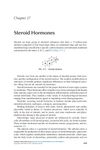
research Steroid Hormones
This article discusses the various roles of steroids in vertebrate organ systems and notes several glucocorticoids that were among the Top 200 Drugs by sales in the 2010s, but it reports no new clinical findings.