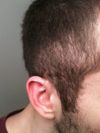
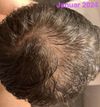
May 2022 - September 2022. 4 month results on 2x daily minoxidil, finasteride, nizoral 2x weekly. Taken in the same office to try and keep lighting consistent. Progress Pictures 9/16/2022
Vat-R-U-Talkin-About: I'm not sure that wearing a hat would have an effect on either Minoxidil or Finasteride. It may be worth experimenting with not wearing one for a few weeks to see if it makes any difference.
This conversation is about a user's progress pictures four months into taking minoxidil, finasteride, and nizoral twice weekly to treat hair loss; others shared their experiences and offered advice on how to improve the treatment.
View this post in the Community โ
Similar Community Posts Join
5 / 1000+ resultscommunity If you rank hairloss treatments fin,min,dut are the top 3, what's next?
Dutasteride, finasteride, and minoxidil are considered the top hair loss treatments. Other suggested treatments include Nizoral shampoo, tretinoin, pyrilutamide, zinc, biotin, and low light laser therapy, though opinions on their effectiveness vary.
community 6 months Fin 1mg, Min 5%. Progress feels sooooo slow. This month I added 2% keto shampoo daily, 0.1% trentinoin daily, and weekly derma rolling. Hoping for much better results over the next 6 months.
A user's progress after taking finasteride and minoxidil for 6 months, as well as adding other treatments such as keto shampoo, trentinoin, and derma rolling. Replies include advice to keep going and the suggestion of considering a hair transplant.
community Back again with a 17 month update. (Fin/Min doing the heavy lifting, occasional 0.5mm microneedling, and Nizoral for scalp health) - Angles are not identical but whatever - Expecting and hoping to be back to pre-hairloss hairline within 6 months from now.
The conversation is about a user's 17-month progress in treating hair loss using finasteride, minoxidil, occasional 0.5mm microneedling, and Nizoral. The user reports significant hairline recovery and aims to achieve a pre-hair loss hairline within the next 6 months.
community 5 months oral 1.2mg Fin, 3mg Min. Switching to Dut. 39M
The user has been using oral finasteride and minoxidil for five months with some progress and plans to switch to dutasteride, while also considering a hair transplant for better coverage. Suggestions include adding microneedling, Nizoral shampoo, and possibly using both oral and topical treatments for improved results.
community Oral min 2.5mg / oral fin 1mg / 3.5 months - 25M progress
A 25-year-old shared progress on hair growth using oral minoxidil 2.5mg, oral finasteride 1mg, and dermarolling over 3.5 months, noting improvements and encouraging others to persist with treatments. Other users discussed their experiences with similar treatments, including topical minoxidil, ketoconazole shampoo, and tretinoin cream, with varying results and side effects.
Related Research
6 / 1000+ results
research Promotive Effect of Topical Ketoconazole, Minoxidil, and Minoxidil with Tretinoin on Hair Growth in Male Mice
Minoxidil with tretinoin boosts hair growth most effectively, followed by minoxidil alone, and then ketoconazole.
research Minoxidil: a comprehensive review
Minoxidil effectively treats hair loss, especially androgenetic alopecia, but needs more research for better understanding.
research Therapy of alopecia
Minoxidil and finasteride are key treatments for hair loss.
research Trichogenic effect of topical ketoconazole versus minoxidil 2% in female pattern hair loss: a clinical and trichoscopic evaluation
Minoxidil works faster, but ketoconazole is a safer alternative for female hair loss.
research Topical ketoconazole: a systematic review of current dermatological applications and future developments
Ketoconazole cream is effective for skin conditions like seborrheic dermatitis and may help with hair loss and other skin issues, with generally mild side effects.
research Treatment of frontal fibrosing alopecia and lichen planopilaris: a systematic review
No effective treatment for frontal fibrosing alopecia was found, but oral 5-alpha-reductase inhibitors had the best response; for lichen planopilaris, topical corticosteroids were commonly used but had a high relapse rate.