Japan-led "Third Cell" Discovery: Is this the missing link for full follicle regeneration? Technology 3/5/2026
A new "third cell" discovery in Japan could be key to fully regenerating hair follicles, with human trials possibly starting in 2027-2028. AI is expected to accelerate medical discoveries, potentially leading to a hair loss cure within a few years.
View this post in the Community →
Similar Community Posts Join
5 / 5 resultscommunity We already know how to permanently fix hair loss. The science is done. The only thing missing is the funding to run one experiment.
A permanent hair loss solution could involve reprogramming hair follicles to resist DHT using mRNA and siRNA. However, high costs, safety concerns, and the pharmaceutical industry's preference for ongoing treatments over one-time cures are major obstacles, with finasteride and minoxidil remaining standard treatments.
community Finally, some real breakthroughs. A comparison of the two leading baldness treatments: PP405 versus ABS-201
PP405 and ABS-201 are promising treatments for male pattern baldness. PP405 shows rapid hair growth in human trials, while ABS-201 shows significant regrowth in animal studies but is still in early human trials.
community PP405 Phase 2a press release with early results
PP405 shows promise in hair regrowth, with 31% of participants experiencing over 20% increase in hair density after 8 weeks. Phase 3 trials are expected in 2026, with potential market availability by 2029-2031.
community When is the cure gonna drop , how much more time
There is no imminent cure for hair loss, but treatments like Minoxidil, Finasteride, and new drugs such as KX-826, GT-20029, and PP405 are being explored. Current solutions focus on slowing hair loss and stimulating growth, with hopes for better options in the future.
community Riken develops new method for culturing hair follicles
A new stem cell method for culturing hair follicles is being developed as an alternative to Minoxidil, finasteride, and RU58841. There are concerns about its cost and accessibility despite plans for commercialization.
Related Research
6 / 6 results
research Local circadian clock gates cell cycle progression of transient amplifying cells during regenerative hair cycling
This study discovered that the circadian clock influences hair follicle regeneration, making hair grow faster in the morning and causing more radiation-induced hair loss in the morning compared to the evening.

research Scarring hair follicle destruction is driven by the collapse of EGFR-protected JAK-STAT1-sensitive stem cell immune privilege
This study demonstrated that disrupting EGFR signaling in mice leads to immune sensitivity compromising the hair follicle's protective environment, but JAK1/2 inhibition can restore this immune privilege and stimulate hair growth, suggesting a potential therapy for scarring hair loss diseases like cicatricial alopecia.
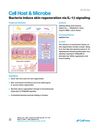
research Bacteria induce skin regeneration via IL-1β signaling
This study found that skin microbiota, particularly in wild-type mice, promotes wound-induced hair follicle neogenesis and wound healing, highlighting the potential downsides of routine antibiotic use on skin regeneration.
research MicroRNA-mediated regulation of hair follicle regeneration: mechanisms, delivery strategies, and translational perspectives
This review outlines recent advancements in understanding how micro-RNAs (miRNAs) influence hair regeneration, highlighting their role in stimulating hair growth and potential therapeutic approaches, while also addressing the challenges of clinical translation due to miRNAs' complex roles and delivery issues.

research Morphogenetic Mechanisms in the Cyclic Regeneration of Hair Follicles and Deer Antlers from Stem Cells
This review highlights surprising similarities between hair follicles and antler units, suggesting that a comparative study of their biology could benefit understanding in both areas without presenting new empirical findings.
research Biomedical Applications of Layer‐by‐Layer Self‐Assembly for Cell Encapsulation: Current Status and Future Perspectives
This review outlines the current state and future prospects of using layer-by-layer self-assembly for cell encapsulation in biomedical applications, such as cell-based biosensors, transplantation, and tissue engineering, while also discussing its limitations and potential advancements.