Been on Dut since 2022, new doctor has concerns. 5/19/2026
A 31-year-old man has been using Dutasteride since 2022, alongside topical Minoxidil, with positive results and no issues. His new healthcare provider expressed concerns about long-term Dutasteride use and suggested alternatives like oral Minoxidil and Spironolactone, but the patient is hesitant to change a successful routine.
View this post in the Community →
Similar Community Posts Join
6 / 6 resultscommunity He used Dutasteride for 20 YEARS: TL;DR Slight gains and largely stable for 20 years.
John has experienced slight hair gains and stability over 20 years using Dutasteride, which is more effective than Finasteride in reducing scalp DHT and maintaining hair. Dutasteride at 0.5mg daily has a similar side effect profile to Finasteride, but at higher doses, it may increase the risk of sexual side effects.
community I wish I were a man so bad. Life is cruel
A woman with androgenetic alopecia uses Dutasteride and Bicalutamide but feels devastated due to increased sensitivity to DHT. She considers wigs, Minoxidil, and seeks advice on options like spironolactone, hair transplants, and therapy.
community Dutasteride is not maintaining my hair. What are some other good options?
The user is experiencing diffuse hair loss despite using finasteride and dutasteride and is considering adding minoxidil, microneedling, or RU58841. They are also thinking about increasing the dutasteride dose or opting for a hair transplant, while being cautious about side effects.
community Dutasteride thins eyebrows and facial hair but doesn't stop scalp loss.
Dutasteride may not effectively stop scalp hair loss and can cause thinning of facial and body hair, including eyebrows. Users suggest considering other causes like autoimmune conditions or vitamin deficiencies and exploring treatments like finasteride or minoxidil.
community Dr Kyle Gillett on topical Dutasteride
The potential effectiveness of topical dutasteride, as well as other hair loss treatments such as finasteride, RU58841, minoxidil, and various vitamins. Experiences from users who have used these treatments were shared.
community So what’s really the deal with dutasteride hairline ruining claims?
The potential effects of dutasteride on hair loss, with some users reporting it improved their hairline while others experienced worsened hair loss or shedding. Other treatments discussed include minoxidil and finasteride, as well as RU58841.
Related Research
6 / 6 resultsresearch Prescribing Habits for Androgenetic Alopecia among Dermatologists in Spain in 2024: A Cross-Sectional Study
In this study, dermatologists in Spain reported a shift in androgenetic alopecia treatment practices from 2019-2020 to 2024, with increased prescribing of oral minoxidil and oral dutasteride, and changes in antiandrogen choices for different patient groups.

research Androgenetic Alopecia in Women: A Narrative Review of Pathophysiology, Clinical Evaluation, and Treatments
Spironolactone is effective for treating female hair loss, with new treatments like clascoterone showing promise.

research The diagnosis and treatment of androgenetic alopecia: a review of the most current management
This source discusses androgenetic alopecia, noting that male patients may transition from topical minoxidil to its systemic form or from finasteride to dutasteride for potentially better results, while female patients might require extensive lab testing to identify hyperandrogenism due to environmental triggers.
research Androgens in women
This review discusses hormone-modulating therapies for androgen-mediated cutaneous disorders in women but reports no new clinical results and highlights the need for more rigorous studies.
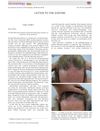
research Frontal fibrosing alopecia: Regrowth following cessation of sunscreen on the forehead
Stopping sunscreen use on the forehead led to hair regrowth in a woman with frontal fibrosing alopecia.
research Additive Effects of Platelet-Rich Plasma and Systemic Therapies in Androgenetic Alopecia: A Retrospective Study
This study found that combining platelet-rich plasma with systemic therapies for androgenetic alopecia may result in greater improvements in hair density and width than using PRP alone, though the differences were not statistically significant.