Anyone tried switching from RU to Pyrilutamide (KX-826) 1/12/2026
The conversation discusses switching from RU58841 to pyrilutamide for hair loss treatment, with users generally recommending staying on RU58841 if it is effective. RU58841 is sourced from GeneTherica, which ships worldwide.
View this post in the Community →
Similar Community Posts Join
5 / 5 resultscommunity Anyone used the 2% pyrilutamide / KX-826 from anagenica or anywhere else?
People are discussing hair loss treatments, including pyrilutamide, minoxidil, dutasteride, alfatradiol, and bimatoprost. Users share their experiences and side effects, noting that pyrilutamide is considered more effective and safer than RU58841.
community Waiting to start treatment until Kintor KX-826 Phase 2 data is published?
People are waiting for KX-826 (Pyrilutamide) Phase 2 data to decide on hair loss treatments, with some considering finasteride or minoxidil in the meantime. Pyrilutamide is seen as a potentially stronger and safer alternative to finasteride, but concerns about side effects and availability remain.
community KX-826 and RU58841: do topical anti-androgens work?
KX-826 and RU58841 are topical anti-androgens discussed for hair loss prevention, with KX-826 showing promise in trials and RU58841 having mixed anecdotal results. Users report combining these with treatments like minoxidil, finasteride, and dutasteride, with varying success and concerns about side effects.
community KX-826+Minoxidil Outperforms Minoxidil Alone for AGA Treatment: 30+ New Hairs/cm² (24 Weeks, P=0.0075)
KX-826 combined with minoxidil significantly increases hair growth compared to minoxidil alone for treating male androgenetic alopecia, with no unexpected safety concerns. Users discuss various hair loss treatments, including KX-826, minoxidil, finasteride, and RU58841, sharing personal experiences and sourcing information.
community If we lose hair because of our sensitivity to DHT, then why are we trying to reduce DHT when our sensitive androgen receptors are the culprit?
The conversation discusses the effectiveness of reducing DHT for hair loss treatment and explores alternative approaches like reducing androgen receptor sensitivity. Specific treatments mentioned include finasteride, dutasteride, pyrilutamide (KX-826), GT20029, and RU58841.
Related Research
6 / 6 results
research Nouvelles thérapeutiques dans la prise en charge de l’alopécie androgénétique
This thesis investigates the underlying mechanisms and treatment options for androgenetic alopecia, highlighting the molecular roles of androgens and genetic predispositions, and evaluates current and emerging therapies, such as PROTACs and Janus Kinase inhibitors, to enhance patient management.
research RU 58841, a new specific topical antiandrogen: A candidate of choice for the treatment of acne, androgenetic alopecia and hirsutism
This study found that the topically applied non-steroidal antiandrogen RU 58841 may reduce androgen-dependent skin conditions in a hamster model with minimal systemic effects.
research RU 58841-myristate–prodrug development for topical treatment of acne and androgenetic alopecia.
This study reports that RU 58841-myristate, a new antiandrogen prodrug formulated with solid lipid nanoparticles, shows potential for targeting hair follicles in preclinical laboratory settings.
research A controlled study of the effects of RU58841, a non-steroidal antiandrogen, on human hair production by balding scalp grafts maintained on testosterone-conditioned nude mice
This study found that the non-steroidal antiandrogen RU58841 increased hair growth rates and promoted hair cycle initiation in balding human scalp grafts on testosterone-conditioned nude mice, indicating a positive effect on hair growth.
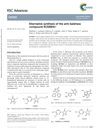
research Alternative synthesis of the anti-baldness compound RU58841
A new, less toxic and more efficient method to create the anti-baldness compound RU58841 was developed in 2014.
research Dose-dependent and long term effects of RU58841 (androgen receptor blocker) on hair growth in the bald stumptailed Macaque.
In this study using a macaque model, RU58841 at a 5% concentration significantly increased hair density, thickness, and length in the frontal bald scalp over six months.