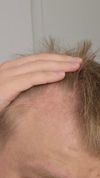
Am I gaining some ground back? 8/8/2026
The user has been treating their receding hairline with topical dutasteride and recently added oral minoxidil, showing significant improvement according to their dermatologist. Other users agree on the improvement, with some discussing side effects and lighting differences in photos.
View this post in the Community →
Similar Community Posts Join
5 / 5 resultscommunity Hairline still receding after nearly 8 months on finasteride — wait or consider dutasteride?
The user has been on oral finasteride for nearly eight months without significant improvement in hair loss and is considering switching to dutasteride. Suggestions include continuing finasteride, adding minoxidil, or trying alternative treatments like topical solutions or scalp massages.
community Still receding at 8 months on finasteride?
The user has been using oral finasteride, oral minoxidil, topical minoxidil, and microneedling to address hair loss but continues to experience recession after 8 months. Suggestions include being patient as treatments can take 12-18 months to show effects, considering a switch to dutasteride, and consulting a dermatologist for potential underlying scalp conditions.
community What to do as a 21yo german with a receeding hairline.
A 21-year-old from Germany is experiencing a receding hairline and is considering treatments like Finasteride and Minoxidil. They are unsure whether to consult a general practitioner or dermatologist and are concerned about being taken seriously due to their age.
community Update: 9 months of oral Dutasteride & topical Minoxidil has done more than I ever expected
Oral Dutasteride and topical Minoxidil significantly improved hair regrowth over nine months. Other users shared mixed results and side effects with treatments like oral Minoxidil and Finasteride.
community Needing some advice on what medicine to take after my dermatologist appointment
The user is experiencing a receding hairline and is considering treatments. They are seeking advice on whether to use finasteride, minoxidil, or both for hair preservation and potential regrowth.
Related Research
6 / 6 resultsresearch Pattern Hair Loss in Men
This article reviews current knowledge on the causes, diagnosis, and medical treatments for androgenetic alopecia, particularly in men, and reports no new findings.
research Frontal fibrosing alopecia: efficacy of treatment modalities
This review highlights current treatment options for frontal fibrosing alopecia, noting that 5-α-reductase inhibitors, intralesional steroids, and hydroxychloroquine have the highest evidence of effectiveness, while other therapies show variable results and need further research.
research Androgenetic Alopecia: a Review and Emerging Treatments
This review covers the pathogenesis, diagnosis, and potential new treatments for androgenetic alopecia but reports no new clinical findings, highlighting an ongoing need for effective therapies.
research Frontal Fibrosing Alopecia in Men: Presentations in 12 Cases and a Review of the Literature
This study found that men with frontal fibrosing alopecia exhibited more frequent facial papules, androgenetic alopecia, and body hair loss compared to women with the condition, and were generally older.
research Androgenetic alopecia (male pattern hair loss) in the United States: What treatments should primary care providers recommend?
This review evaluates six primary studies on androgenetic alopecia treatments and suggests topical minoxidil or finasteride as first-line options, recommending further research into treatments and practice guidelines.
research Current understanding and treatment of sex hormone-related hair diseases
This review examines the effects of sex hormones on hair growth and the pathogenesis of related hair disorders, highlighting current management benefits and controversies but reporting no new results.