 128 citations
,
August 2015 in “Cell Stem Cell”
128 citations
,
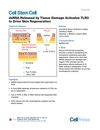
August 2015 in “Cell Stem Cell” The researchers reported that dsRNA from damaged skin activates TLR3, promoting hair follicle regeneration, while TLR3-deficient animals fail to initiate this process, suggesting potential therapeutic approaches for hair neogenesis.
55 citations
,
November 2010 in “Journal of Allergy and Clinical Immunology” This study found that the TLR3 L412F genetic variant is associated with severe viral infections, especially CMV, and immune dysfunction in a subgroup of chronic mucocutaneous candidiasis patients.
 47 citations
,
June 2019 in “Nature Communications”
47 citations
,
June 2019 in “Nature Communications” This study found that self-noncoding dsRNA activates TLR3 to stimulate intrinsic retinoic acid synthesis, promoting new hair follicle formation in wounded mice and showing similar gene expression changes in humans treated with rejuvenation lasers.
 5 citations
,
March 2019 in “Experimental dermatology”
5 citations
,
March 2019 in “Experimental dermatology” In this study involving adult mice, the researchers identified that double-stranded RNA-mediated activation of toll-like receptor 3 stimulates wound-induced hair neogenesis, potentially reflecting mechanisms used in facial rejuvenation treatments.
 3 citations
,
December 2016 in “Springer eBooks”
3 citations
,
December 2016 in “Springer eBooks” This study found that activating Toll-like receptor 3 in periodontal ligament stem cells enhanced their stem cell and immunosuppressive properties, potentially supporting effective periodontal tissue regeneration.