 18 citations
,
January 2017 in “Annals of dermatology/Annals of Dermatology”
18 citations
,
January 2017 in “Annals of dermatology/Annals of Dermatology” This study found that Th17 lymphocytes may play a more crucial role than cytotoxic T cells in the development of alopecia areata due to their infiltration around the hair bulb/bulge, which exacerbates hair loss as histopathological grade worsens.
 60 citations
,
September 2015 in “Expert Review of Clinical Immunology”
60 citations
,
September 2015 in “Expert Review of Clinical Immunology” This study suggests that CD8+ cytotoxic T lymphocytes play a crucial role in the development of alopecia areata, based on observations in rodent models that mimic human autoimmune disease.
15 citations
,
December 2018 in “International journal of environmental research and public health/International journal of environmental research and public health” This study observed that Epigallocatechin-3-gallate (EGCG) can inhibit phosphorylation of STAT1 and reduce a specific subset of immune cells in vitro and ex vivo, suggesting a potential role in maintaining immune privilege in alopecia areata.
January 2015 in “프로그램북(구 초록집)” This study highlights that the combination of adapalene and benzoyl peroxide (Epiduo®) is an effective first-line treatment for acne, significantly inhibiting antibiotic-susceptible and antibiotic-resistant P. acnes strains.
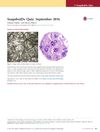 August 2016 in “Journal of Investigative Dermatology”
 This quiz based on a Journal of Investigative Dermatology article reports no new clinical results but serves as an educational tool for diagnosing scalp conditions, including scalp psoriasis and psoriatic alopecia.