 April 2026 in “Molecules”
 This study suggests that extracellular vesicles derived from Saccharomyces cerevisiae may enhance hair follicle-related cellular processes, highlighting their potential for biomedical and cosmetic applications.
March 2026 in “International Journal of Dermatology” In this study, researchers observed that patients with androgenetic alopecia show differences in scalp microbial communities compared to the general population, including an increase in Cutibacterium acnes, particularly in males, which may interact with lipid and immune pathways to contribute to hair follicle miniaturization.
 February 2026 in “Preprints.org”
 In this study, extracellular vesicles from Saccharomyces cerevisiae demonstrated multifunctional bioactivity, enhancing cell proliferation and migration, reducing inflammation, and promoting collagen gene expression in hair follicle–related cells.
January 2025 in “Indian Journal of Small Ruminants (The)” In this case study of a Beetal doe with severe skin lesions, the researchers diagnosed concurrent psoroptic mange and malasseziosis, and reported successful treatment with a combination of Ivermectin, antibiotics, and topical applications, leading to reduced skin lesions and new hair growth.
December 2024 in “International Journal of Biology Pharmacy and Allied Sciences” This study aims to explore the replacement of synthetic ingredients in anti-dandruff shampoos with natural alternatives, emphasizing the use of herbal shampoos crafted from pure organic ingredients to control dandruff and promote healthy hair growth. Results are not reported.
 February 2024 in “Scientific Reports”
 In this retrospective cohort study, 87.1% of pediatric patients with chemotherapy-induced alopecia experienced clinical improvement after treatment with minoxidil or combination therapy with CYP, with the combination therapy showing greater hair thickness and minimal adverse effects.
 August 2023 in “American Journal of Hospice and Palliative Medicine”
 This study describes common skin disorders in palliative care patients, emphasizing that conditions like xerosis, pressure ulcers, and fungal infections often require symptomatic treatment focused on quality of life rather than cure, due to limited life expectancy and potential treatment burdens.
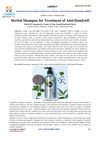 February 2023 in “International Journal of Advanced Research in Science, Communication and Technology”
 In this study, the researchers investigated the effectiveness of shampoo containing herbal extracts, specifically Neem and Tulsi, for managing dandruff and found it may offer benefits compared to synthetic drugs, which often cause side effects.
This review discusses seborrheic dermatitis and pityriasis sicca but reports no new clinical findings.
January 2018 in “INTAS POLIVET” In this clinical case report, a Labrador dog with multiple skin issues was successfully treated for Demodex mites and Pemphigus foliaceus using Prednisolone, Cephalexin, Amitraz, Ivermectin, and Ketoconazole, resulting in an uneventful recovery.
January 2015 in “Zurich Open Repository and Archive (University of Zurich)” This study found no significant difference in anagen rate improvement between the CYP-based dietary supplement and placebo in women over 60 with telogen effluvium, possibly due to variable patient inclusion related to hair growth seasonality.
 June 2023 in “Pediatric investigation”
 This case report describes a 7-year-old boy with pityriasis versicolor presenting as scalp hypopigmentation, a rare distribution for this fungal infection. Diagnosis was confirmed via Wood's lamp examination and microscopy, and the condition resolved after treatment with topical terbinafine hydrochloride cream.
January 2022 in “Clinical Cases in Dermatology” This article reviews the causes, characteristics, and treatment options for seborrheic dermatitis, discussing its prevalence in specific populations, without providing new research findings.
15 citations
,
July 1984 in “Nutrition Research” Selenium increased in hair but not in blood after taking supplements.
October 2019 in “International Journal of Ayurvedic Medicine” This study found that Yastimadhuk Tail Pratimarsha Nasya was effective in reducing hair fall symptoms in patients with Khalitya, providing significant relief over a 91-day period compared to a control group.
66 citations
,
August 2007 in “Applied and environmental microbiology” This study engineered a bioluminescent yeast strain responsive to androgenic chemicals, demonstrating rapid and sensitive detection suitable for high-throughput screening and environmental monitoring.
 3 citations
,
July 1996 in “Clinics in Dermatology”
3 citations
,
July 1996 in “Clinics in Dermatology” This study found that dietary yeast cell wall supplementation in broiler chickens increased certain immune responses compared to antibiotic treatments following immunization with sheep red blood cells.
66 citations
,
February 2002 in “Veterinary dermatology” This study suggests that the presence of Malassezia yeast in biopsy specimens from cats with multifocal or generalized skin lesions indicates the need for a thorough assessment for internal neoplasia.
22 citations
,
January 2020 in “Veterinary dermatology” This review discusses the unique characteristics and taxonomy of Malassezia yeasts and examines current diagnostic and therapeutic approaches in veterinary medicine; it reports no new clinical findings.
This study suggests that the ANE syndrome mutation in yeast Nop4, analogous to human RBM28, disrupts protein folding and protein-protein interactions, contributing to ribosomal dysfunction.
 13 citations
,
December 1940 in “The journal of nutrition/The Journal of nutrition”
13 citations
,
December 1940 in “The journal of nutrition/The Journal of nutrition” In this study, silver foxes given a yeast "filtrate factor" supplement retained their fur and normal pelts, while those without it experienced fur loss and thymus abnormalities.
3 citations
,
August 2025 in “Fermentation” In this study, researchers produced a biosurfactant from yeast that effectively reduces surface tension, acts as a good oil emulsifier, demonstrates antioxidant and antimicrobial properties, and exhibits no cytotoxicity, suggesting its potential use in eco-friendly cosmetic formulations.
April 2026 in “Clinical Cosmetic and Investigational Dermatology” This study found that androgenetic alopecia involves fungal dysbiosis, with significant depletion of the commensal yeast Malassezia and enrichment of opportunistic microbes, affected by host factors and geography.
 September 2025 in “Cermin Dunia Kedokteran”
 This research reports that onychomycosis, a common nail fungal infection often caused by Candida yeast, requires laboratory testing like direct preparations, fungal cultures, and molecular tests for accurate diagnosis due to its diverse etiology and differential diagnosis, improving therapy effectiveness and efficiency.
24 citations
,
March 2018 in “Brazilian Journal of Pharmaceutical Sciences” This study found that unripe and ripe Musa sapientum fruit extracts may exhibit hypoglycemic effects by inhibiting α-amylase activity, reducing glucose diffusion, and promoting glucose uptake in yeast cells.
23 citations
,
September 1997 in “Veterinary dermatology” This study found that topical mupirocin resulted in excellent or good treatment responses for feline acne in 24 out of 25 cats, despite some having concurrent dermatophyte or yeast involvement.
 12 citations
,
April 2005 in “Mycoses”
12 citations
,
April 2005 in “Mycoses” This study found that 1-day itraconazole therapy was more effective for acute vulvovaginal candidosis than for recurrent cases, where relapses occurred despite no yeast resistance.
 7 citations
,
January 2011 in “Veterinary Pathology”
7 citations
,
January 2011 in “Veterinary Pathology” In this case report, a 9-year-old horse was diagnosed with alopecia areata contributing to Malassezia dermatitis, involving lymphocyte infiltration and symptoms consistent with yeast presence.
 March 2026 in “Frontiers in Bioscience-Elite”
 This study found that duloxetine and escitalopram exhibited broad-spectrum antimicrobial activity, while buspirone had selective effects, and finasteride disrupted yeast virulence traits, suggesting these drugs could be repurposed as antimicrobial therapies.
 June 2025 in “Universities Journal of Phytochemistry and Ayurvedic Heights”
 This study evaluated the wedelolactone content and antimicrobial activity of Eclipta alba and Wedelia chinensis extracts, finding a potential relationship between the concentration of wedelolactone and their in vitro antimicrobial effects against several pathogenic bacteria and yeast.