 1 citations
,
March 2025 in “Frontiers in Physiology”
1 citations
,
March 2025 in “Frontiers in Physiology” This study identified key genes linked to immune cells and potential therapeutic compounds for alopecia areata by evaluating upregulated genes from patient datasets, highlighting T and NK cell involvement in hair follicle attack and suggesting drug candidates through molecular docking and dynamics simulations.
 1 citations
,
January 2024 in “Scientific reports (Nature Publishing Group)”
1 citations
,
January 2024 in “Scientific reports (Nature Publishing Group)” This study explored using keratin extracted from human hair waste to create biodegradable bioplastic films, revealing promising potential for applications in packaging and disposable items due to their uniform surface morphology and ability to degrade with keratinophilic fungi.
1 citations
,
March 2023 in “Journal of Natural Fibers” This study explored using tyrosine as a cross-linking agent for curling Asian hair and found that it could shape hair effectively before washing without damaging the fibers, though the method was less effective after washing compared to commercial products.
This study examined data from the FDA Adverse Event Reporting System and found that finasteride use is linked with both known and previously unlisted adverse events, such as erectile dysfunction and post-5α reductase inhibitor syndrome, with variations observed by age and sex.
15 citations
,
January 2018 in “Advances in experimental medicine and biology” This review discusses recent advances in understanding the structural hierarchy of trichocyte keratins, including their heterodimeric structure and distinct conformations impacting hair growth, with no new experimental results reported.
 49 citations
,
May 2020 in “Frontiers in Public Health”
49 citations
,
May 2020 in “Frontiers in Public Health” Insulin resistance linked to obesity may increase COVID-19 severity.
 8 citations
,
June 2021 in “Journal of Cosmetic Dermatology”
8 citations
,
June 2021 in “Journal of Cosmetic Dermatology” This review details various skin manifestations linked to COVID-19 and highlights dermatitides caused by personal protective equipment, emphasizing the need for accurate diagnosis and prompt treatment.
4 citations
,
September 2024 in “Cell Reports” This study found that mice lacking the CXCR2 receptor regenerated tissue scarlessly in various injury models and that administering plasma or G-CSF from these mice to wild-type mice also reduced scarring, suggesting potential therapeutic strategies to improve human skin wound healing.
 July 2026 in “Aesthetic Plastic Surgery”
 This pilot study found that intradermal 10% glucose combined with non-cross-linked hyaluronic acid improved hair density and diameter more than hyaluronic acid alone in adults with androgenetic alopecia, with no serious adverse events.
 January 2024 in “Frontiers in endocrinology”
 This study found that genetic variants linked to hypothyroidism significantly increased the risk of developing alopecia areata, suggesting a causative connection between the two conditions.
 October 2023 in “The Journal of clinical endocrinology and metabolism/Journal of clinical endocrinology & metabolism”
 This review found that hyperandrogenism in premenopausal women is linked to a higher prevalence of cardiovascular risk factors and diseases regardless of obesity, while in postmenopausal women, these risks depend on obesity.
 September 2022 in “Frontiers in genetics”
 This case study reports a new LAMB3 mutation linked to junctional epidermolysis bullosa with severe urinary tract stenosis, outlining treatment challenges and expanding knowledge of EB-related urological complications.
 January 2019 in “Springer eBooks”
 Acne is linked to inflammation and insulin resistance, and is associated with various syndromes that require different treatments.
 October 2010 in “Journal of Men's Health”
 Larger prostate size in older men may be linked to poorer semen quality and fertility issues.
 October 1971 in “The BMJ”
 Hair loss can be linked to hormonal changes, and physical conditions like heart defects can cause depression.
24 citations
,
February 2022 in “Journal of Biological Chemistry” This study found that carvacrol activates the TRPV3 ion channel by binding to a specific pocket formed by the S2-S3 linker, providing insight into its role in skin sensitization and potential for designing specific modulators.
 118 citations
,
October 2013 in “Trends in Genetics”
118 citations
,
October 2013 in “Trends in Genetics” The AUTS2 gene is linked to neurological disorders and may affect human brain development and cognition.
 40 citations
,
January 2013 in “Frontiers in Endocrinology”
40 citations
,
January 2013 in “Frontiers in Endocrinology” Finger length ratios are not linked to the number of specific gene repeats affecting testosterone sensitivity.
25 citations
,
May 2019 in “Cosmetics” This paper reviews the surface degradation of hair and describes how combining 18-MEA with specific surfactants can maintain hydrophobicity on bleached and weathered hair surfaces.
 22 citations
,
June 2013 in “Australasian Journal of Dermatology”
22 citations
,
June 2013 in “Australasian Journal of Dermatology” Early stage bald spots are linked to skin inflammation and damage to the upper part of the hair follicle.
 8 citations
,
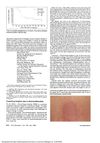
July 1990 in “Archives of Dermatology”
8 citations
,
July 1990 in “Archives of Dermatology” This case report details a fixed-drug eruption in a woman linked to the use of dextromethorphan, marking it as a previously unreported skin reaction to this medication.
 6 citations
,
June 2011 in “Journal of The American Academy of Dermatology”
6 citations
,
June 2011 in “Journal of The American Academy of Dermatology” Iron deficiency might be linked to hair loss, but more research is needed.
 4 citations
,
February 2025 in “BMC Genomics”
4 citations
,
February 2025 in “BMC Genomics” This study identified 71 SNPs linked to black wool traits in Qira sheep and found that specific mutations in the TYRP1 gene significantly correlate with coat color variations, providing insights for their genetic selection and conservation.
 4 citations
,
January 2014 in “Dermatology”
4 citations
,
January 2014 in “Dermatology” This case report details a woman with autoimmune primary ovarian insufficiency linked to hormonal contraception discontinuation, who achieved pregnancy through ovarian stimulation and in vitro fertilization despite typically low fertility in such conditions.
 1 citations
,
November 2025 in “Journal of Korean Medical Association”
1 citations
,
November 2025 in “Journal of Korean Medical Association” This review describes nail changes linked to various non-infectious skin diseases, highlighting how these alterations can help diagnose and manage conditions like psoriasis and lupus by noting specific and overlapping nail characteristics.
 January 2026 in “Dermatology Online Journal”
 COVID-19 vaccination may be linked to alopecia areata, especially in young adults.
 October 2025 in “Progress In Microbes & Molecular Biology”
 This review reveals that PCOS is consistently linked to gut microbiota dysbiosis, characterized by reduced microbial diversity and shifts in composition, which are associated with various PCOS phenotypes and may present opportunities for microbiota-targeted therapies addressing the disorder's underlying pathophysiological mechanisms.
 July 2025 in “Communications Biology”
 In this study, researchers used synchrotron X-ray imaging to examine rat vibrissa follicles, finding that despite variations in vibrissa length and follicle size, certain sensory structures remain consistent, suggesting specialized roles in sensory processing depending on the vibrissa type.
 February 2025 in “International Journal of Cosmetic Science”
 This study found that treating hair with ATS, formed from fumaric acid and cysteamine, effectively improved hair quality by increasing moisture content and altering the internal structure of strong curls.
 September 2024 in “Archives of Medical Science”
 Alopecia areata is linked to immune system differences, with specific biomarkers like CXCL9 and CXCL10 being key for diagnosis and potential treatment targets.