July 2025 in “Indian Journal of Endocrinology and Metabolism” This source provides a comprehensive guideline for the management of transgender individuals in India, highlighting the need for multidisciplinary diagnosis, counseling for gender-affirming hormone therapy, and the importance of addressing social stigma, legal issues, and medical training to improve healthcare access for this population.
This study protocol aims to explore the prevalence of polycystic ovary syndrome among female pediatric patients with spina bifida, focusing on metabolic and phenotypic differences, but reports no new results yet.

This study utilized the USFDA AERS to identify significant associations between various medications—such as anti-osteoporotic drugs and phenytoin—and gingival disorders, noting emergent signals with finasteride, COVID-19 vaccine, and levothyroxine, suggesting a need for awareness of oral side effects.
January 2025 in “Human Reproduction Open” This study found that approximately 26% of women with Type 1 diabetes have undiagnosed androgen disorders, with polycystic ovary syndrome being the most common, particularly in those with premenarcheal onset of diabetes.

In this case report, a 35-year-old woman was diagnosed with Sheehan's syndrome years after severe postpartum hemorrhage, leading to multiple hormonal deficiencies, highlighting delayed diagnosis's impact on treatment and quality of life.

This study examined the zinc levels in Kurdish adults experiencing hair loss to understand its relationship with four types of hair loss, although specific results were not reported in the abstract.
May 2023 in “Asian Journal of Transfusion Science” In this study, conducted at a tertiary care hospital in Chennai, adverse events during blood donation were observed in 0.42% of donors, predominantly affecting first-time male donors, and were mostly vasovagal reactions such as giddiness and sweating.
July 1998 in “Annals of saudi medicine/Annals of Saudi medicine” This case report describes a misdiagnosed case of HAIR-AN syndrome with an unfortunate outcome, highlighting the challenges in distinguishing it from other hyperandrogenic conditions.
8 citations
,
September 2005 in “Practical diabetes” This article discusses management strategies for polycystic ovary syndrome, emphasizing the role of insulin resistance and the importance of addressing associated cardiovascular risk factors; it reports no new clinical results.
 7 citations
,
September 2014 in “PubMed”
7 citations
,
September 2014 in “PubMed” This study observed that androgenetic alopecia is significantly associated with an increased risk of metabolic syndrome, with notable correlations found among both male and female subjects across European and Asian populations.
 September 2022 in “Women's healthcare”
 This review discusses various aspects of polycystic ovary syndrome, including its prevalence, diagnosis, and treatment options, and reports no new empirical results.
 January 2023 in “Pakistan Armed Forces Medical Journal”
  6 citations
,
December 2015 in “JAMA”
6 citations
,
December 2015 in “JAMA” This content is not a research abstract; it includes a website navigation notice and no study findings.
 January 2025 in “SKIN The Journal of Cutaneous Medicine”
 This study suggests that while vitamin D3 deficiency is linked to alopecia areata severity, evidence for the effectiveness of supplementation or topical calcipotriol treatment remains inconsistent and low quality.

This chapter reviews pharmacodynamic evaluations in endocrine disorders focusing on oral antidiabetics, insulin analogues, and hormone interactions, but reports no new results.
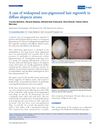 March 2019 in “Our Dermatology Online”
 A woman with severe hair loss regrew mostly white hair after treatment.
 254 citations
,
September 2014 in “Menopause”
254 citations
,
September 2014 in “Menopause” The NAMS 2014 recommendations guide healthcare providers on treating health issues in midlife women, emphasizing individualized care and informed decision-making.
 March 2016 in “Indian Journal Of Applied Research”
 This study found that 16.60% of patients in Agartala, India have hypothyroidism, with higher prevalence among females and individuals over 50 years old.
 83 citations
,
November 2002 in “British Journal of Dermatology”
83 citations
,
November 2002 in “British Journal of Dermatology” This study found no direct relationship between low serum ferritin and chronic diffuse telogen hair loss in women, questioning the usefulness of serum ferritin measurement and iron supplementation for managing this condition.
 45 citations
,
March 2010 in “Journal der Deutschen Dermatologischen Gesellschaft”
45 citations
,
March 2010 in “Journal der Deutschen Dermatologischen Gesellschaft” This article discusses methods for diagnosing and managing diffuse hair loss and reports no new results; the authors emphasize systematic evaluation and the importance of psychological support.
 37 citations
,
January 2009 in “Dermatology”
37 citations
,
January 2009 in “Dermatology” This study reports that hair growth and shedding in healthy women show annual seasonal patterns, with the highest shedding in summer and a less pronounced peak in spring.
 26 citations
,
May 2012 in “Cellular and Molecular Life Sciences”
26 citations
,
May 2012 in “Cellular and Molecular Life Sciences” This review discusses the structure, expression, regulation, and potential roles of NcoA4 in cancer and other pathologies, reporting no new experimental findings.
 17 citations
,
August 2001 in “Australasian journal of dermatology”
17 citations
,
August 2001 in “Australasian journal of dermatology” This case report describes a 50-year-old woman who developed drug-induced hepatitis after using spironolactone for androgenetic alopecia, with symptoms resolving upon discontinuation.
 13 citations
,
February 2016 in “Clinical Medicine”
13 citations
,
February 2016 in “Clinical Medicine” This article discusses various types of alopecia relevant to hospital medicine and reports no new clinical findings, emphasizing the need for accurate diagnosis and understanding of associated psychological impacts.
 13 citations
,
October 2011 in “Clinical Obstetrics and Gynecology”
13 citations
,
October 2011 in “Clinical Obstetrics and Gynecology” This review covers the diagnosis of polycystic ovary syndrome and the management of related infertility, describing evaluation and initial treatment steps, without presenting new clinical results.
 13 citations
,
December 2010 in “Nature Reviews Endocrinology”
13 citations
,
December 2010 in “Nature Reviews Endocrinology” A young man with an eating disorder had a life-threatening adrenal crisis due to an autoimmune condition, highlighting the need for better education on managing hormone treatments.
 11 citations
,
May 2023 in “Journal of Cancer Research and Clinical Oncology”
11 citations
,
May 2023 in “Journal of Cancer Research and Clinical Oncology” This review discusses various applications of CRISPR-based tools in cancer research, emphasizing their potential for investigating microRNA functions and developing microRNA-based therapies, despite challenges like off-target effects and delivery issues in using CRISPR/Cas9.
 11 citations
,
January 2011 in “Turkish Journal of Medical Sciences”
11 citations
,
January 2011 in “Turkish Journal of Medical Sciences” This study found that iron deficiency anemia is a key factor in the development of telogen effluvium, and higher 25-hydroxyvitamin D3 levels in TE patients may be linked to increased UV exposure.
 10 citations
,
July 2012 in “International Journal of Dermatology”
10 citations
,
July 2012 in “International Journal of Dermatology” This article addresses diffuse pattern essential syphilitic alopecia as an unusual form of secondary syphilis but provides no new clinical findings.
 10 citations
,
January 2012 in “Annals of Dermatology”
10 citations
,
January 2012 in “Annals of Dermatology” In this study, 1.25 mg daily finasteride for 28 weeks showed minimal increase in hair density and thickness in normoandrogenic female pattern hair loss, but no significant clinical improvement was observed.