5 citations
,
October 2021 in “American Journal of Medical Genetics Part A” This case report identifies a novel maternally inherited MBTPS2 variant associated with an expanded phenotypic spectrum of BRESHECK syndrome, including cytopenias, bone marrow fibrosis, and chronic diarrhea.
 13 citations
,
November 2009 in “Journal of Dermatological Science”
13 citations
,
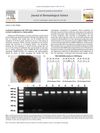
November 2009 in “Journal of Dermatological Science” This article discusses various dermatological studies cited by previous authors and reports no new clinical results.
9 citations
,
January 2014 in “Molecular Genetics and Metabolism Reports” This study discovered that a specific G to C mutation in the ornithine aminotransferase gene is linked to the retarded hair growth phenotype in mice and may serve as a model for human gyrate atrophy.
June 2020 in “Zenodo (CERN European Organization for Nuclear Research)” This study suggests that the DNMT3B -579 G>T polymorphism may be a genetic risk factor for colorectal cancer in the Azerbaijani population.
January 2026 in “Animal Genetics” This study investigated a Labrador Retriever with paw pad hyperkeratosis and identified a unique de novo heterozygous missense variant in the GJB6 gene, suggesting its potential role in the condition, analogous to Clouston syndrome in humans, although differences between species may provide further insights.
46 citations
,
September 2007 in “Journal of Investigative Dermatology” 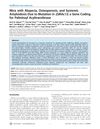 73 citations
,
June 2010 in “PLoS Genetics”
73 citations
,
June 2010 in “PLoS Genetics” This study identified that a deficiency in the palmitoyl transferase enzyme, due to a mutation in the Zdhhc13 gene, led to severe physiological abnormalities in mice, including skin, bone, and systemic amyloid issues.
 8 citations
,
January 2009 in “Journal of pediatric endocrinology & metabolism/Journal of pediatric endocrinology and metabolism”
8 citations
,
January 2009 in “Journal of pediatric endocrinology & metabolism/Journal of pediatric endocrinology and metabolism” This study reports a novel TRbeta gene mutation associated with resistance to thyroid hormone syndrome, which may contribute to various forms of alopecia in the affected family members.

This study suggests that skin tumor cells in tuberous sclerosis complex may promote hamartoma morphogenesis by expressing and releasing higher levels of cathepsin B.
 September 2016 in “Journal of Dermatological Science”
 This study identified that in Japanese patients with autosomal recessive woolly hair/hypotrichosis, the c.736T > A LIPH mutation is associated with a mild phenotype, while the c.742C > A mutation may lead to severe baldness.
 6 citations
,
January 2020 in “BMC Medical Genetics”
6 citations
,
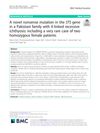
January 2020 in “BMC Medical Genetics” In this study, researchers identified a novel STS gene (c.287G > A; p.W96*) mutation in Pakistani individuals with X-linked ichthyosis, expanding the understanding of its genetic causes and aiding in genetic counseling.
 January 2011 in “Journal of Human Genetics”
 This study found a severe MBTPS2 gene mutation in a Japanese IFAP syndrome patient, suggesting other factors may influence the syndrome's clinical features compared to previously studied patients.
July 2025 in “Clinical Case Reports” In this case report, a 17-year-old male with a specific TRPS1 gene mutation presented with sparse, soft hair, short thumbs and toes, misaligned teeth, and distinctive bone abnormalities in the fingers and toes as observed through X-ray analysis.
21 citations
,
June 2009 in “Mammalian genome” This study describes a mouse model for Marie Unna Hereditary Hypotrichosis, identifying mutations in the hairless gene that result in sparse or absent hair and cyst-like hair follicles.
 December 2013 in “Appetite”
 This study identified a nonfunctional Itpr3 gene in BTBR mice, attributed to a 12-bp deletion, which likely causes their simultaneous hair loss and taste perception deficits.
66 citations
,
December 1999 in “Journal of Investigative Dermatology” New mutations in the hairless gene may cause hair loss and affect bone development.
January 2000 in “The Mouseion at the JAXlibrary (Jackson Laboratory)” This study identified a new mouse mutation associated with noninflammatory proliferative skin disease and hair abnormalities, drawing parallels to human conditions like Netherton's syndrome and monilethrix.
4 citations
,
January 2009 in “PubMed” In this study, researchers identified an autosomal dominant mutation (E402K) in exon 7 of the KRT86 gene as a cause of Monilethrix in a large family from Turkey.
130 citations
,
April 2001 in “Journal of Investigative Dermatology” This study reports the first keratin gene mutation affecting the tail domain, leading to a unique cytoskeletal abnormality and severe epidermal hyperkeratosis, highlighting the tail domain's critical role in keratin organization.
31 citations
,
November 2015 in “PloS one” In this study, modulating Tyrosinase expression altered mouse coat color by affecting melanosome accumulation, indicating that melanosome maturity plays a role in determining skin and hair color beyond total melanin content.
14 citations
,
March 2018 in “The American journal of case reports” This study highlights the phenotypic variability in 5 patients with Woodhouse-Sakati syndrome carrying the c.436delC mutation, suggesting a broader range of clinical presentations than previously recognized.
76 citations
,
January 1998 in “Mammalian Genome”  20 citations
,
July 2013 in “European Journal of Oral Sciences”
20 citations
,
July 2013 in “European Journal of Oral Sciences” This study found a novel PAX9 gene mutation that may cause tooth agenesis and trichodysplasia in a studied family.
 15 citations
,
December 2014 in “PLoS ONE”
15 citations
,
December 2014 in “PLoS ONE” This study identifies iRhom2 as a crucial regulator of hair follicle differentiation, showing that the iRhom2Uncv mutation leads to dysplasia and reduced TACE maturation, resulting in a hairless phenotype in mice.
 245 citations
,
January 1998 in “Genes & Development”
245 citations
,
January 1998 in “Genes & Development” This study found that Hoxc13 mutations in mice cause defects in hair, nail, and tongue structures, with the most noticeable issue being brittle hair leading to alopecia.
 11 citations
,
September 2012 in “The journal of investigative dermatology/Journal of investigative dermatology”
11 citations
,
September 2012 in “The journal of investigative dermatology/Journal of investigative dermatology” This study identified a missense mutation in the keratin 71 gene as the cause of autosomal dominant woolly hair/hypotrichosis in a Japanese family, marking the first human mutation in KRT71 linked to a hair disorder.
 July 2012 in “European journal of cancer”
 This study demonstrated that switching aE-catenin to aT-catenin in murine skin substantially rescued hyperproliferative and pre-cancerous conditions, but led to partial baldness, indicating potential functional discrepancies.

This study identified a genetic locus associated with rhabdomyosarcoma susceptibility in mice and found that specific differentiation markers are linked to the regression of basal cell carcinoma.
 1 citations
,
December 2018 in “Journal of genetic medicine”
1 citations
,
December 2018 in “Journal of genetic medicine” In this case report, a 20-year-old male with tricho-rhino-phalangeal syndrome was found to have a de novo frameshift mutation in the TRPS1 gene, highlighting the challenges in diagnosing this rare disorder.
34 citations
,
November 1998 in “Journal of Investigative Dermatology” A common mutation in the hHb6 gene is linked to monilethrix, but other factors may also play a role.